Volume & Pressure Changes in the Lungs
Volume & Pressure Changes in the Lungs
Volume & Pressure Changes in the Lungs
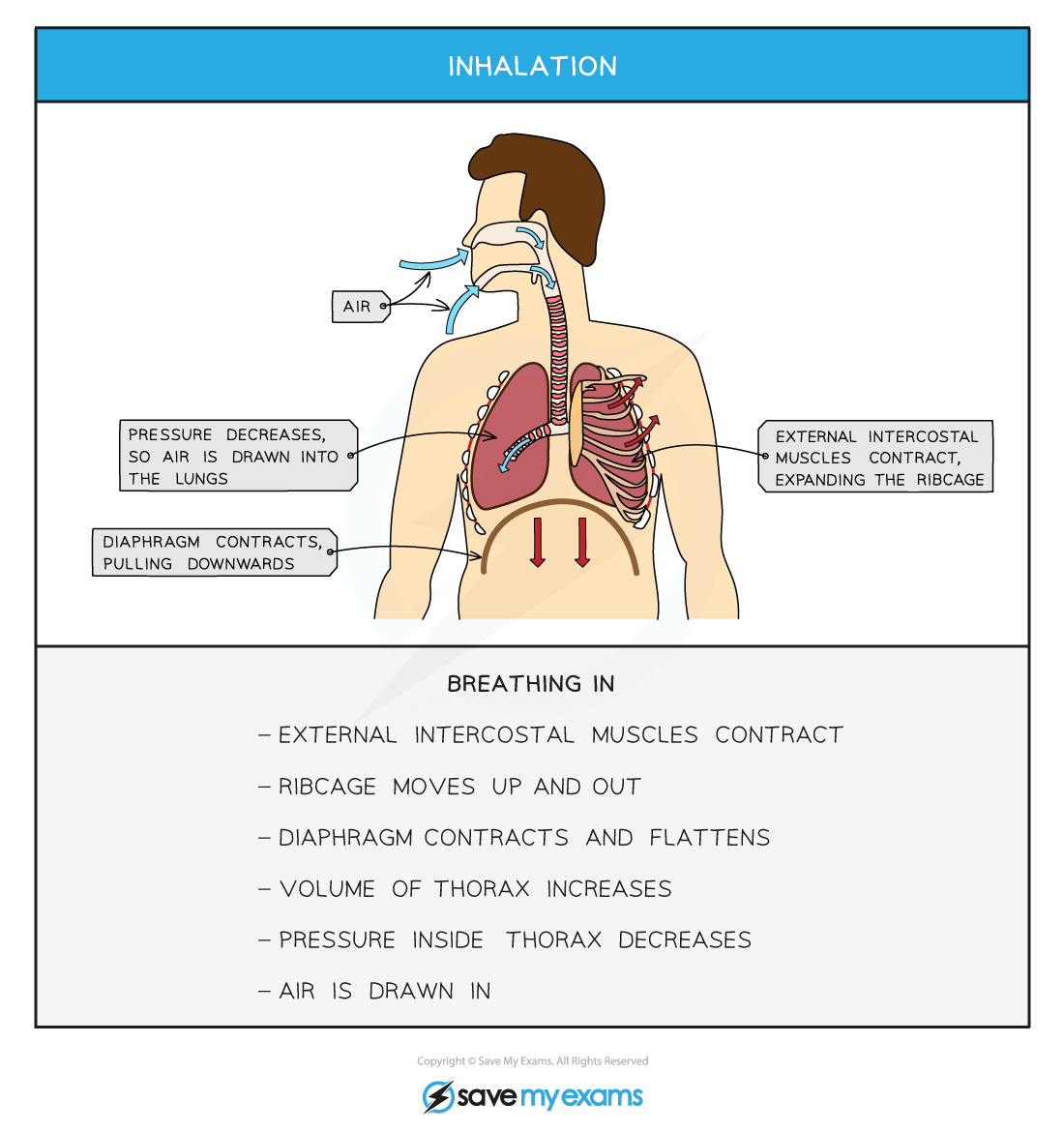
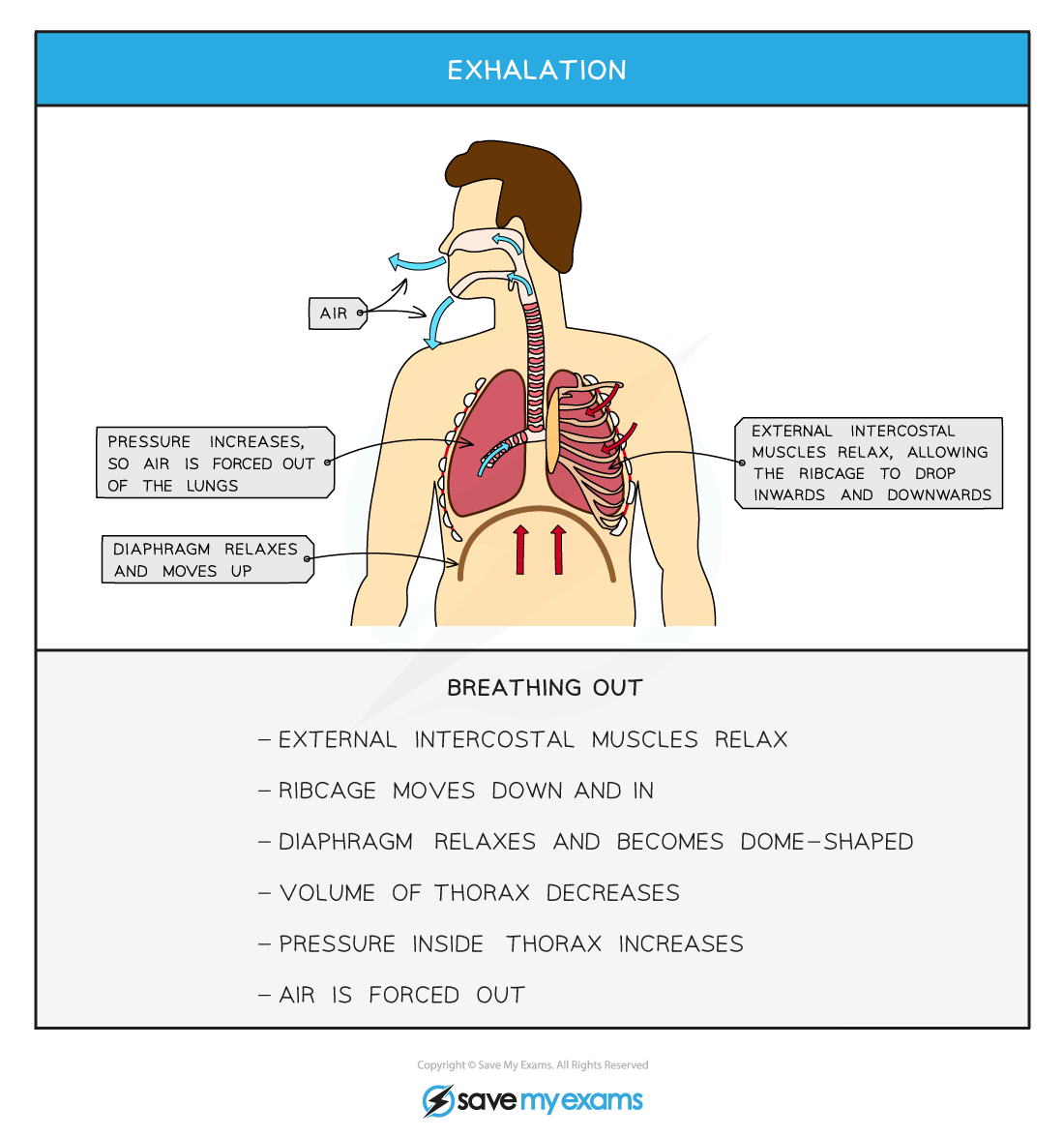
The diaphragm is a thin sheet of muscle that separates the chest cavity from the abdomen; it is ultimately responsible for controlling ventilation in the lungs
When the diaphragm contracts it flattens and this increases the volume of the chest cavity (thorax), which consequently leads to a decrease in air pressure inside the lungs relative to outside the body, drawing air in
When the diaphragm relaxes it moves upwards back into its natural, domed shape and this decreases the volume of the chest cavity (thorax), which consequently leads to an increase in air pressure inside the lungs relative to outside the body, forcing air out
The external and internal intercostal muscles work as antagonistic pairs (meaning they work in different directions to each other)
During inhalation, the external set of intercostal muscles contracts to pull the ribs up and out:
This also increases the volume of the chest cavity (thorax), decreasing air pressure, drawing air in
During exhalation, the external set of intercostal muscles relax so the ribs drop down and in:
This decreases the volume of the chest cavity (thorax) increasing air pressure, and forcing air out
When we need to increase the rate of gas exchange (for example during strenuous activity) the internal intercostal muscles will also work to pull the ribs down and inwards, to decrease the volume of the thorax more, forcing air out more forcefully and quickly – this is called forced exhalation
There is actually a greater need to rid the body of increased levels of carbon dioxide produced during strenuous activity!
This allows a greater volume of gases to be exchanged
Inhalation and Exhalation Diagrams