How Did the Nazis Deal with Opposition?
The Aspects of the Nazi Police State - Summary
Once the SA and army had sworn an oath of loyalty to him, Hitler wanted to transform Germany into a police state to ensure that there would be no obstacles to creating his Third Reich.
As dedicated Nazis, the SS formed the backbone of Hitler’s police force and oversaw the roles of the Gestapo and SD. Their intimidating presence on the streets of Germany, combined with their ability to bypass legal proceedings, spread fear into those who thought about resisting or opposing Nazi policy.
In the background, the SD gathered intelligence and information on enemies of the Nazi Party, informing the SS and other police groups of who to target.
Of all the components of the police force, the Gestapo were perhaps the most infamous and feared. People worried about their late night visits to suspected opponents of the Nazi Party, as well as their ability to blend into public life and remain unseen.
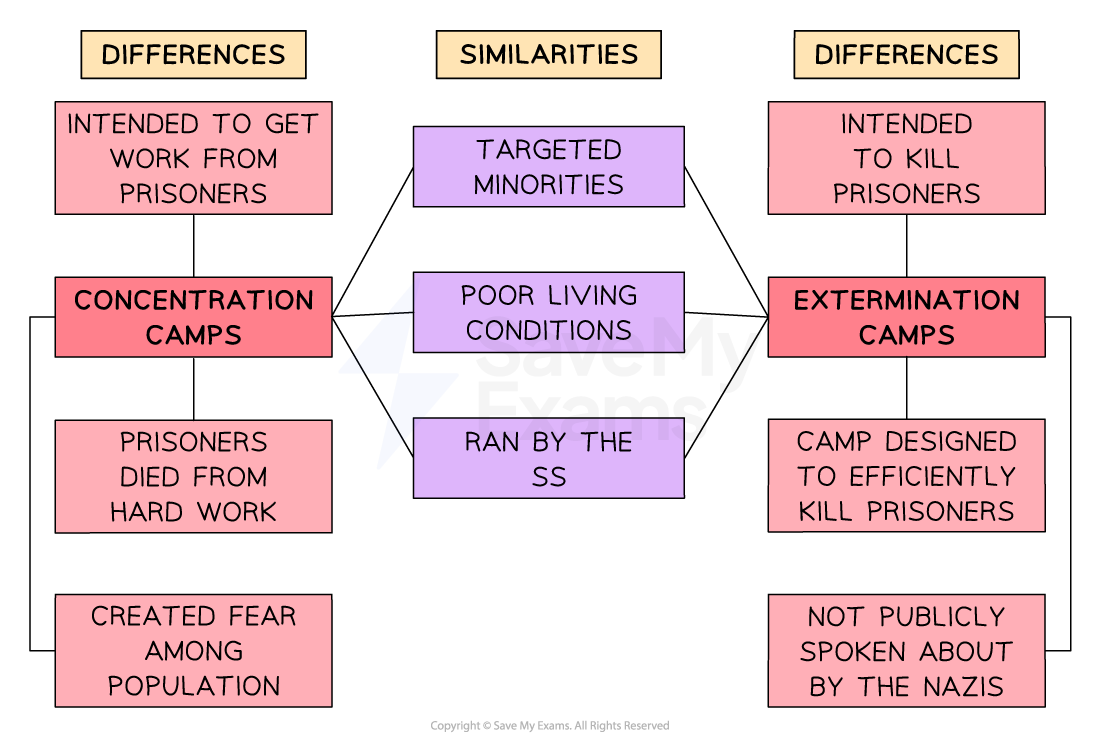
The Nazis created concentration camps in 1933 to imprison all opponents of the Nazi regime. Details of the poor living conditions and violence committed were leaked back to the public, creating fear and ensuring compliance.
Changes to the legal system drastically increased the conviction rate and number of people executed due to treasonous crimes. With the removal of trial by jury, enemies of the state were at the mercy of pro-Nazi judges influenced to declare them guilty.
With the majority of the population being either Catholic or Protestant, the Nazis were worried about the ideas and beliefs being taught in church and Christian schools. Ultimately, Hitler could not allow religion to challenge his authority. He made agreements with the Catholic Church and reformed the Protestant Church.
Role of the SS
Role of the SS
The SS was created in 1925 to act as personal bodyguards to Hitler
Members had to be both ‘racially pure’ and radically loyal to the NSDAP
Heinrich Himmler became leader of the SS from 1929
The SS wore black uniforms to be easily identifiable from the SA
The SS had several roles:
Protect Hitler and other Nazi leaders
Provide security during political meetings
Urge people to subscribe to the Nazi newspaper, Der Völkischer Beobachter
Marry ‘racially pure’ wives to create ‘racially pure’ children
Manage and control other police forces, including the SD and Gestapo
The SS were responsible for carrying out the arrests and murders of SA members during the Night of the Long Knives in 1934
Year | SS Membership |
|---|---|
1925 | 240 |
1933 | 52,000 |
1939 | 290,000 |
1944 | 800,000 |
Role of the SD
Role of the SD
The SD was created in 1931 by Heinrich Himmler
Reinhard Heydrich was placed in charge
They gathered intelligence on anyone they suspected or knew opposed the Nazi Party, which included:
Existing and new Nazi Party members
Leaders and activities within other political parties
Minority groups such as Jewish people, Jehovah’s Witnesses and Freemasons
Government officials
Heydrich and the SD compiled a list of SA members during the Night of the Long Knives
The SD became the only police agency to collect and manage intelligence from 1934
They continued this work during the war
Year | SD Membership |
|---|---|
1932 | 33 |
1934 | 850 |
1939 | 4,000 |
Role of the Gestapo
Role of the Gestapo
Hermann Goering initially created the Gestapo to “investigate and combat all attempts to threaten the state”
By 1934, Reinhard Heydrich led the Gestapo
They wore plain clothes so they could not be easily identified
The Gestapo had several roles:
Tapping phones and spying on opponents
Arresting, questioning and torturing suspects
Around 160,000 people were arrested in 1939 for political crimes
Sending people directly to concentration camps using protective custody
Releasing information about concentration camp conditions to spread fear
They relied on denunciations from the public to target suspects:
Only around 10% of political crimes committed were discovered by the Gestapo, compared to 80% reported by ordinary citizens
Towns such as Hamburg and Frankfurt only had 40-50 Gestapo agents, which demonstrates the reliance on fear to reduce opposition
Year | Gestapo membership |
|---|---|
1937 | 6,500 |
1939 | 20,000 |
1944 | 32,000 |
The Development of Concentration Camps
The Development of Concentration Camps
Most arrests were for ‘political crimes’
Political crimes involved speaking out against the Nazi Party
Dachau was opened in 1933 and became the first concentration camp in Nazi Germany
Concentration camps were created to imprison many groups:
Minority groups such as Jewish people and Jehovah’s Witnesses
‘Undesirables’ such as homosexuals, prostitutes and Romani
Political opponents, including journalists, writers, intellectuals and Communists
Concentration camps had poor living conditions and inmates had to do hard labour
During the Second World War, the Nazi strategy changed
Concentration camps did not reduce the number of ‘undesirables’ in Germany
Germany’s progression into Eastern Europe increased the number of ‘undesirables’ under Nazi occupation
Hitler and the Nazis developed the ‘Final Solution’ in 1942
This led to the development of six extermination camps
The most notorious camp was Auschwitz-Birkenau
Controlling the Legal System
Controlling the Legal System
Control of the legal system allowed the Nazi Party to remove opposition under the illusion that it was fair and just
However, cases were often pre-determined and biased in favour of a conviction
Judges and Lawyers
Judges and lawyers were required to prioritise the interests of the Nazi Party above all else:
Judges joined the National Socialist League for the Maintenance of the Law
Judges were dismissed if they did not join
Lawyers joined the German Lawyers Front
Judges had to wear the swastika from 1936
Judges decided the outcome of cases, not the jury
Law Courts
The Nazis removed trial by jury so that judges could decide the outcome of the case
The People’s Court was introduced to hear cases of treason
The Nazis selected judges radically loyal to them
Trials were held in secret
The right to appeal was removed
Control of the legal system led to a rapid rise in the number of political opponents executed:
Between 1930 and 1932, only eight people were executed
Between 1934 and 1939, this increased to 534 people
Controlling Religion
Controlling Religion
The Concordat With the Catholic Church
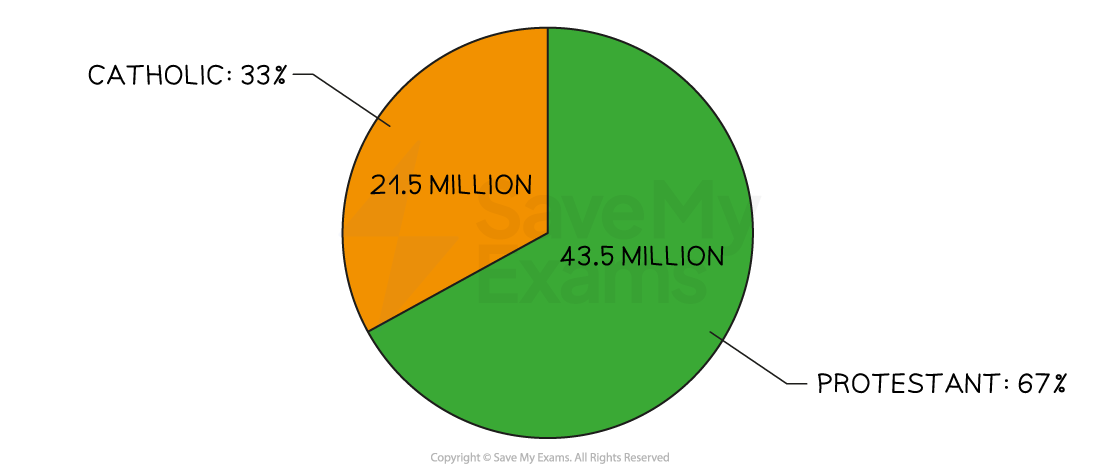
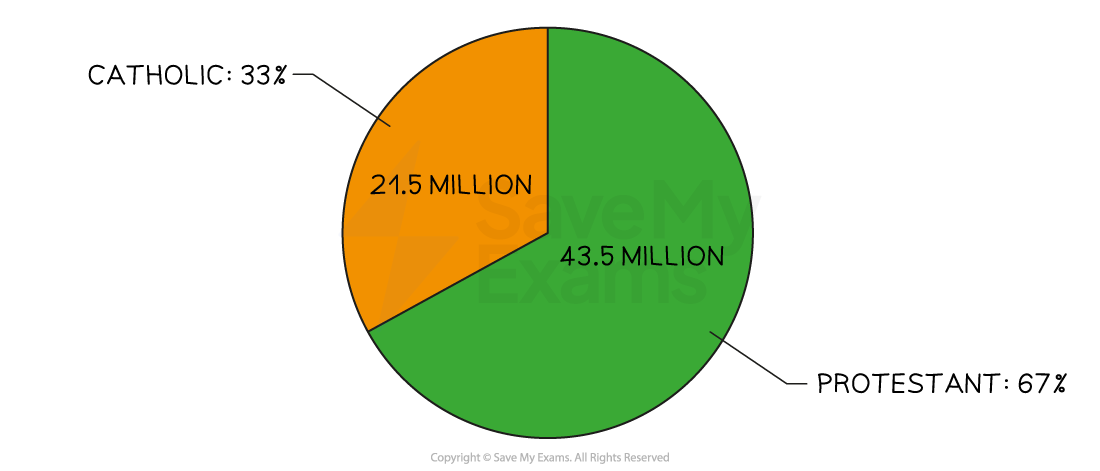
Germany had high levels of Christianity
Most of the country was either Protestant or Catholic
Christianity was a threat to Hitler and the Nazi Party because the Christian Church held different beliefs from the Nazi Party:
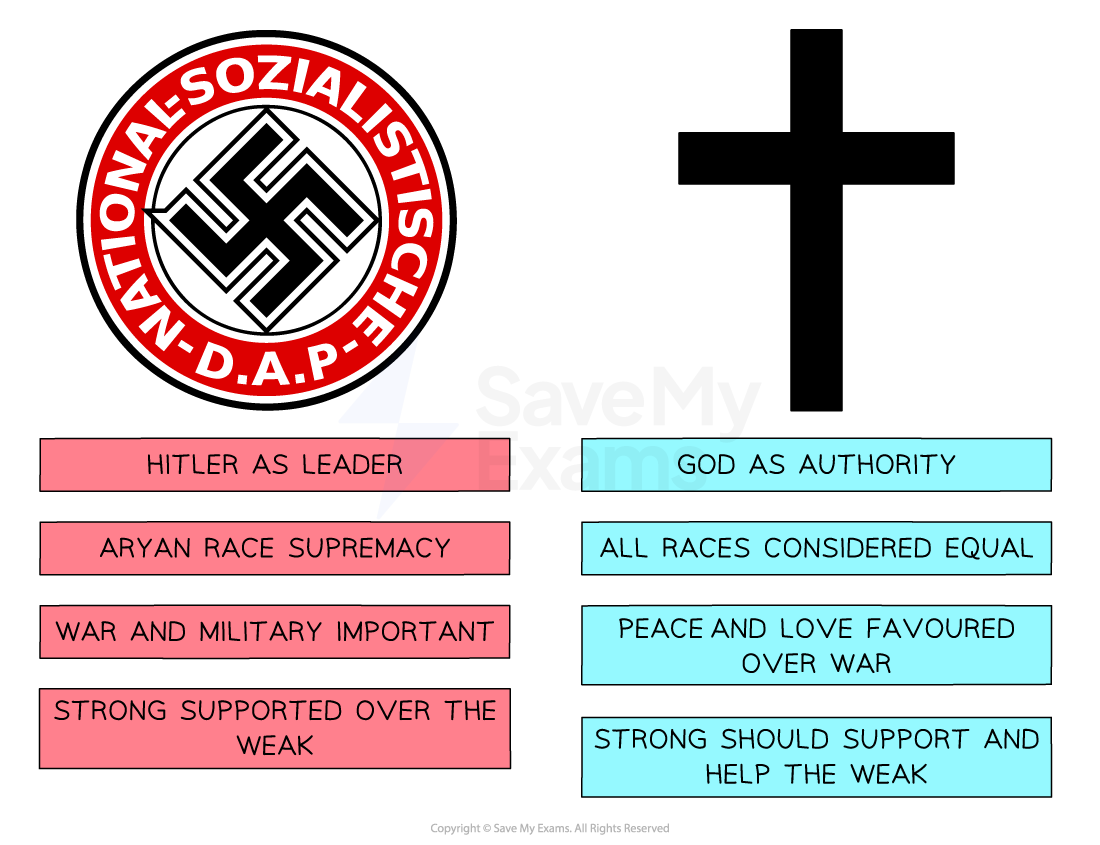
However, Hitler was not sure what to do about the churches:
Should Hitler Destroy or Keep Christianity?
Destroy | Keep |
|---|---|
Christianity had more followers than the Nazi Party | Many Christians had voted for Hitler during important elections |
Christian beliefs conflicted with Nazi beliefs | They shared similar beliefs on the importance of family |
Churches could spread anti-Nazi ideas | If the Nazis could control the churches, they could control the population |
Hitler initially wanted the Christian churches to work with the Nazi government
The Catholic and Protestant churches reacted differently to Nazi interference
Catholics represented several challenges for Hitler:
They were loyal to the Pope
They supported the Catholic Centre Party before the Enabling Act
They had their own Catholic schools, which taught different beliefs to Nazi schools
Hitler signed an agreement known as a Concordat with the Pope in July 1933 on behalf of the Catholic Church:
It allowed Catholics to worship freely and to continue with Catholic schools
In return, Catholic priests would not interfere in politics and would swear loyalty to the Nazi regime
Persecution of Catholics continued throughout the 1930s:
Around 400 priests were sent to the Dachau concentration camp
Catholic schools were controlled or closed
This broke the Concordat
Youth groups like the Catholic Youth League were banned
Monasteries were closed down
By 1937, the Concordat had failed:
The Pope released a statement known as ‘With Burning Anxiety’, which criticised the Nazi regime
The Pope called Hitler a “mad prophet”
The Protestant Reich Church
Many Protestants supported the Nazi Party by 1933 as the party had promised protection from Communists, who were anti-Christian
Ludwig Müller became Reich Bishop of a unified Protestant Church called the Reich Church:
Around 2,000 individual churches joined
The swastika was displayed in some churches
Jewish people were not allowed to be baptised in the Reich Church
Pastor Martin Niemöller resisted Nazi intervention and set up the Pastors’ Emergency League (PEL)
The Confessing Church was created in 1934 and 6,000 churches joined