The Sun as a Star
The Milky Way
The Milky Way
Galaxies are made up of billions of stars
The Universe is made up of many different galaxies
The Sun is one of the billions of stars in a galaxy called the Milky Way
Other stars in the Milky Way galaxy are much further away from Earth than the Sun is
Some of these stars also have planets which orbit them
Our Place in Space
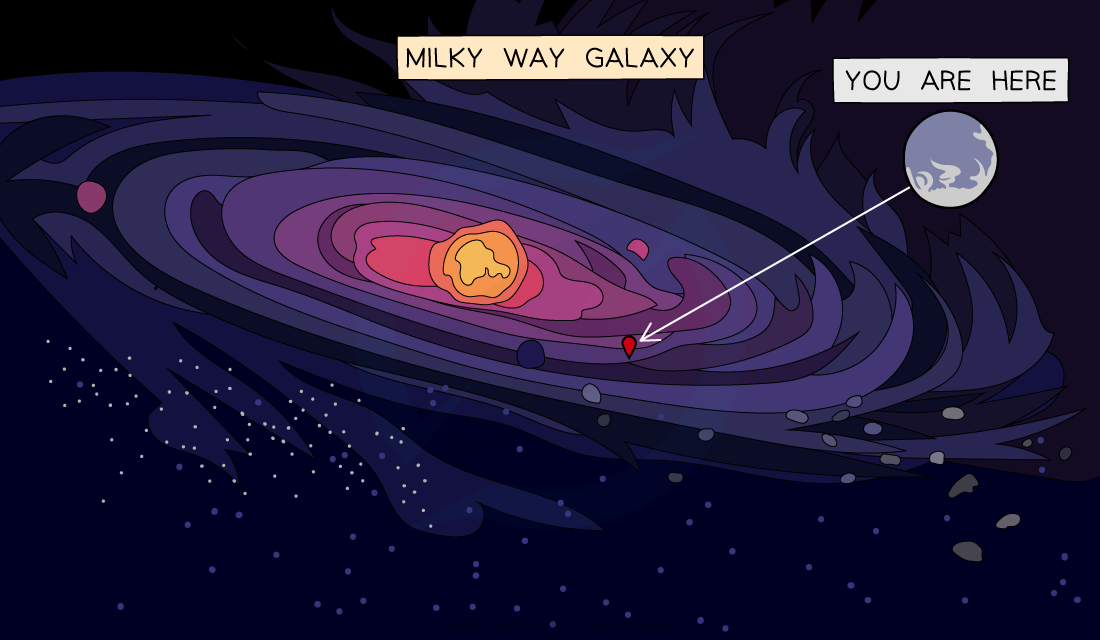
Our solar system is just one out of potentially billions in our galactic neighbourhood, the Milky Way. There are estimated to be more than 100 billion galaxies in the entire universe
The Sun
The Sun
The Sun lies at the centre of the Solar System
The Sun is a star which makes up over 99% of the mass of the solar system
The fact that most of the mass of the Solar System is concentrated in the Sun is the reason the smaller planets orbit the Sun
The planets are kept in orbit due to the gravitational pull of the Sun
The Sun is a medium-sized star consisting of mainly hydrogen and helium
It radiates most of its energy in the infrared, visible and ultraviolet regions of the electromagnetic spectrum
The Sun
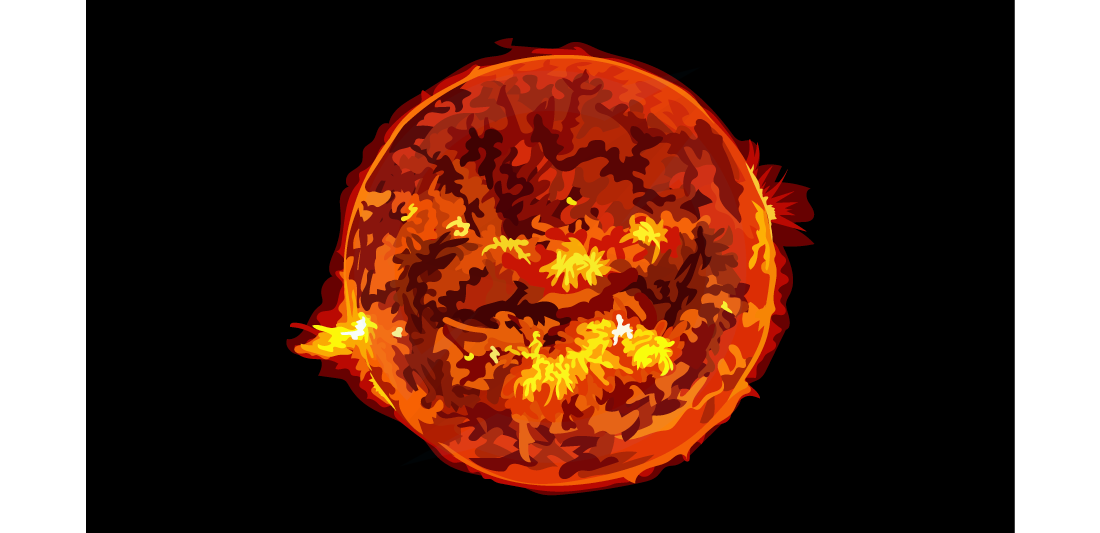
Our Sun (Image courtesy of NASA)
Stars come in a wide range of sizes and colours, from yellow stars to red dwarfs, from blue giants to red supergiants
These can be classified according to their colour
Warm objects emit infrared and extremely hot objects emit visible light as well
Therefore, the colour they emit depends on how hot they are
A star's colour is related to its surface temperature
A red star is the coolest (at around 3000 K)
A blue star is the hottest (at around 30 000 K)
Temperature & Colour of Stars
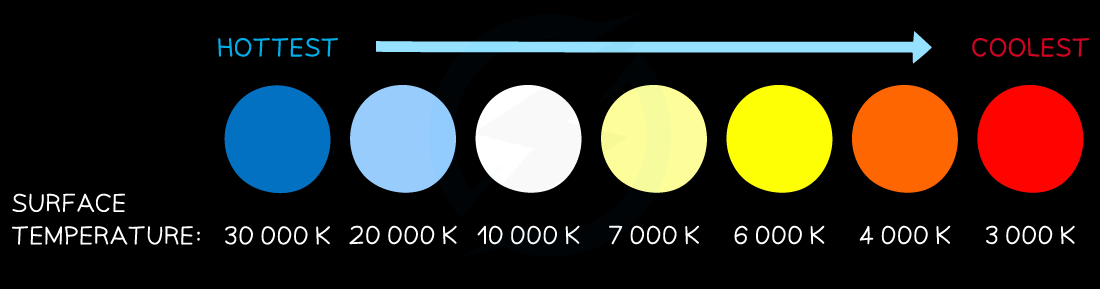
The colour of a star correlates to its temperature
Nuclear Fusion in Starsvideo
Nuclear Fusion in Stars
In the centre of a stable star, hydrogen atoms undergo nuclear fusion to form helium
The equation for the reaction is shown here:
The equation shows (deuterium) and (tritium) which are both isotopes of hydrogen
They can be formed through other fusion reactions in the star
A huge amount of energy is released in the reaction
This provides a pressure that prevents the star from collapsing under its gravity
Nuclear Fusion in Stars
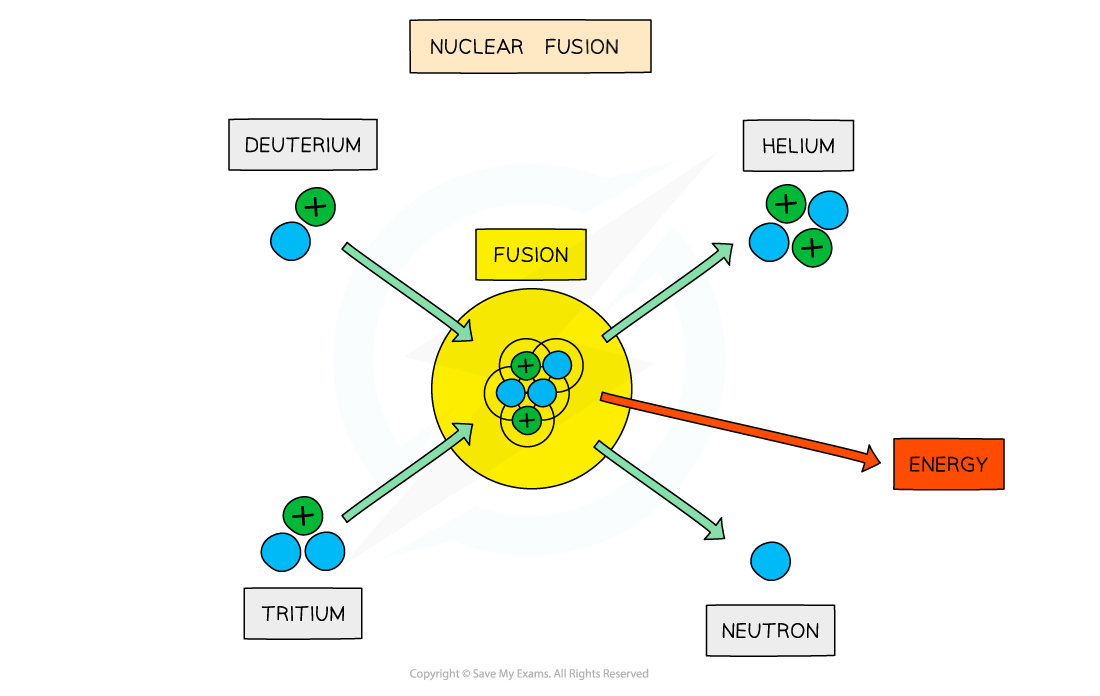
The fusion of deuterium and tritium to form helium with the release of energy