Disposal of Non-Current Assets
Profit or loss on a sale of a non-current asset
Profit or loss on a sale of a non-current asset
Can a business sell a non-current asset?
A non-current asset can be sold when the business no longer needs it
This is referred to as the disposal of a non-current asset
The sale of the non-current asset could be a cash sale or credit sale
If it is a credit sale then a general ledger account is created for the person or business buying the asset
This account is referred to as an other receivables account to avoid confusion with trade receivables accounts
The money received from the sale is called the proceeds of the sale
This is a capital receipt
A non-current asset can also be used as a part-exchange for a new non-current asset
The business and the supplier of the new asset will agree on the value of the old asset
The business will give the old asset to the supplier
The supplier will reduce the cost of the new asset by the value of the old asset
How do I calculate the profit or loss on a sale of a non-current asset?
STEP 1
Calculate the net book value of the non-current assetThe cost of the asset minus the accumulated depreciation
STEP 2
Calculate the difference between the proceeds of the sale and the net book valueSTEP 3
Determine if a profit or loss has been madeIf the proceeds of the sale are greater than the net book value then it is a profit
This means too much depreciation has been charged
If the proceeds of the sale are smaller than the net book value then it is a loss
This means not enough depreciation has been charged
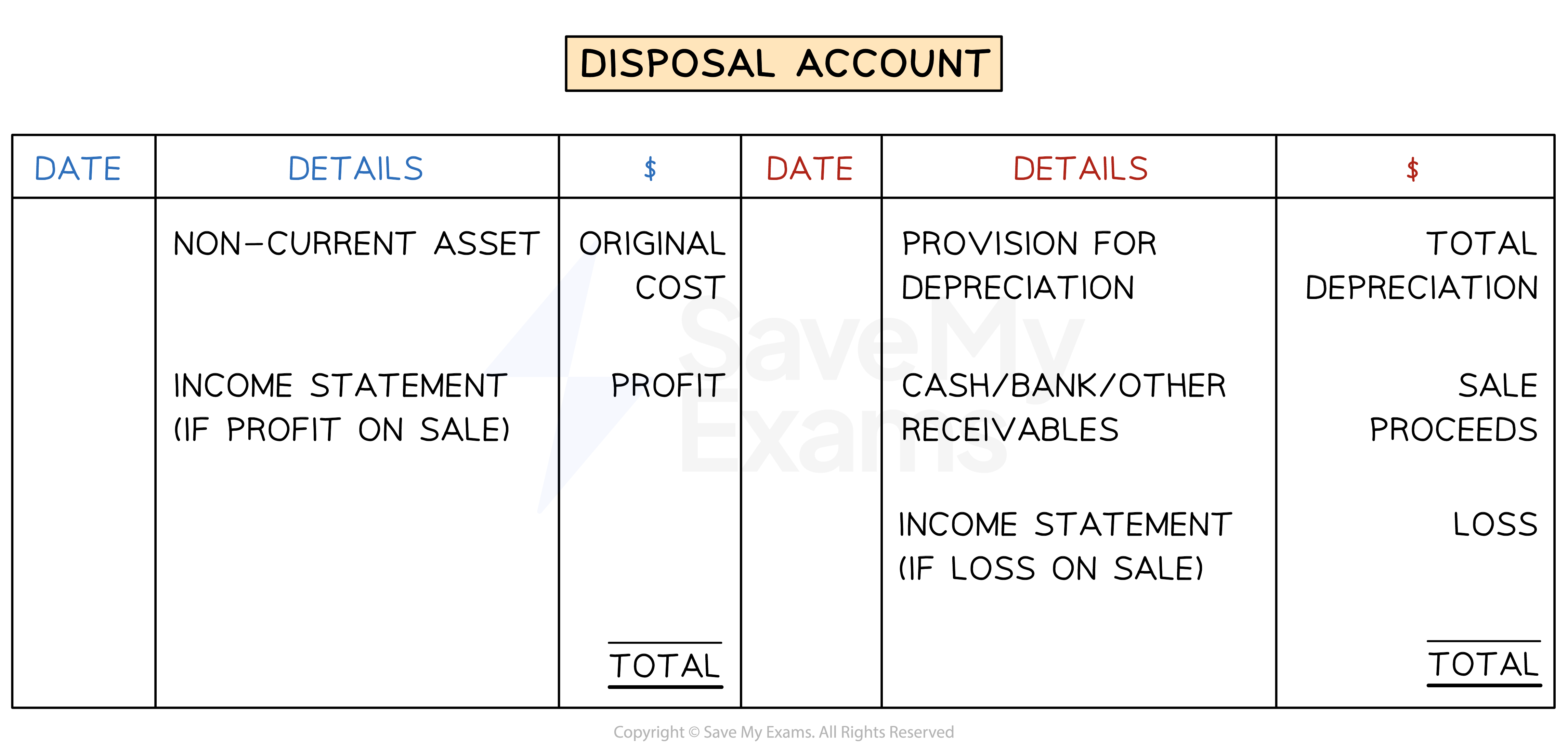
Disposal account
Disposal account
What is a disposal account?
A disposal account is used to show the calculation of the profit or loss on a sale of a non-current asset
The profit or loss is transferred to the income statement
The account will then have a zero balance
How do I record the sale of a non-current asset in the ledger accounts?
The book of prime entry is the journal
Deal with each transaction one at a time
STEP 1
Reduce the non-current asset account by the original valueCredit the non-current asset account
Because the value of the assets is decreasing
Debit the disposal account
STEP 2
Reduce the provision of depreciation account by the accumulated depreciation of the non-current assetDebit the provision for depreciation account
Credit the disposal account
STEP 3
Increase the cash, bank or other receivables accountDebit the relevant asset account
Cash, if received
Bank, if money is received by cheque or bank transfer
Other receivables account if it was sold on credit
Credit the disposal account
STEP 4
Include the profit or loss of the saleIf a profit is made, then this is an income for the business
Credit the income statement
Debit the disposal account
If a loss is made, then this is an expense to the business
Debit the income statement
Credit the disposal account