Provision for Doubtful Debts
Provision for doubtful debts
Provision for doubtful debts
What is a provision for doubtful debts?
A provision for doubtful debts is an estimation for the amount of sales in a given financial period which will result in irrecoverable debts
The amount for the provision for doubtful debts can be determined using different methods
It could be a fixed percentage of the trade receivables at the end of a financial period
It could be a fixed amount based on data from previous years
It could factor in how long debts have been outstanding
It could be based on which individuals are unlikely to settle their debts
A business should use the same method for accounting for doubtful debts each year
This adheres to the accounting principle of consistency
A provision for doubtful debts is similar to a provision for depreciation of a non-current asset
The provision for doubtful debts estimates a reduction in an asset
The asset is the amount owed by trade receivables
However, the reduction is kept in a provision account which is separate from the asset accounts
Why do businesses set up a provision for doubtful debts?
Businesses use a provision for doubtful debts to adhere to the accounting principles:
Prudence
Matching
The principle of prudence is applied because:
The assets are not overstated
The provision reduces the trade receivables by a realistic amount
The profit for the year is not overstated
The potential losses are factored into the expenses
The principle of matching is applied because:
An estimate of irrecoverable debts is made based on sales in a given period
This estimate is then treated as an expense for the same period as the original sales
How do I set up a provision for doubtful debts?
The provision is set up at the end of the financial period
The business estimates the amount of sales in that period that will result in irrecoverable debts
This is normally a percentage of the trade receivables at the end of the financial period
This amount is debited to the income statement as an expense
A credit entry is made in the provision for doubtful debts account
The balance of a provision for doubtful debts account will be on the credit side because it represents a reduction in an asset
Adjustments to a provision for doubtful debts
Adjustments to a provision for doubtful debts
How do I update a provision for doubtful debts at the end of a financial period?
The provision for doubtful debts is reviewed at the end of each year and the amount might be updated
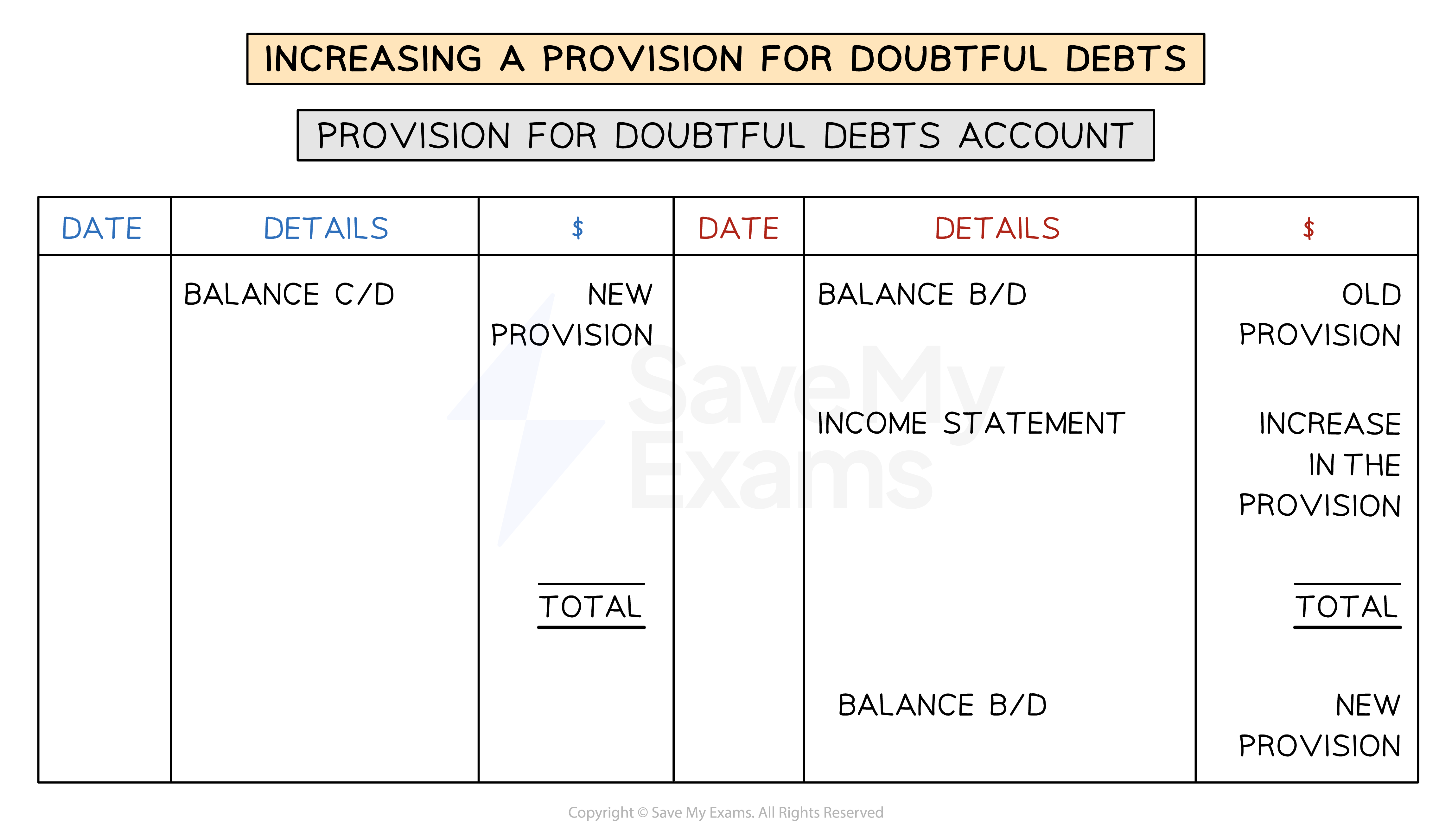
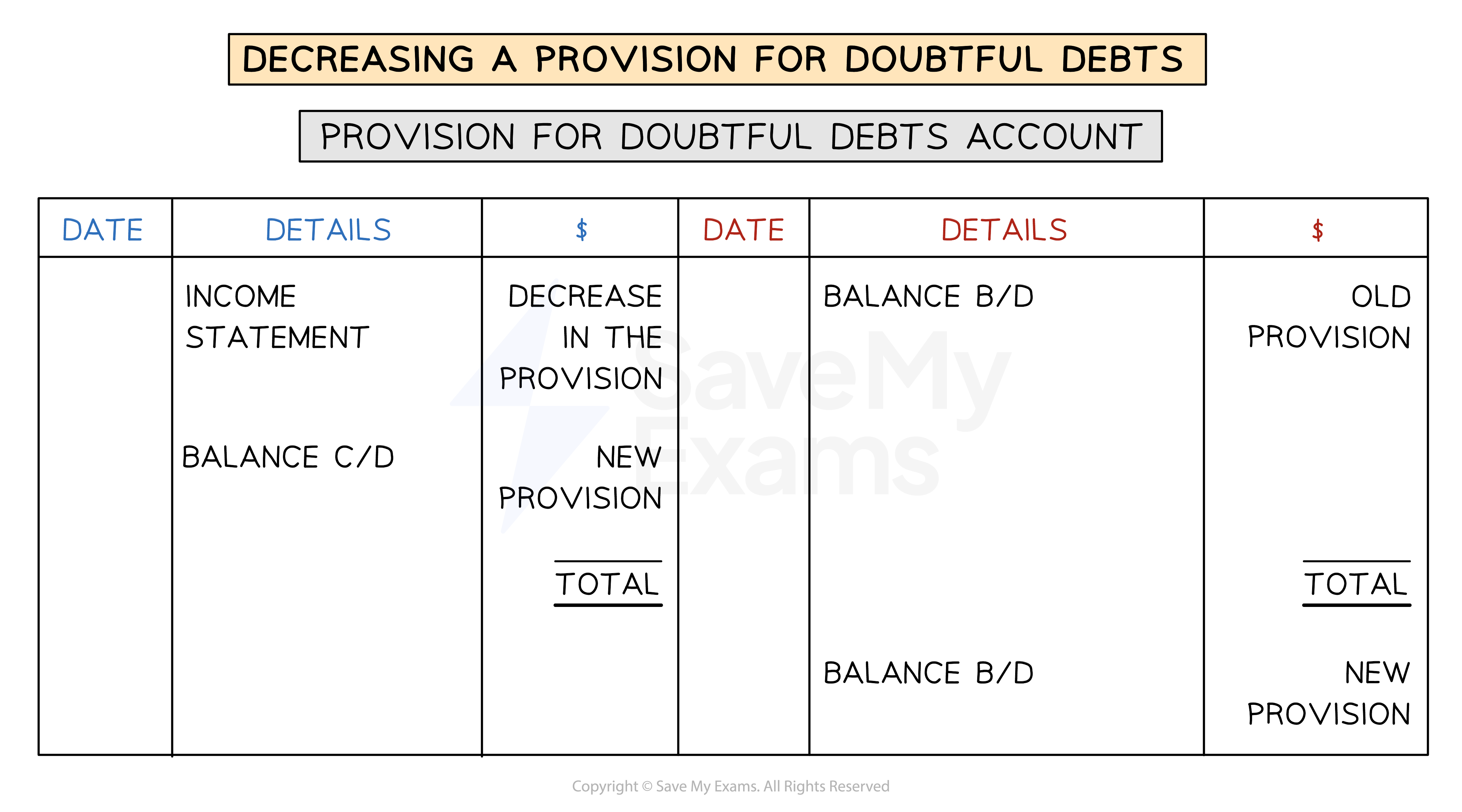
At the end of the financial period
Calculate the new provision for doubtful debts
This will be the opening balance of the provision for doubtful debts account for the next financial period
Enter it on the credit side
Enter the corresponding closing balance on the debit side of the provision for doubtful debts account for the current financial period
Calculate the difference and enter it on the appropriate side to make the account balance
This value will be transferred to the income statement
If the provision for doubtful debts increases:
The difference will be on the credit side
This will be debited to the income statement as an expense
If the provision for doubtful debts decreases:
The difference will be on the debit side
This will be credited to the income statement as an income
How does a provision for doubtful debts affect the financial statements?
At the end of a financial period, the balance from the provision for doubtful debts account appears on the statement of financial position
It is listed under trade receivables
The balance is subtracted from the balance for trade receivables
The difference in the provision between the start of the year and the end of the year appears on the income statement
If the provision has increased, it appears with the other expenses
If the provision has decreased, it appears with the other income