Bacterial Cells
Bacteria Cellsvideo
Bacteria Cells
Bacteria, which have a wide variety of shapes and sizes, all share the following biological characteristics:
They are microscopic single-celled organisms
Possess a cell wall (made of peptidoglycan, not cellulose), cell membrane, cytoplasm and ribosomes
Lack a nucleus but contain a circular chromosome of DNA that floats in the cytoplasm
Plasmids are sometimes present - these are small rings of DNA (also floating in the cytoplasm) that contain extra genes to those found in the chromosomal DNA
They lack mitochondria, chloroplasts and other membrane-bound organelles found in animal and plant cells
Some bacteria also have a flagellum (singular) or several flagella (plural). These are long, thin, whip-like tails attached to bacteria that allow them to move
Examples of bacteria include:
Lactobacillus (a rod-shaped bacterium used in the production of yoghurt from milk)
Pneumococcus (a spherical bacterium that acts as the pathogen causing pneumonia)
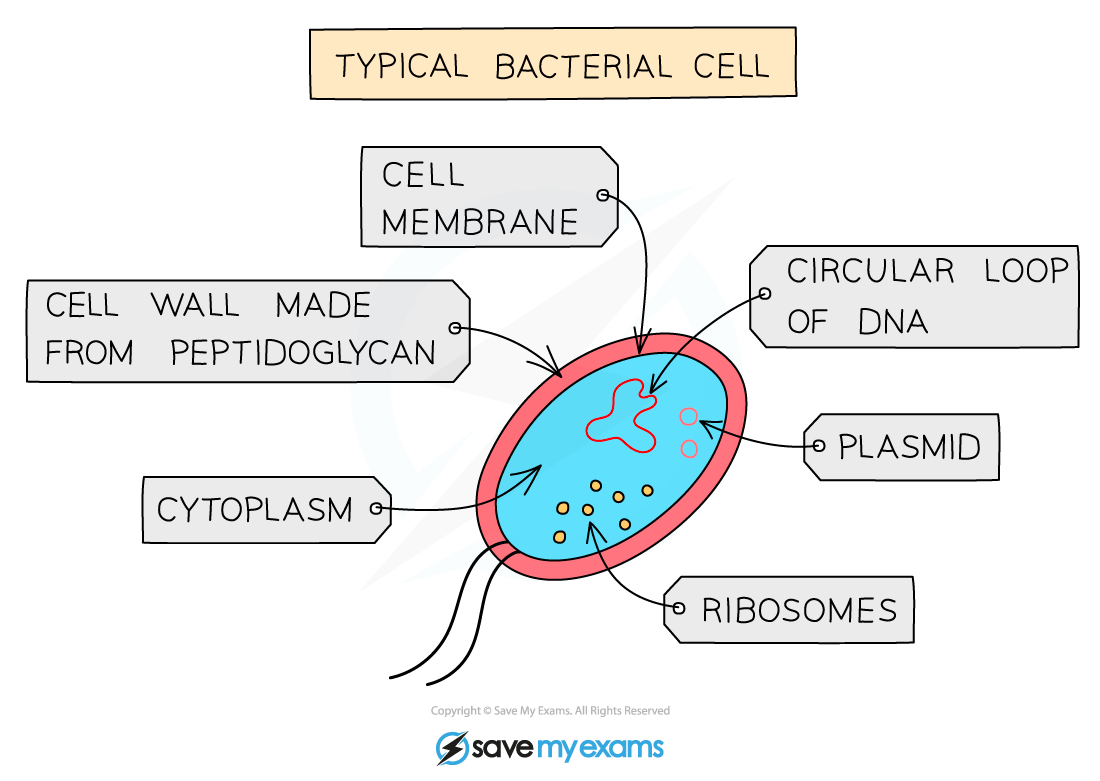
A typical bacterial cell