Structure & Function of Blood Vessels
How Structure of Blood Vessels is Adapted to their Function
How Structure of Blood Vessels is Adapted to their Function
Arteries
Have thick, muscular walls containing elastic fibres to withstand the high pressure of blood and maintain the blood pressure as it recoils after the blood has passed through
Have a narrow lumen to maintain high pressure
Veins
Have a wide lumen as blood pressure is low
Contain valves to prevent the backflow of blood as it is under low pressure
Capillaries
Have walls that are one cell thick so that substances can easily diffuse in and out of them
Have ‘leaky’ walls so that blood plasma can leak out and form tissue fluid surrounding the neighbouring cells
Are narrow so that red blood cells have to touch the sides as they pass through in single-fil
This reduces the diffusion distance for gas exchange as the cells bind/release oxygen molecules
Adaptations of Blood Vessels Diagram
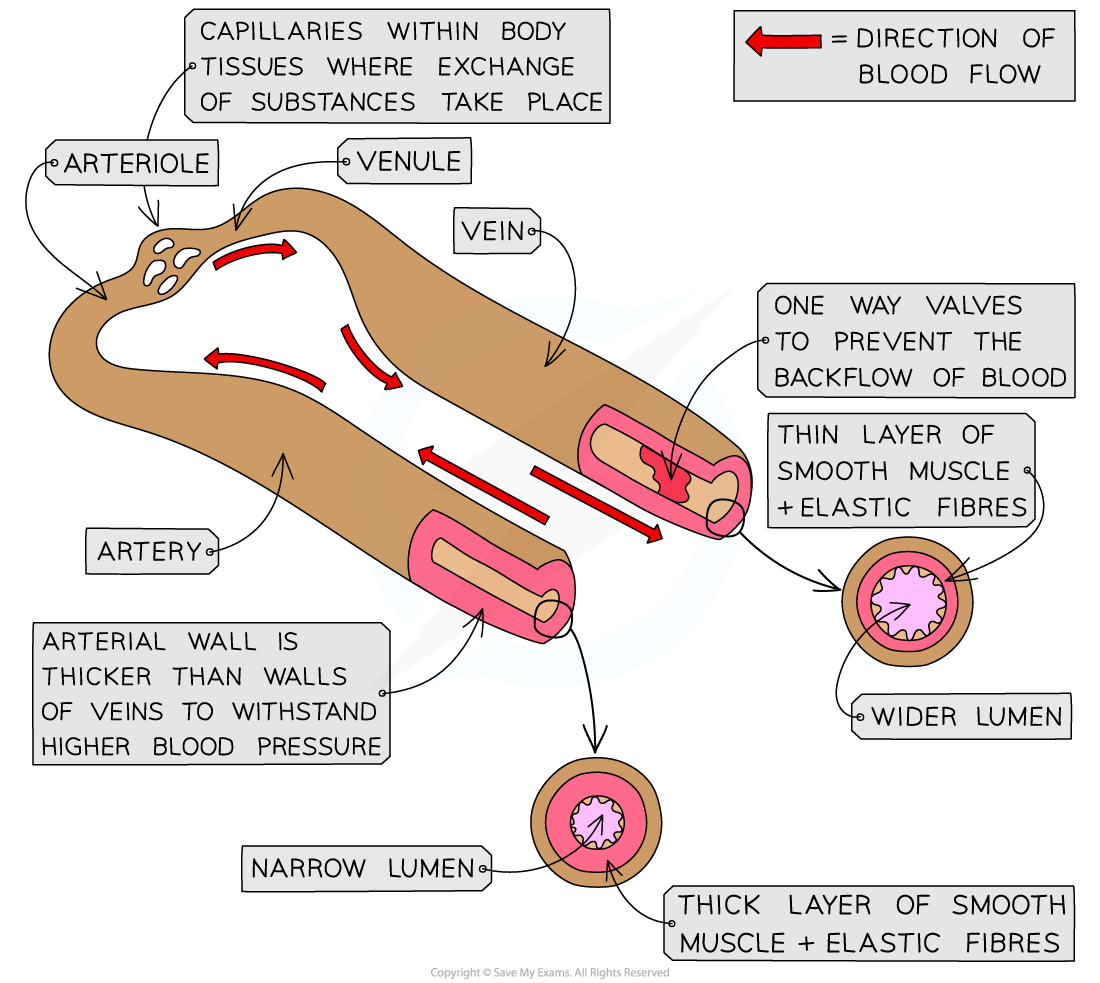
Adaptations of blood vessels
Arterioles and venules
As arteries divide more as they get further away from the heart, they get narrower
The narrow vessels that connect arteries to capillaries are called arterioles
Veins also get narrower the further away they are from the heart
The narrow vessels that connect capillaries to veins are called venules
The Blood Vessel Network Diagram
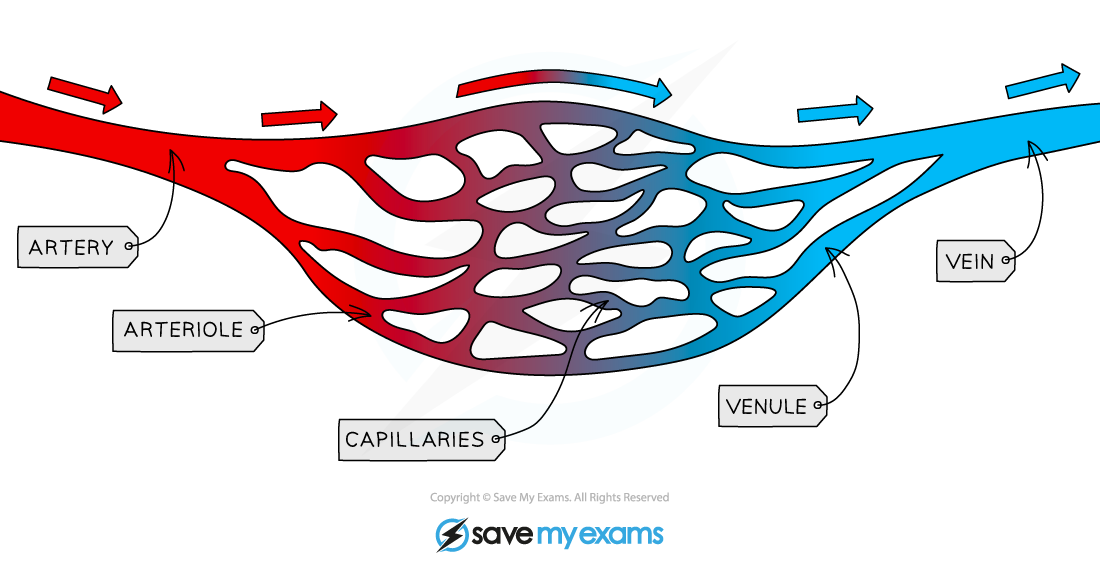
The blood vessel network