Tissue Fluid
Tissue Fluid
Tissue Fluid
Plasma is a straw-coloured liquid that constitutes around 55% of the blood
Plasma is largely composed of water (95%) and because water is a good solvent, many substances can dissolve in it, allowing them to be transported around the body
As blood passes through capillaries, some plasma is forced out (under pressure) through gaps in the walls of the capillary to surround the cells of the body
This results in the formation of tissue fluid
The composition of plasma and tissue fluid are virtually the same, although tissue fluid contains far fewer proteins
Proteins are too large to fit through gaps in the capillary walls and so remain in the blood
Tissue fluid bathes almost all the cells of the body outside of the circulatory system
The exchange of substances between cells and the blood occurs via the tissue fluid
For example, carbon dioxide produced in aerobic respiration will leave a cell, dissolve into the tissue fluid surrounding it, and then diffuse into the capillary
This is how all substances are exchanged between cells and their surroundings in large, multicellular organisms
Formation of Tissue Fluid Diagram
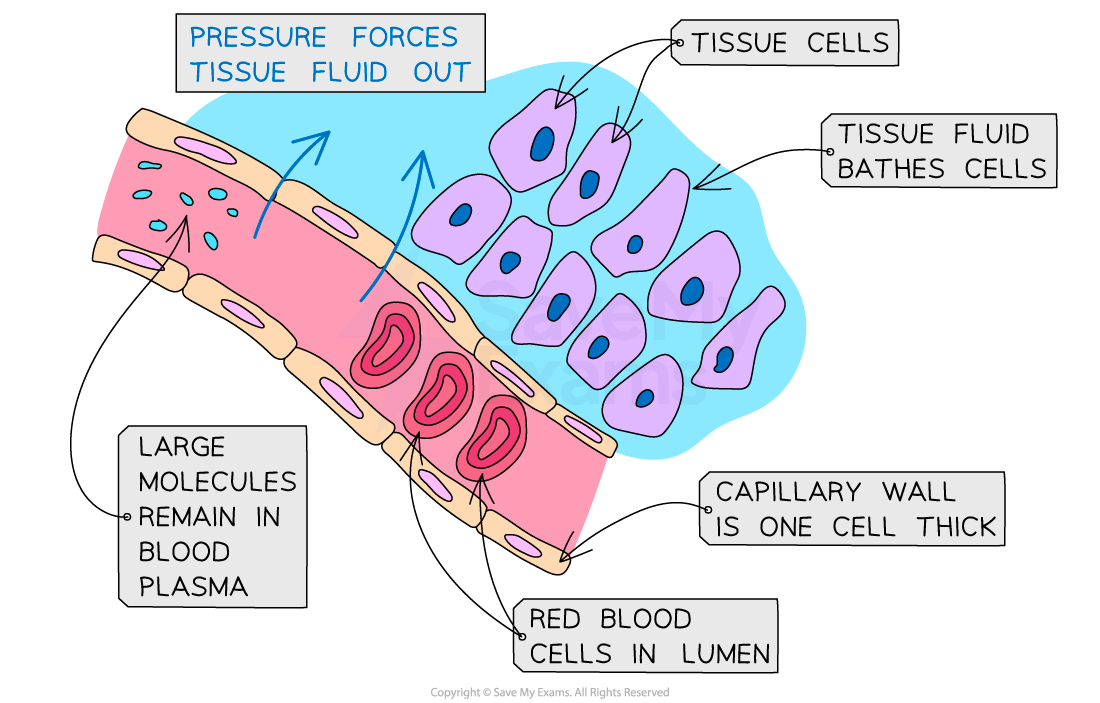
Formation of tissue fluid