The Synapse
Structure of a Synapse
Structure of a Synapse
The junction between two neurones is known as a synapse
A synapse consists of:
The synaptic cleft, also known as the synaptic gap
The presynaptic knob; here vesicles are found which contain neurotransmitter molecules
The postsynaptic membrane, which contains receptor proteins
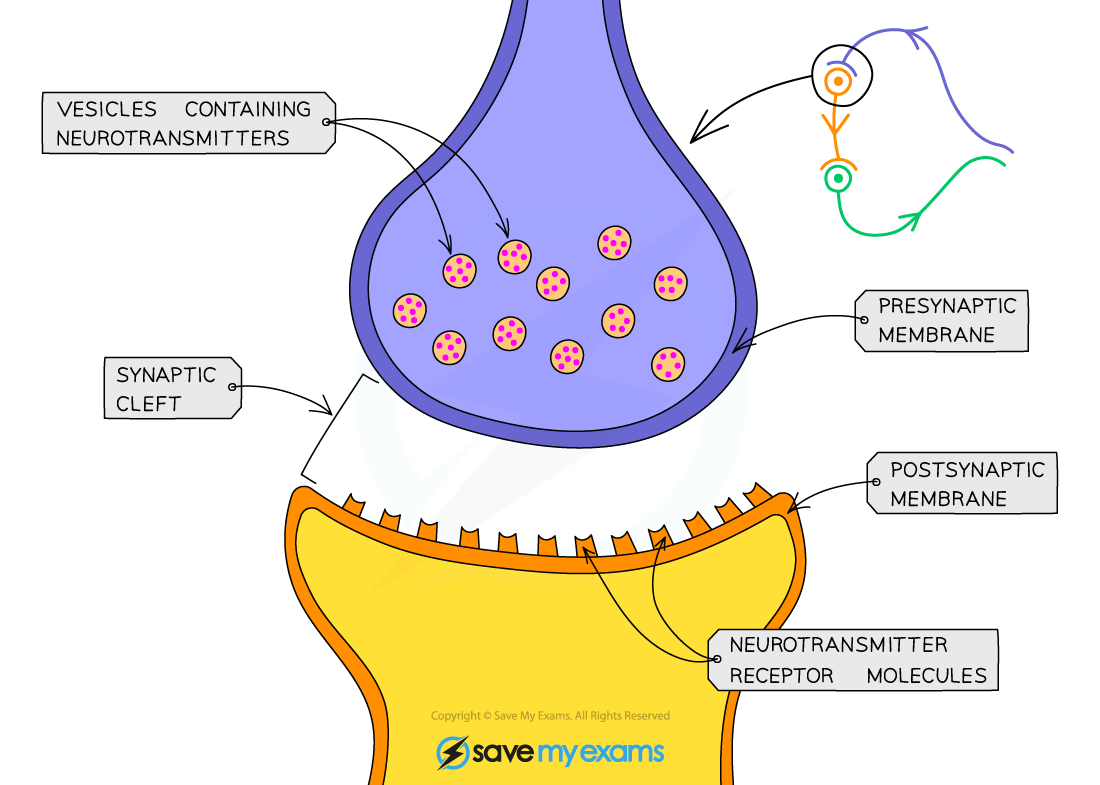
The junctions between neurones are known as synapses
Synapses & Neurotransmitters
Synapses & Neurotransmitters
Neurones never touch each other
The junctions (gaps) in between neurones are called synapses
The electrical impulse travels along the first axon
This triggers the nerve-ending of the presynaptic neurone to release chemical messengers called neurotransmitters from vesicles which fuse with the presynaptic membrane
The neurotransmitters diffuse across the synaptic gap (or cleft) and bind with receptor molecules on the membrane of the second neurone (known as the postsynaptic membrane)
The vesicles stay in the presynaptic membrane
This stimulates the second neurone to generate an electrical impulse that travels down the second axon
The neurotransmitters are then destroyed to prevent continued stimulation of the second neurone which would cause repeated impulses to be sent
Synapses ensure that impulses only travel in one direction, avoiding confusion within the nervous system if impulses were travelling in both directions
As this is the only part of the nervous system where messages are chemical as opposed to electrical, it is the only place where drugs can act to affect the nervous system - e.g. this is where heroin works
Synapses and Neurotransmitters Diagram
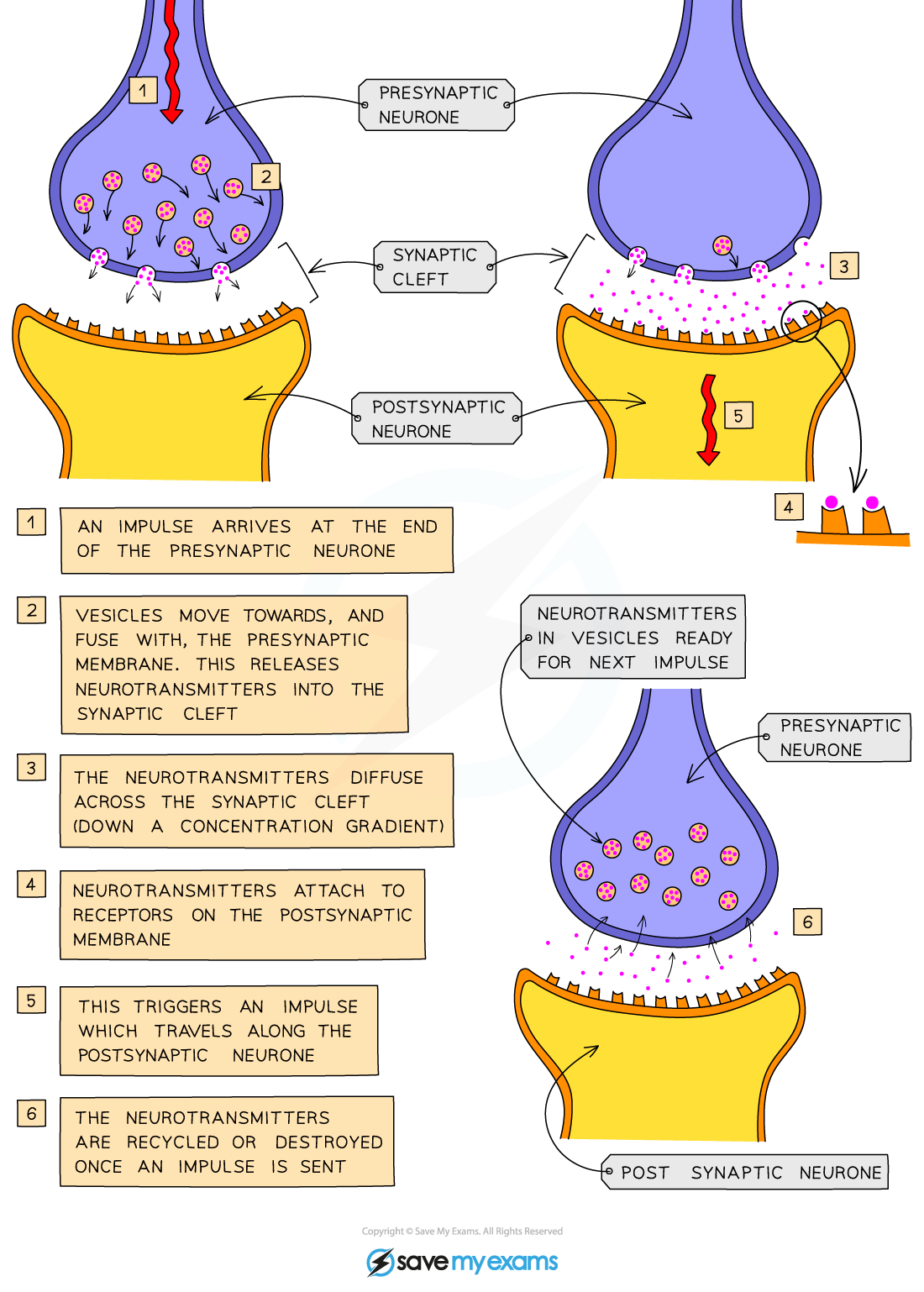
How an impulse is passed on at a synapse