Enzymes
What Are Enzymes?
What Are Enzymes?
Enzymes are biological catalysts
This is because they are:
Catalysts that speed up the rate of a chemical reaction without being changed or used up in the reaction
Made from the biological molecule protein
They are necessary to all living organisms as they maintain reaction speeds of all metabolic reactions (all the reactions that keep an organism alive) at a rate that can sustain life
For example, if we did not produce digestive enzymes, it would take around 2 - 3 weeks to digest one meal; with enzymes, it takes around 4 hours
How Do Enzymes Work?
How Do Enzymes Work?
The enzyme is made from protein that is folded into a very specific 3D shape
Part of this 3D shape is a section of the enzyme called the active site
The active site is the section of the enzyme that binds to the substrate (the reactant)
When the enzyme binds to the substrate it is called the enzyme-substrate complex
The formation of the enzyme-substrate complex diagram
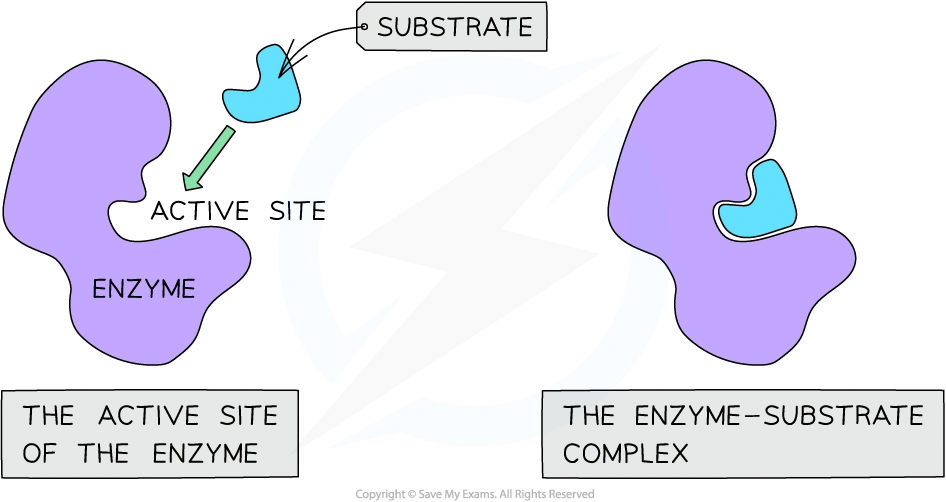
The enzyme-substrate complex forms when the substrate binds to the active site of the enzyme
The product is made from the substrate(s) and is released
After the product is released the enzyme is free to bind to a new substrate and repeat the reaction again
Diagram showing how enzymes work
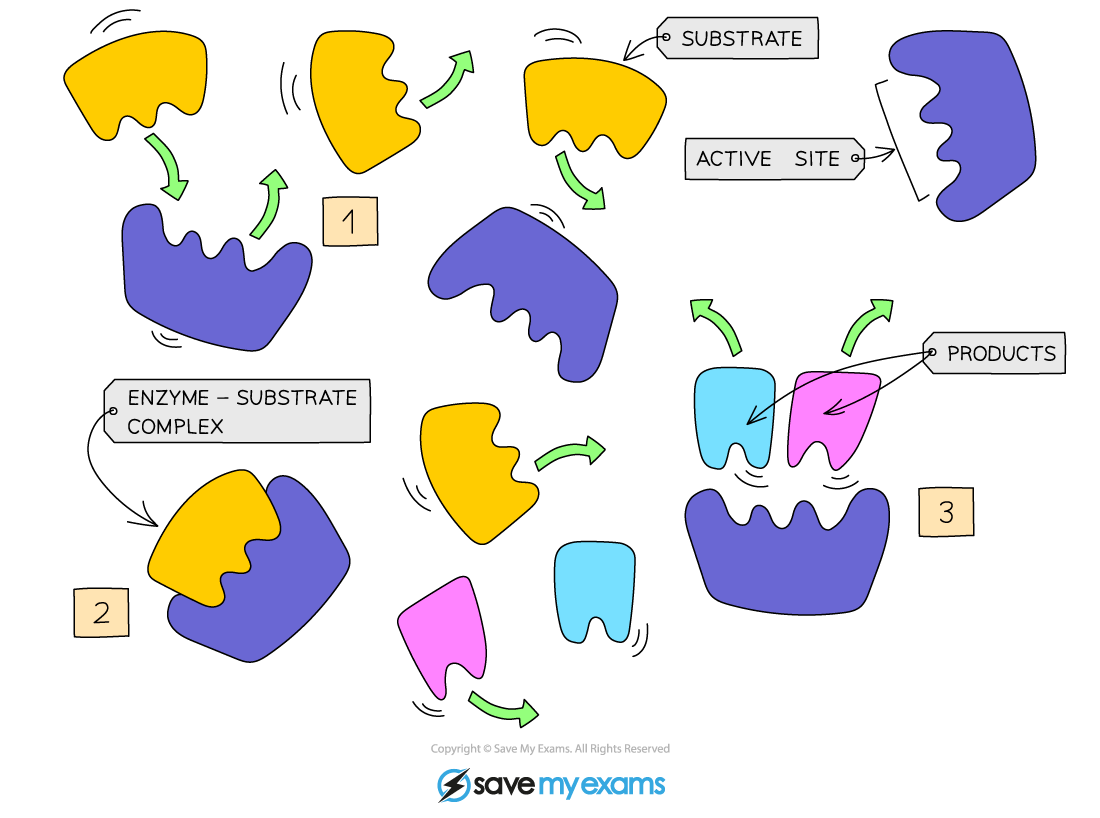
Enzymes act as biological catalysts