Enzyme Investigations
Measuring Reactants & Productsvideo
Measuring Reactants & Products
The progress of enzyme-catalysed reactions can be investigated by:
Measuring the rate of formation of a product
Measuring the rate of disappearance of a substrate
For example, the enzyme catalase releases oxygen gas as a product as it breaks down the substrate hydrogen peroxide
The oxygen gas can be collected and the volume is measured using a measuring cylinder or a gas syringe
Measuring the rate of product formation of an enzyme-catalysed reaction diagram
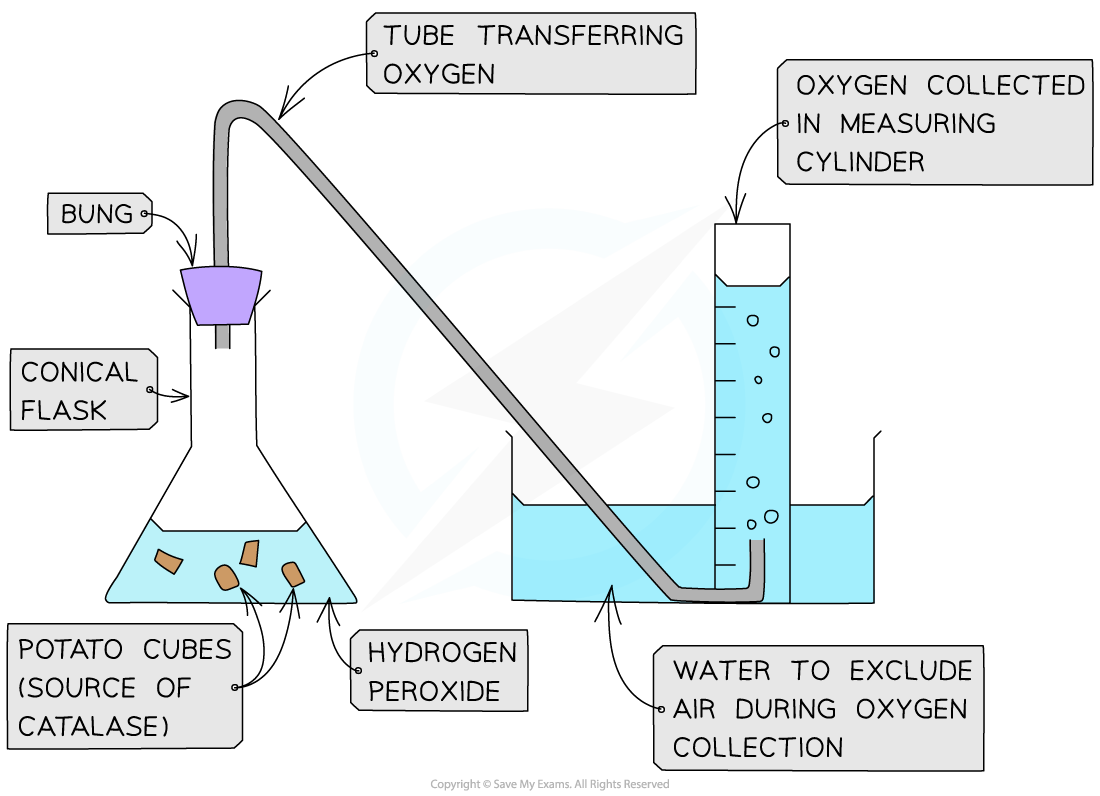
The rate of oxygen production is measured in order to determine the rate of the catalase enzyme activity
Investigating the Effect of Temperature on Amylase
Investigating the Effect of Temperature on Amylase
Starch solution is heated to a set temperature
Iodine is added to wells of a spotting tile
Amylase is added to the starch solution and mixed well
Every minute, droplets of solution are added to a new well of iodine solution
This is continued until the iodine stops turning blue-black (this means there is no more starch left in the solution as the amylase has broken it all down)
Time taken for the reaction to be completed is recorded
Experiment is repeated at different temperatures
The quicker the reaction is completed, the faster the enzyme is working
Investigating the effect of temperature on amylase diagram
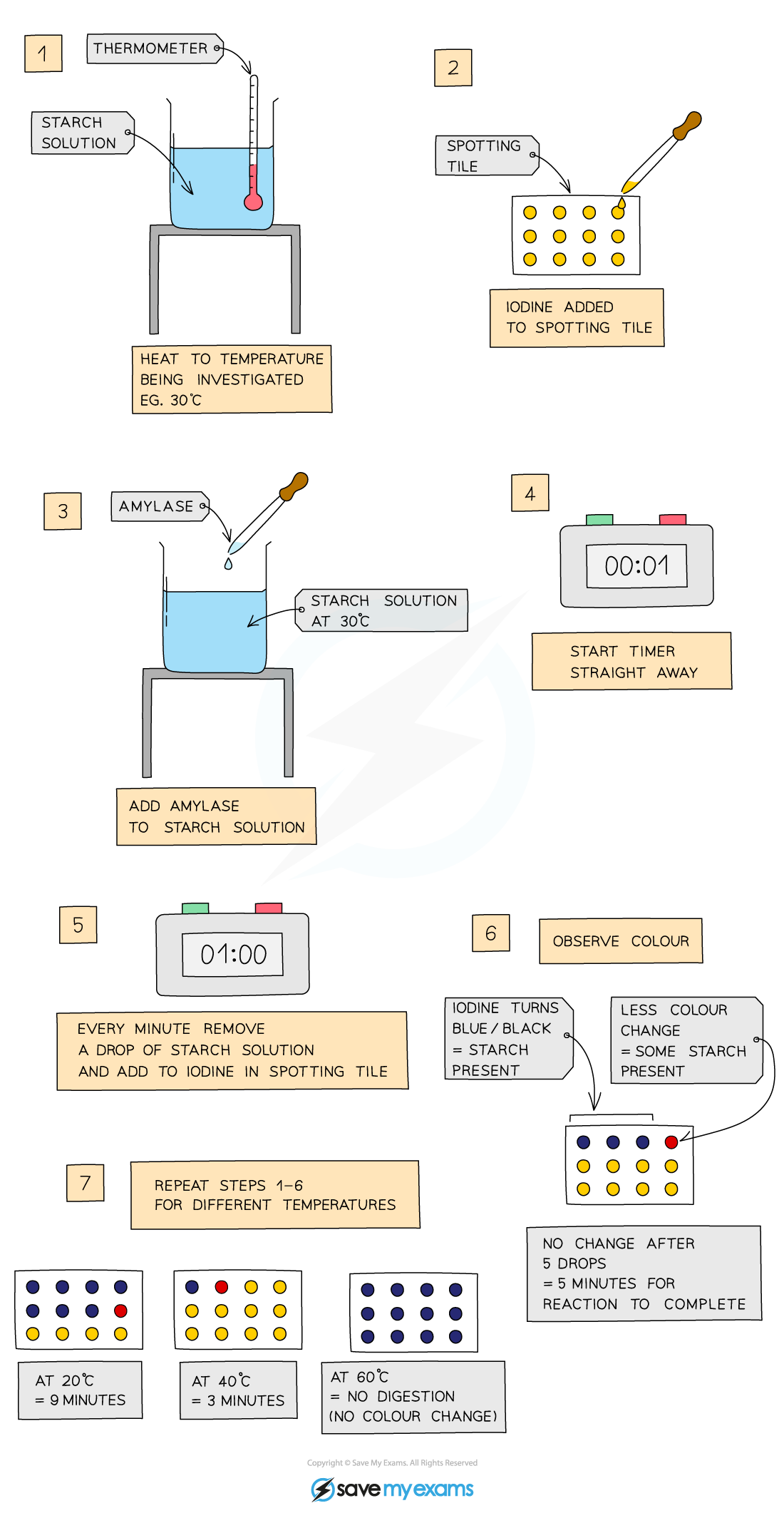
The rate of amylase activity can be determined by how quickly the wells of iodine stop turning blue-black when the reaction solution is added
Investigating the Effect of pH on Amylase
Investigating the Effect of pH on Amylase
Place single drops of iodine solution in rows on the tile
Label a test tube with the pH to be tested
Use the syringe to place 2cm3 of amylase in the test tube
Add 1cm3 of buffer solution to the test tube using a syringe
Use another test tube to add 2cm3 of starch solution to the amylase and buffer solution, start the stopwatch whilst mixing using a pipette
After 10 seconds, use a pipette to place one drop of mixture on the first drop of iodine, which should turn blue-black
Wait another 10 seconds and place another drop of mixture on the second drop of iodine
Repeat every 10 seconds until iodine solution remains orange-brown
Repeat experiment at different pH values - the less time the iodine solution takes to remain orange-brown, the quicker all the starch has been digested and so the better the enzyme works at that pH
Investigating the effect of pH on amylase diagram
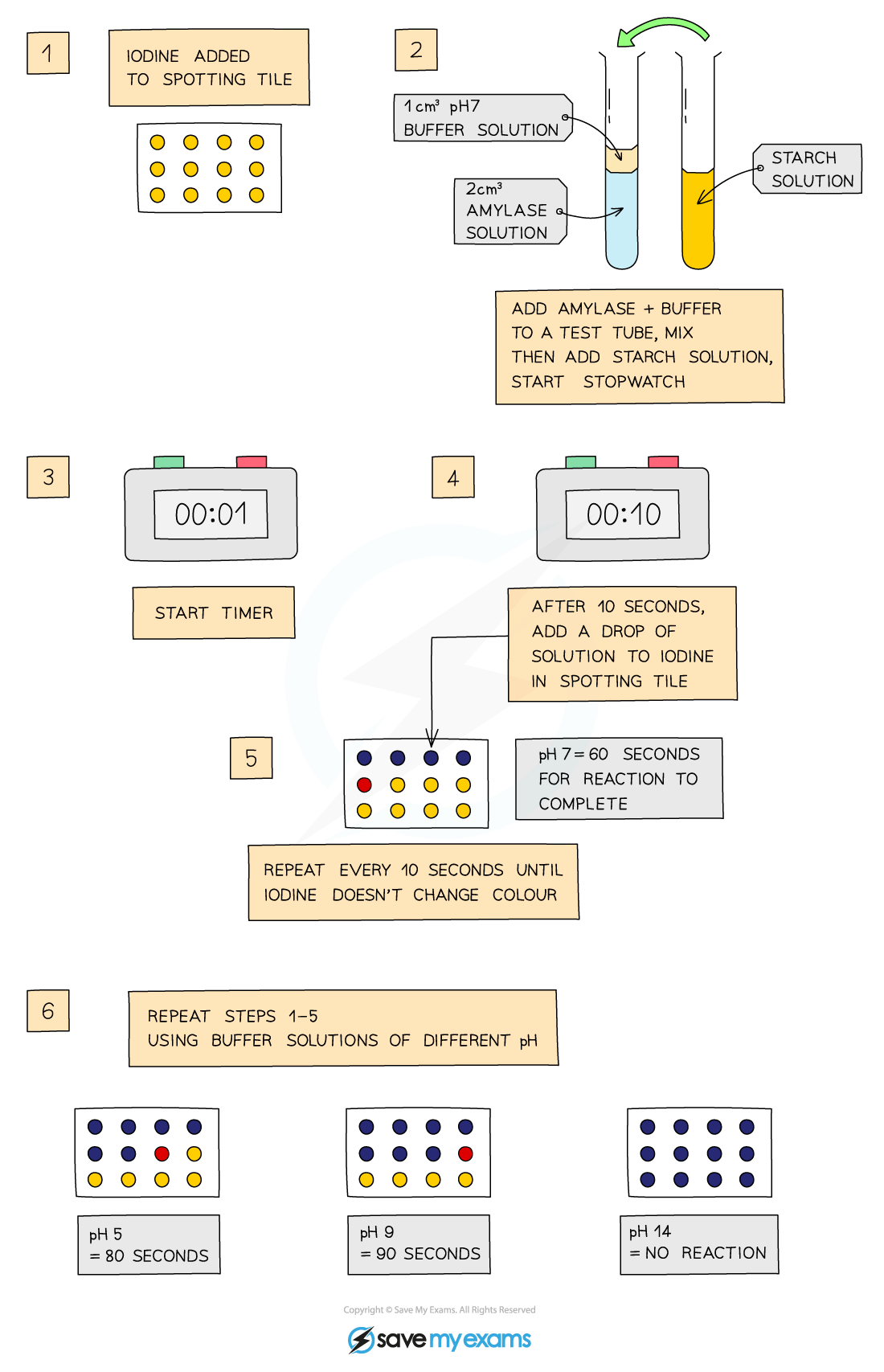
The rate of amylase activity can be determined by how quickly the wells of iodine stop turning blue-black when the reaction solution is added