The Periodic Table
The Periodic Table
The Periodic Table
There are over 100 chemical elements which have been isolated and identified
Each element has one proton more than the element preceding it
This is done so that elements end up in columns with other elements which have similar properties
Elements are arranged on the periodic table in order of increasing atomic number
The table is arranged in vertical columns called groups and in rows called periods
Period: These are the horizontal rows that show the number of shells of electrons an atom has and are numbered from 1 - 7
E.g. elements in period 2 have two electron shells, elements in period 3 have three electron shells
Group: These are the vertical columns that show how many outer electrons (also known as valency electrons) each atom has and are numbered from I – VII, with a final group called Group 0 (instead of Group VIII)
E.g. Group IV elements have atoms with 4 electrons in the outermost shell, Group VI elements have atoms with 6 electrons in the outermost shell and so on
The group number can help determine the charge that metal and non-metal ions form
For metals, the group number corresponds to the number of electrons it will lose to achieve a full outer shell and the charge of the metal ion
E.g. sodium is in Group I, it will lose 1 electron and form an ion with a 1+ charge
Magnesium is in Group II, it will lose 2 electrons and form an ion with a 2+ charge
For non-metals in Group VII and VI, they will gain 1 and 2 electrons respectively to gain a full outer shell
E.g. non-metals in Group VII gain 1 electron to form ions with a 1- charge
Non-metals in Group VI gain 2 electrons to form ions with a 2- charge
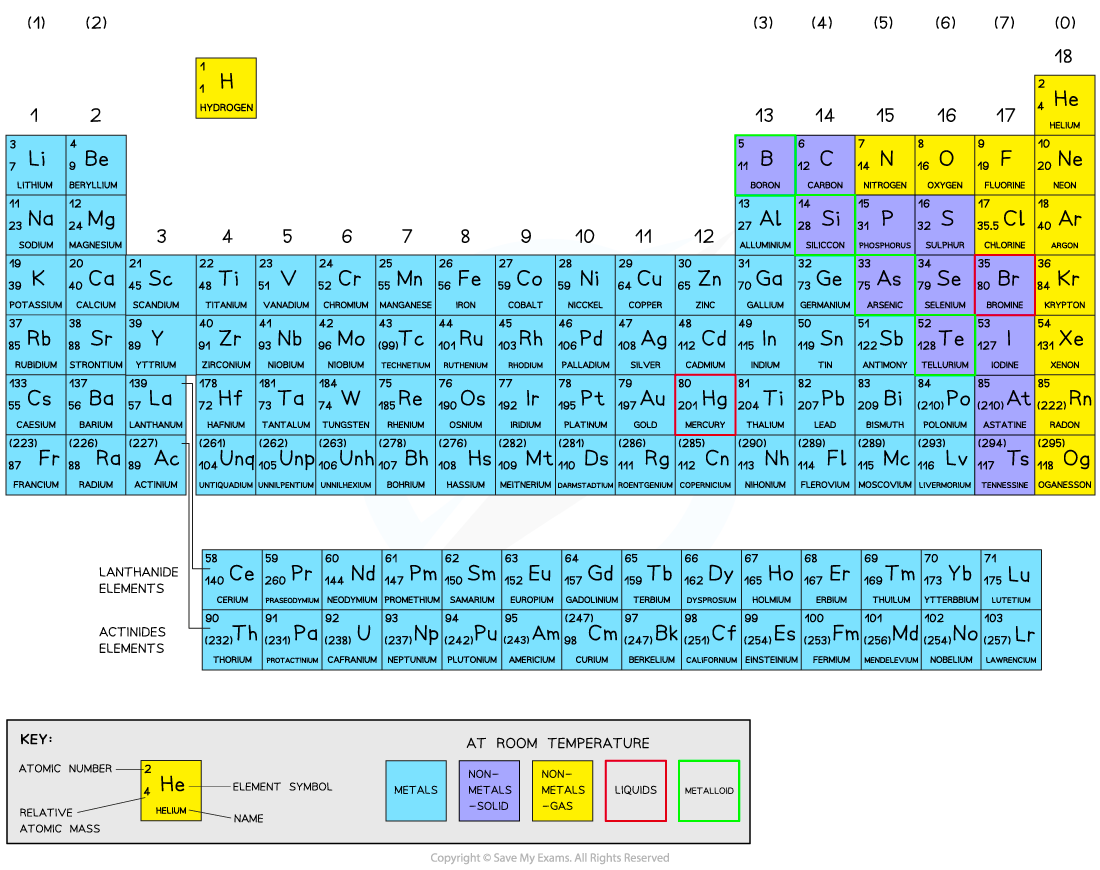
All elements are arranged in the order of increasing atomic number from left to right
Valency
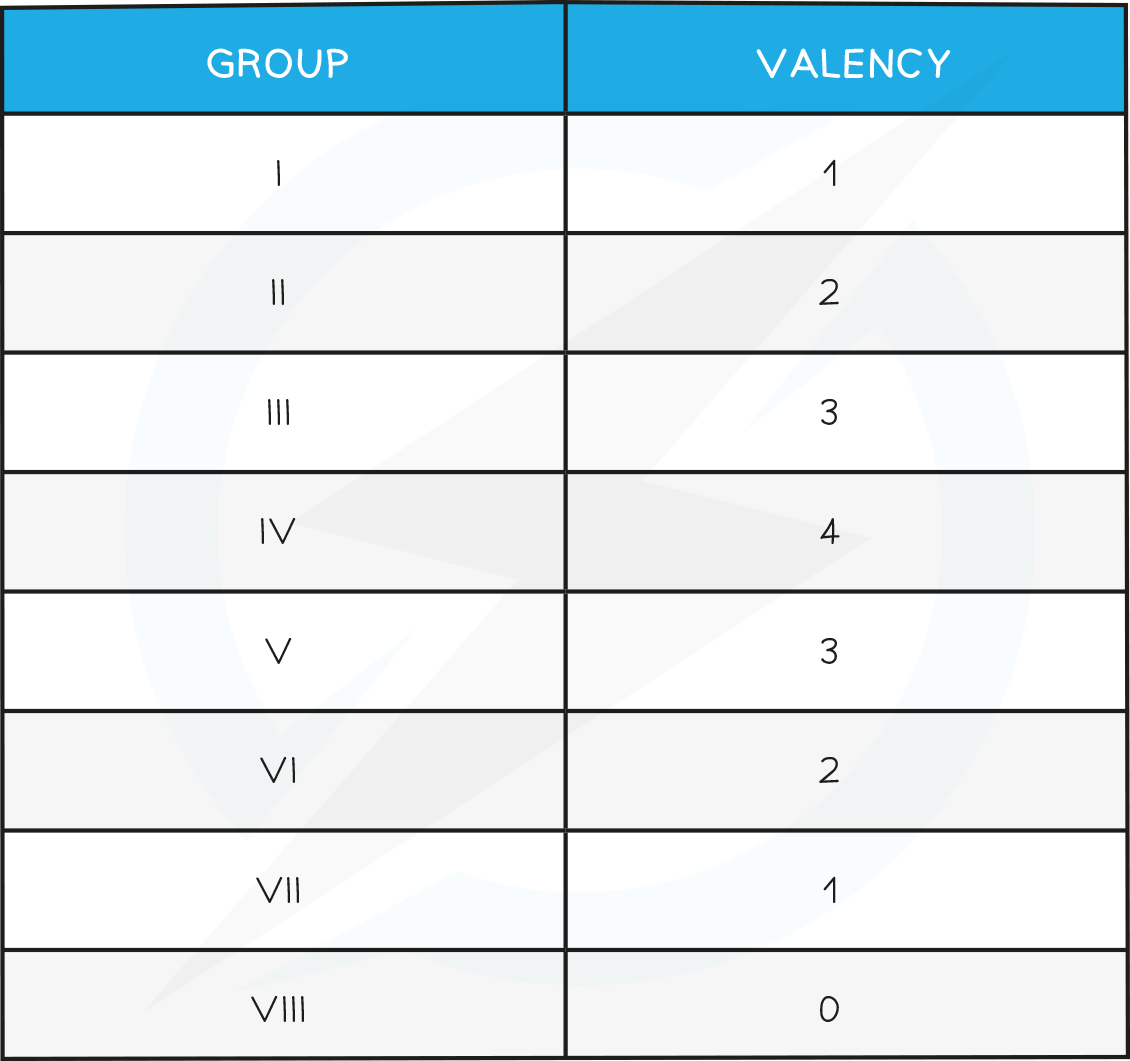
Valency (or combining power) tells you how many bonds an atom can make with another atom or how many electrons its atoms lose, gain or share, to form a compound
E.g. carbon has a valancy of 4 as it is in Group IV so a single carbon atom can share 4 electrons to make 4 single bonds or 2 double bonds
The following valencies apply to elements in each group: