Costline Formation
Specification link
This page covers section 2.2.2 of the CIE O Level specification.
2.2.2 - The formation and characteristics of discordant and concordant coastlines.
The influence of geological structure
The influence of geological structure
Geological structure influences the shape of the coastline
A coastline made up of softer rocks such as sands and clays will be more easily eroded
Coastlines of more resistant, harder rock will take longer to erode and produce rugged landscapes
Joints and faults expose rock to erosion and weathering
The differences between hard and soft rocks will also impact the shape and characteristics of cliffs
The Effects of Rock Type on the Coastline
| Hard Rock | Soft Rock |
|---|---|---|
Shape of cliff | High and steep | Generally lower and less steep |
Cliff face | Bare rock and rugged | Smoother; evidence of slumping |
Foot of cliff | Boulders and rocks | Few rocks; some sand and mud |
The angle of the rocks at the coastline determines the shape that the coastline will take
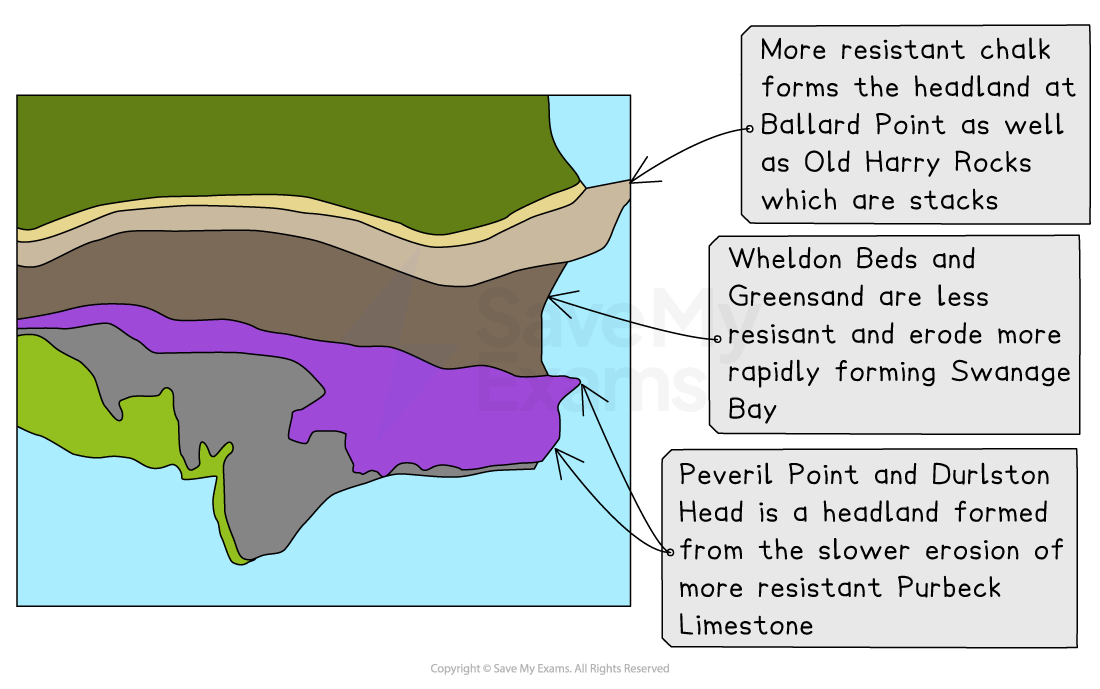
This forms a concordant or discordant coastline, such as the Dorset coastline
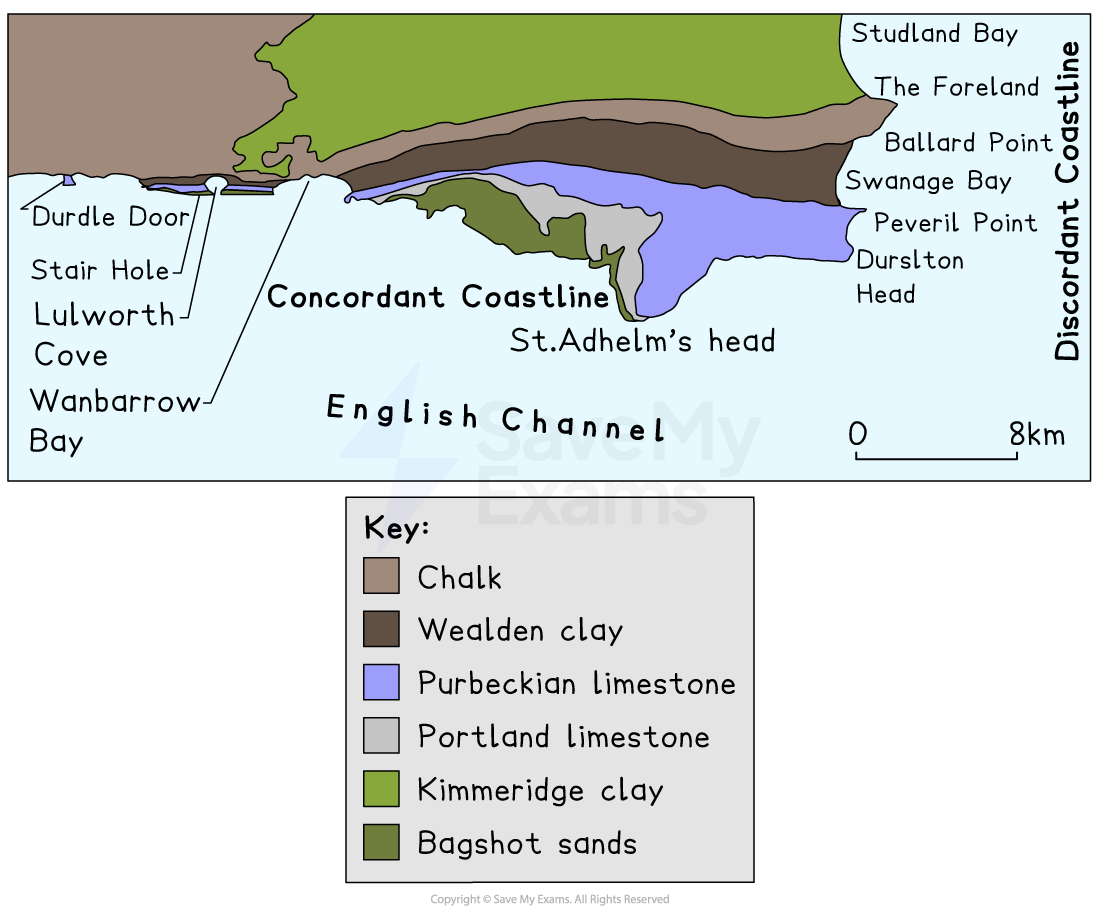
Geology, therefore, determines the coastline vertically through the height and profile of a cliff and horizontally with bays and headlands
Concordant coastlines
Concordant coastlines
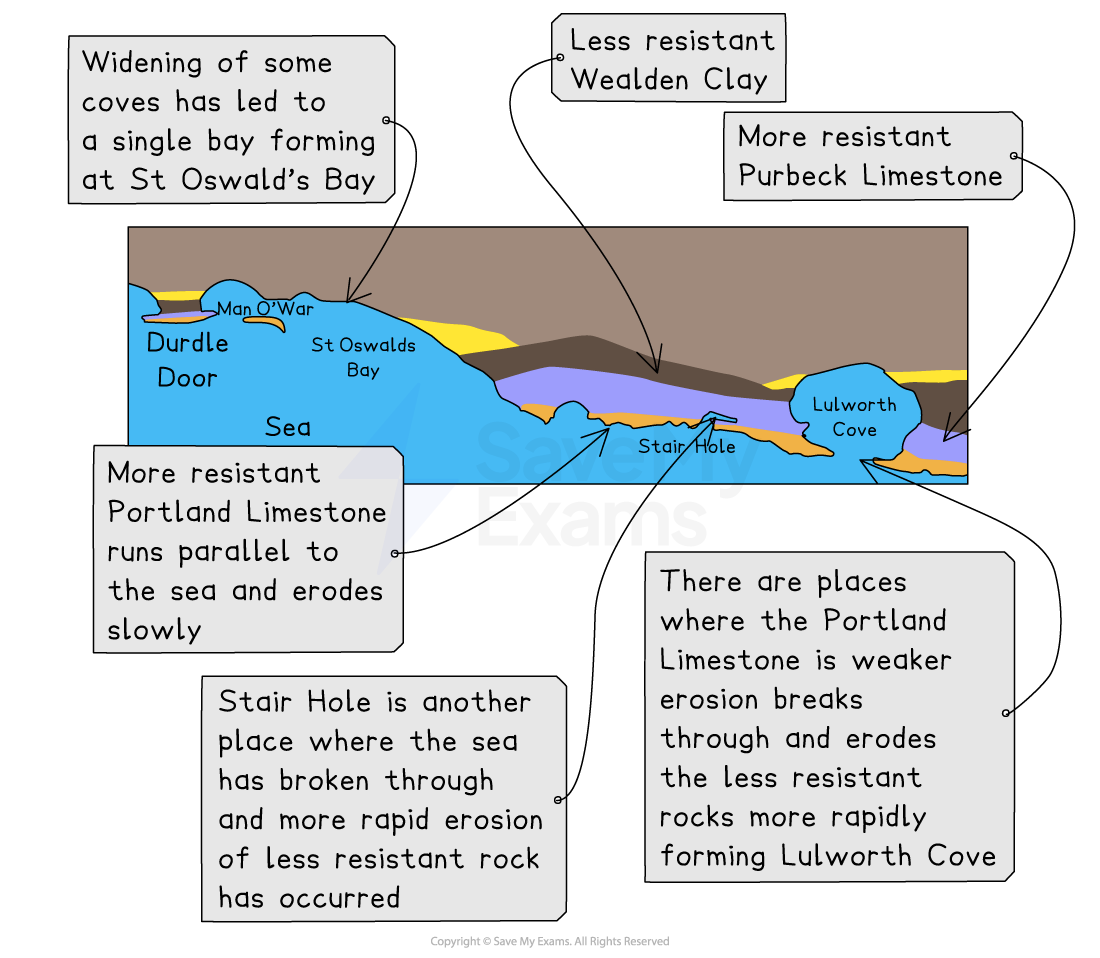
Concordant coastlines are made up of the same rock type, running parallel to the sea
This causes even rates of erosion along the coastline
These coastlines typically produce coves
An example of a concordant coastline can be found in the area around Lulworth Cove in Dorset
More resistant Portland Limestone runs parallel to the sea, with less resistant Purbeck Limestone and Wealden Clay behind it
The formation of coves has occurred where the water has broken through at weaker points in the Portland Limestone
Discordant coastlines
Discordant coastlines
Discordant coastlines have alternating bands of rock perpendicular (90°) exposed to the sea
This causes uneven rates of erosion along the coastline
These types of coastlines form headlands and bays
For example, to the east of Lulworth Cove in Dorset, the coastline runs north to south and so the rocks meet the coast at an angle, creating a discordant coastline