Peristalsis
Peristalsisvideo
Peristalsis
Peristalsis is a mechanism that helps moves food along the alimentary canal
Firstly, muscles in the walls of the oesophagus create waves of contractions which force the bolus along
Once the bolus has reached the stomach, it is churned into a less solid form, called chyme, which continues on to the small intestine
Peristalsis is controlled by circular and longitudinal muscles
Circular muscles contract to reduce the diameter of the lumen of the oesophagus or small intestine
Longitudinal muscles contract to reduce the length of that section the oesophagus or the small intestine
Mucus is produced to continually lubricate the food mass and reduce friction
Dietary fibre provides the roughage required for the muscles to push against during peristalsis
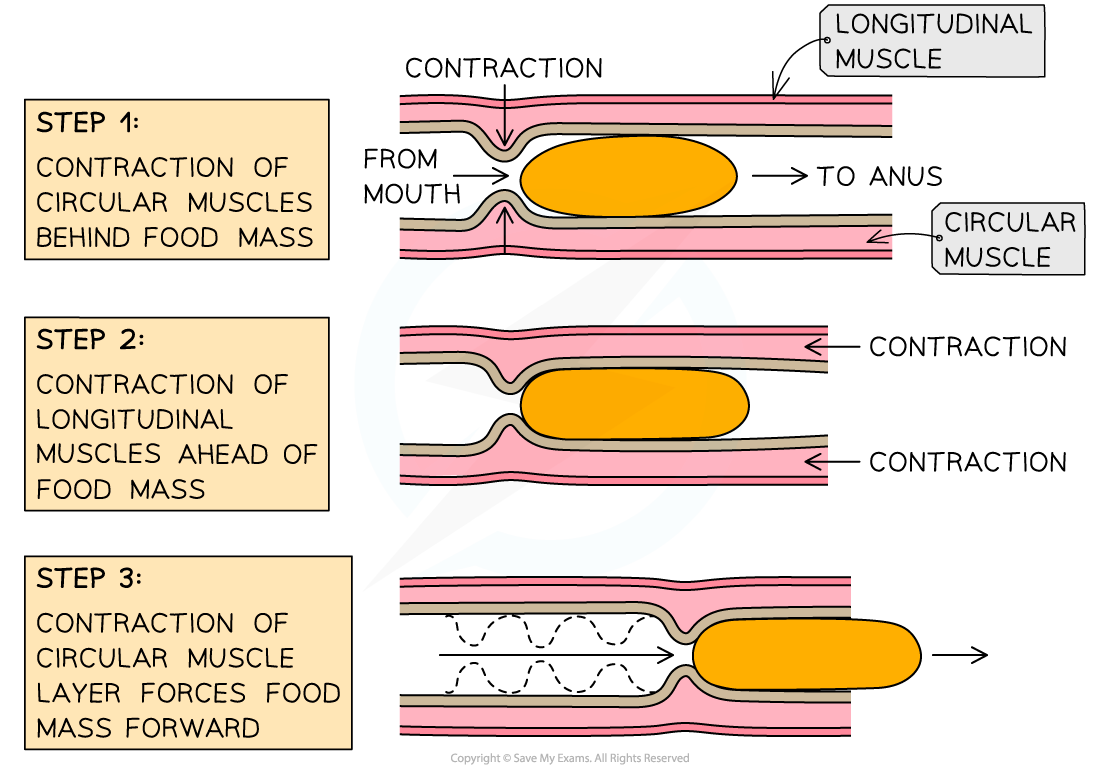
Muscles in the alimentary canal contract rhythmically to move the partially digested food along in a wave-like action