Adaptations of the Small Intestine
Adaptations of the Small Intestine
Adaptations of the Small Intestine
The ileum is adapted for absorption because it is very long and has a highly folded surface with millions of villi (tiny, finger-like projections)
Each cell that forms part of a villus has folds in its cell membrane, called microvilli
These adaptations massively increase the surface area of the ileum, allowing absorption to take place faster and more efficiently
Adaptations of the Small Intestine for Absorption Diagram
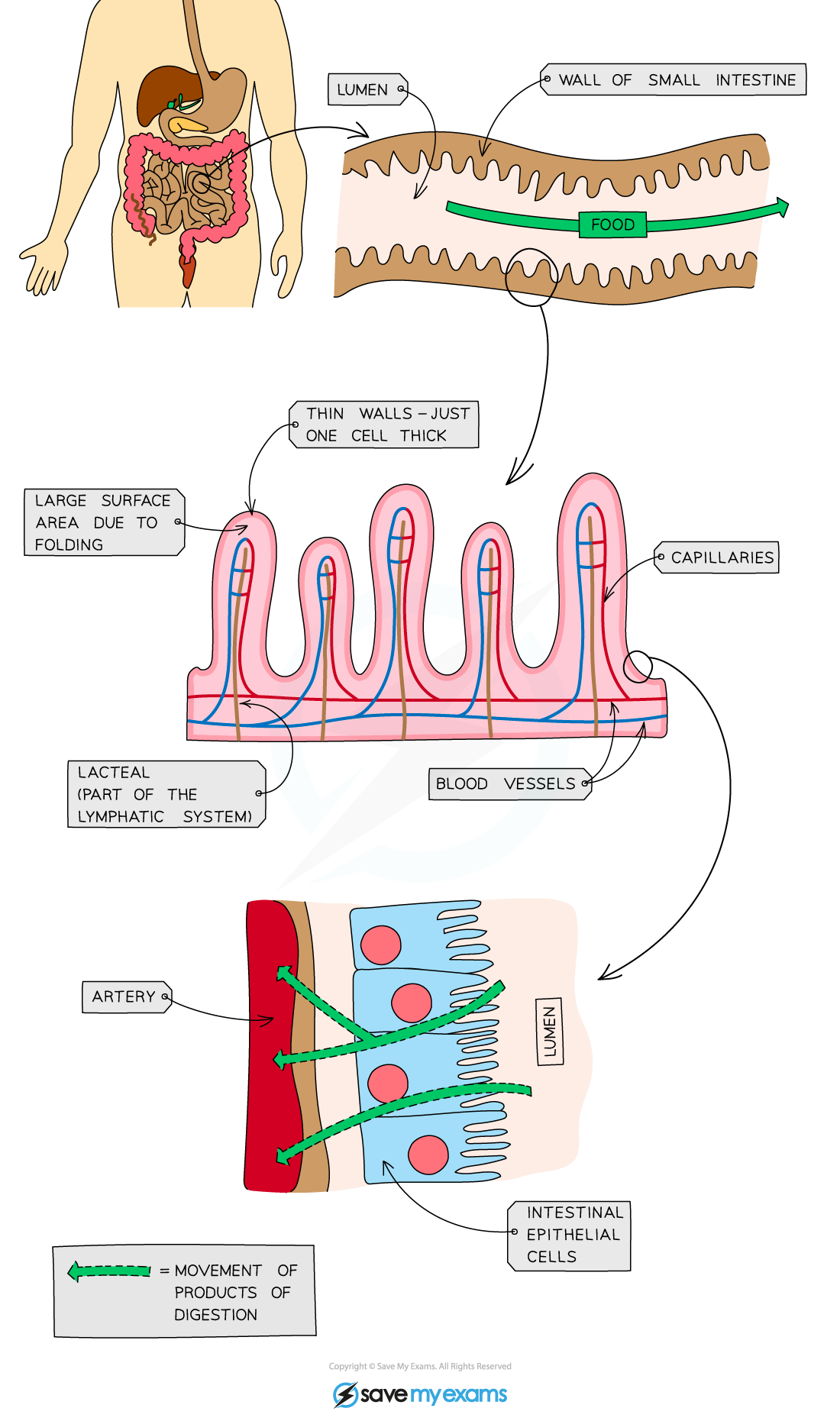
Adaptations of the small intestine
Microvilli on the surface of the villus further increase surface area for faster absorption of nutrients
The wall of the villus is one cell thick meaning that there is only a short distance for absorption to happen by diffusion and active transport
Well supplied with a network of blood capillaries that transport glucose and amino acids away from the small intestine in the blood
The Lacteal runs through the centre of the villus to transport fatty acids and glycerol away from the small intestine in the lymph
A Single Intestine Epithelial Cell Showing Microvilli Diagram
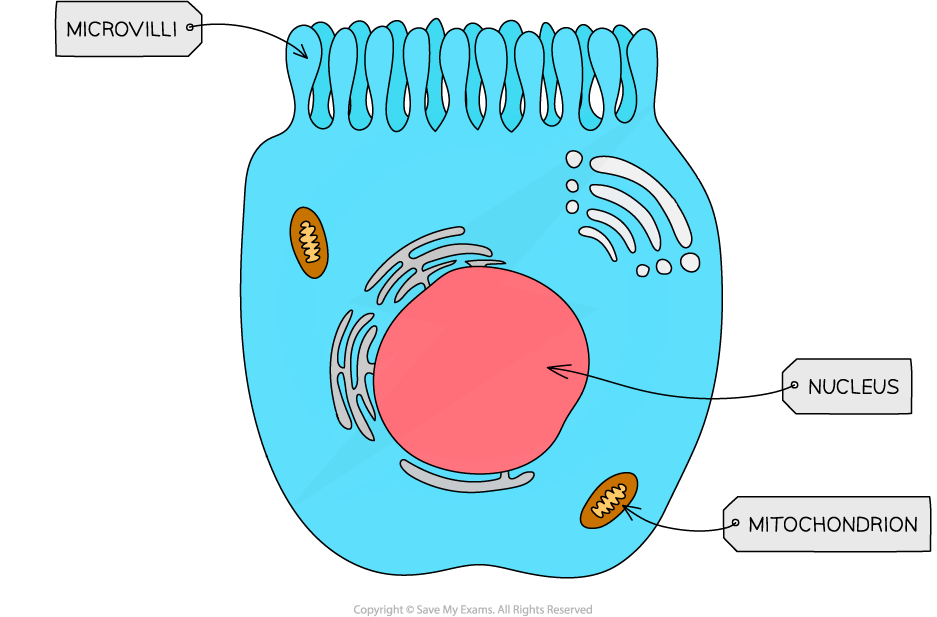
Each individual cell that lines the intestine contains folds in its membrane called microvilli
Hepatic Portal Vein
Hepatic Portal Vein
In the intestine, a lot of important food molecules, ions and water are absorbed into the blood across the intestinal wall
This blood leaves the intestines with no oxygen but with a heavy load of nutrients that are needed by the rest of the organs and tissues
A separate vein, the hepatic portal vein, carries this blood to the liver from the intestine
The liver plays an important role in processing different food molecules during assimilation
Beyond the liver, the food molecules continue their journey around the double circulation system until they reach their destination cells
The liver can also detoxify certain chemicals that might have been ingested by accident