The Importance of Profit
An introduction to profit
An introduction to profit
Most businesses have the main objective of making a profit
Profits help new businesses survive and break-even
It is a reward for risks taken by entrepreneurs and investors
For more established businesses, profits can enable long-term growth
The most simple formula for calculating profit is:
Profit can be categorised into net profit and gross profit
Gross profit is the difference between the money received from selling goods or services and the cost of making or providing them
It is calculated using the formula
Net profit is the difference between the gross profit and all of the other business expenses
It is calculated using the formula
Profit is the surplus that remains after business costs have been subtracted from the total sales revenue
If costs exceed revenue, the business makes a loss
The process of making a profit
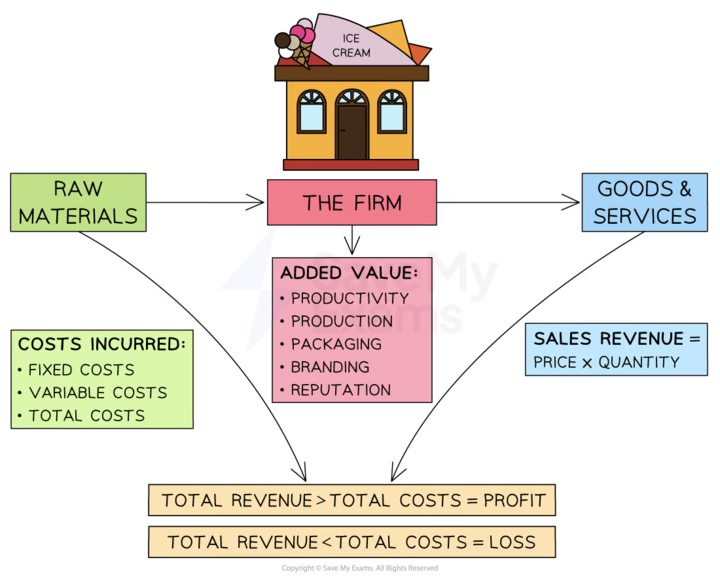
Profit can be increased using the following strategies
Increasing sales revenues
Reducing costs
A combination of increasing revenue and reducing costs
The importance of profit to private sector businesses
The importance of profit to private sector businesses
Profit is the financial reward that entrepreneurs receive in return for the risks they take
Business owners invest long hours, creativity, their own money, and effort to make a successful business
Profit is a useful source of finance
E.g. Retained profit can be used to fund the purchase of assets, pay bills and invest in research and development
Profit is an indicator of success
Increasing profitability suggests that a business is being run effectively and could be an attractive investment
Profit levels can be compared over time and with similar businesses to determine how well a business is performing
Some public sector organisations, such as public corporations, can have the objective of making a profit
Although social objectives may be more important, such as serving the local community, profits can be reinvested back into services such as education and healthcare
These profits, known as surpluses, could also be used to improve quality and service efficiency
Social enterprises also need to make a profit to survive, as they often have similar objectives to grow so that they can fund their social objectives
The difference between profit and cash
The difference between profit and cash
Profit and cash are different financial terminologies
Profit is calculated at a specific point in time
While a company may be in profit, they may lack cash, as some customers may not actually have paid them yet
Profit is the difference between revenue generated and total business costs during a specific period of time
Profit can be an important indicator of a company's financial health and long-term success, as it helps to assess the effectiveness of a company's operations
Cash is measured by taking into account the full range of money flowing in and out of a business
This includes revenue from sales, operating expenses, investments, loans, and any other cash-related transactions
Profit vs cash flow
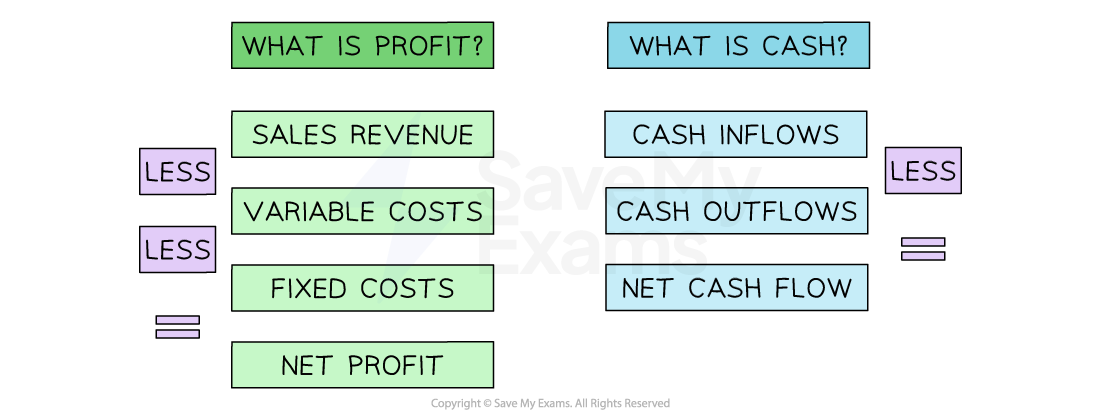
A profitable business is likely to fail quickly if it does not have sufficient cash
Cash-poor businesses will struggle to pay suppliers, employees and operating expenses
This is called insolvency
Lifestyle retailer Joules announced plans to liquidate in December 2022 as a result of cash-flow difficulties, despite making a profit of £2.6 million during the previous year