Electroplating
Electroplating
Electroplating
Electroplating is a process where the surface of one metal is coated with a layer of a different metal
The anode is made from the pure metal you want to coat your object with
The cathode is the object to be electroplated
The electrolyte is an aqueous solution of a soluble salt of the pure metal at the anode
Example: coating a strip of iron metal with tin:
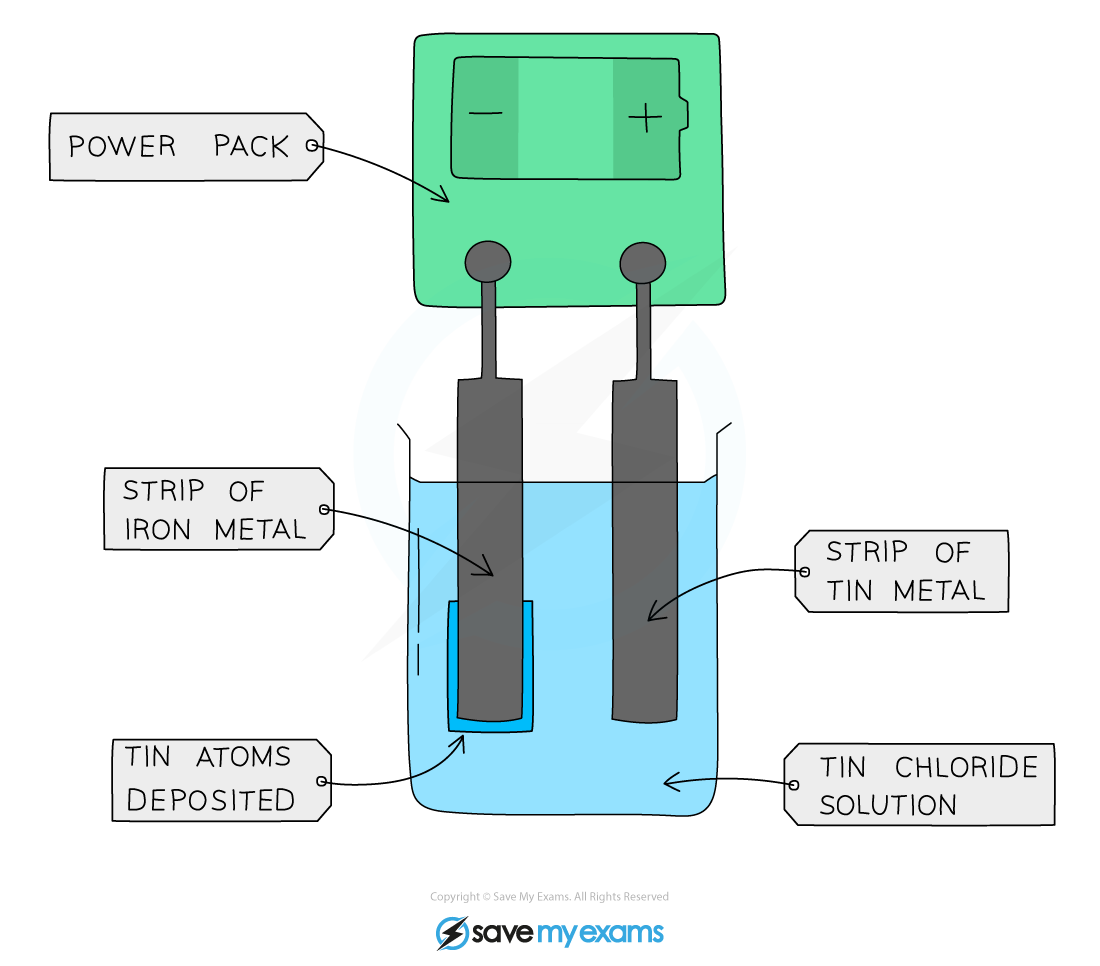
A piece of iron being electroplated with tin. The electrolyte is tin(II) chloride, a water-soluble salt of tin
At the anode: Tin atoms lose electrons to form tin ions in solution
At the cathode: Tin ions gain electrons to form tin atoms which deposit on the strip of iron metal, coating it with a layer of tin
Uses of electroplating
Electroplating is done to make metals more resistant to corrosion or damage
e.g, chromium and nickel plating
It is also done to improve the appearance of metals,
e.g. coating cutlery and jewellery with silver