Causes of Poverty
Absolute and Relative Poverty
Absolute and Relative Poverty
Poverty is a situation where a person lacks the financial resources to sustain a basic standard of living
Economists distinguish between absolute and relative poverty
Absolute poverty is a situation where individuals cannot afford to acquire the basic necessities for a healthy and safe existence
These necessities include shelter, water, nutrition, clothing and healthcare
In 2022, the World Bank defined absolute poverty as anyone who was living on less than $1.90 a day
Absolute poverty is more prevalent in developing countries than developed ones
Relative poverty is a situation where household income is a certain percentage less than the median household income in the economy
Poverty in a household is considered relative to income levels in other households
E.g. The UK defines relative poverty as households that are living with less than 60% of the median household income
In May 2022, the median UK monthly household income was £2072/month
This meant that the relative poverty line was any household earning less than £1243,20/month
Relative poverty is the main form of poverty that occurs in developed countries
Causes of Poverty
Causes of Poverty
There are many causes of poverty. However, poor countries have several common characteristics which can be summarised in a poverty cycle diagram
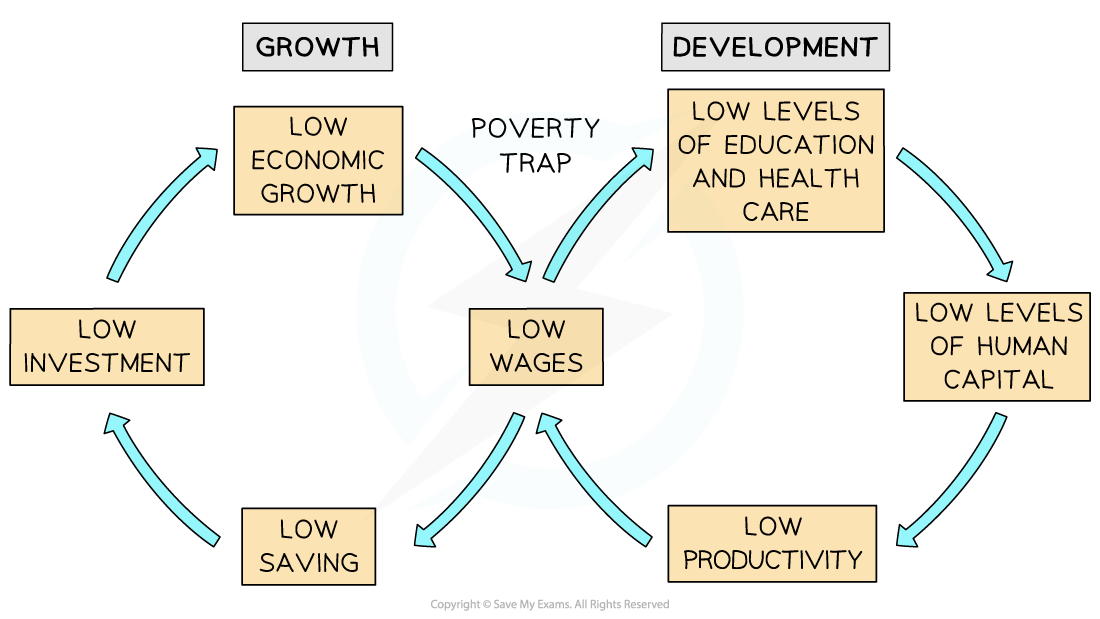
Low wages represent the intersection of economic growth and human development and are the major cause of poverty
Low wages are usually the result of unemployment, informal employment, a lack of skills, or a primary sector based economy
Education and healthcare cost money and with lower wage levels these are not accessible, resulting in poor human capital
People find it harder to stay well or to recover from illness resulting in lower productivity and shorter life expectancy
Low productivity results in low wages and the cycle continues
Populations with a large number of dependents (old people and children) for each working household tend to experience higher levels of poverty