The Causes of Poverty
Absolute and relative poverty
Absolute and relative poverty
Poverty is a situation where a person lacks the financial resources to sustain a basic standard of living
Economists distinguish between absolute and relative poverty
Absolute poverty
Absolute poverty is when a person cannot afford basic necessities like food, clean water, shelter, and clothing. It is usually defined as living on less than $2.15 per day (World Bank, 2022)
Absolute poverty is more prevalent in developing countries than developed ones
Relative poverty
Relative poverty is a situation where household income is a certain percentage less than the median household income in the economy
Poverty in a household is considered relative to income levels in other households
E.g., the UK defines relative poverty as households that are living with less than 60% of the median household income
In May 2022, the median UK monthly household income was £2072/month
This meant that the relative poverty line was any household earning less than £1243,20/month
Relative poverty is the main form of poverty that occurs in developed countries
Causes of poverty
Causes of poverty
Poverty means not having enough income to meet basic needs such as food, shelter, education, and healthcare
People can fall into poverty for many reasons, often beyond their control
1. Unemployment
People without jobs have no regular income, making it hard to afford basic needs
Long-term unemployment increases the risk of falling into absolute poverty
Families may rely on others or government support, which is often not enough
2. Low wages
Some people are employed but earn very low incomes (known as the working poor)
Wages may not be enough to cover rent, food, and healthcare
This is common in jobs with no minimum wage, informal work or underemployment
3. Illness
Serious illness or disability can stop people from working
Medical treatment is expensive in many countries, pushing families into poverty
Lack of access to affordable healthcare can make the problem worse
4. Age
Elderly people may no longer earn income and rely on savings or pensions
In countries without state pensions or elderly support, older people are at higher risk of poverty
Similarly, children in poor households face higher risk of poverty due to dependency
5. Environmental factors
Natural disasters (e.g. floods, droughts, earthquakes) can destroy homes, crops, and jobs
Climate change and poor land quality can reduce agricultural income
In rural areas, poor infrastructure can limit access to markets, schools and hospitals
The poverty trap
The poverty trap
The causes of poverty mentioned above, often trap people in a negative cycle which is called the 'poverty trap'
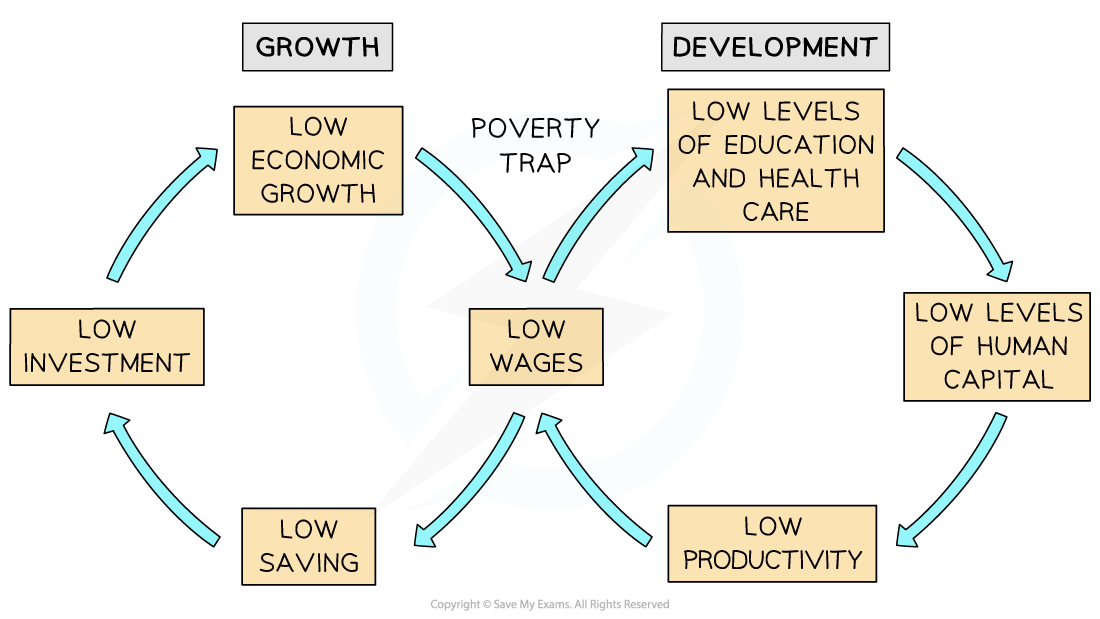
Low wages represent the intersection of economic growth and human development and are the major cause of poverty
Low wages are usually the result of unemployment, informal employment, a lack of skills, or a primary sector-based economy
Education and healthcare cost money and with lower wage levels these are not accessible, resulting in poor human capital
People find it harder to stay well or to recover from illness, resulting in lower productivity and shorter life expectancy
Low productivity results in low wages and the cycle continues
Populations with a large number of dependents (old people and children) for each working household tend to experience higher levels of poverty