Free Trade
The Benefits of Free Trade
The Benefits of Free Trade
International trade refers to the exchange of goods and services between countries
International trade involves the exchange of goods/service through exports and imports
International trade is 'free' when there is no government intervention (quotas, taxes etc.) to reduce or limit trade
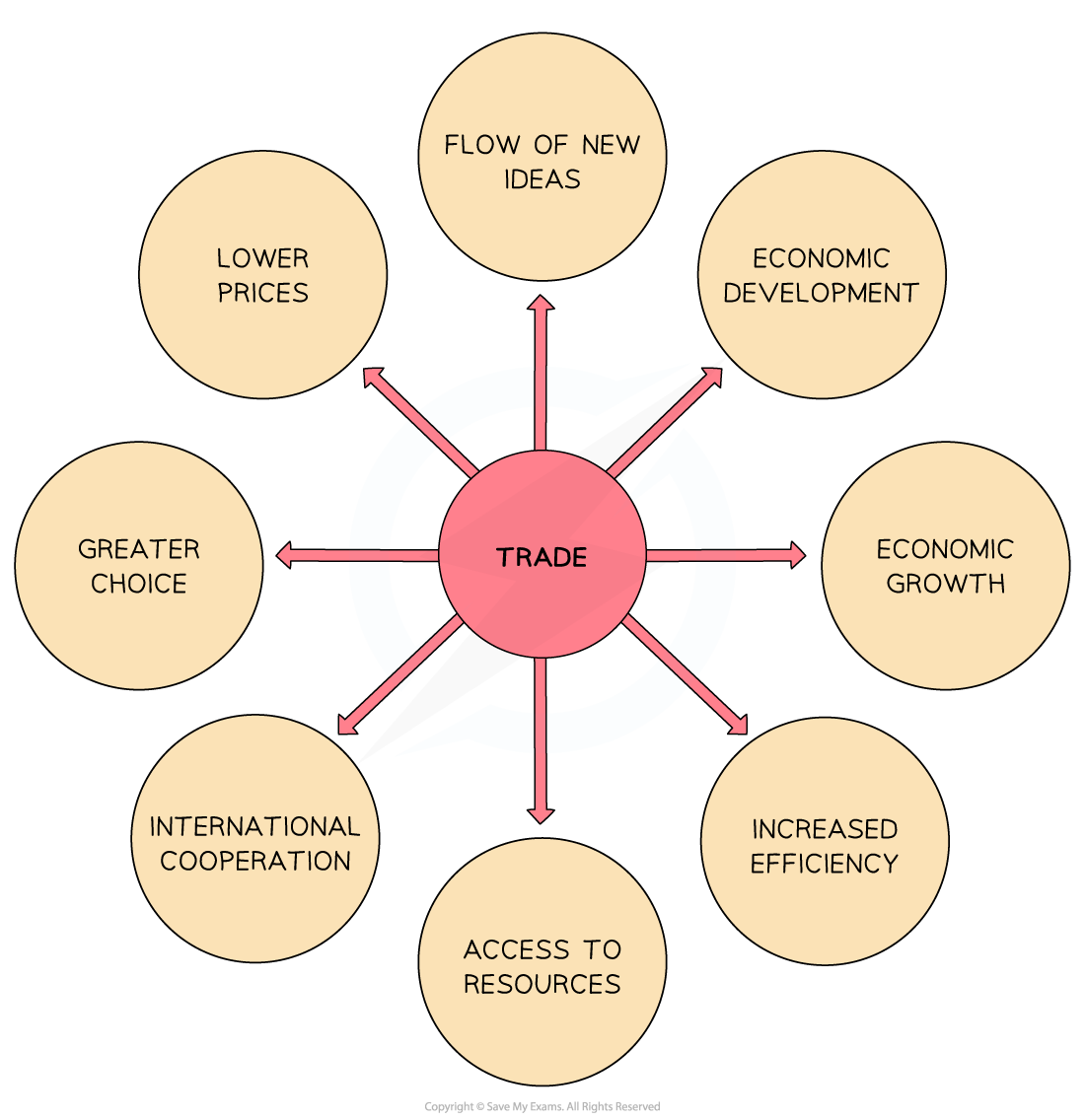
Greater choice: with access to a wider variety of goods/services, the standard of living improves
Lower prices: with international competition prices fall giving households the ability to buy more
International cooperation: required for trade helps countries to build better relationships which leads to lower levels of hostilities
Flow of new ideas: innovative ideas and technology can be shared between countries
Access to resources: output can increase and costs of production can fall with increased access to raw materials
Increased efficiency: international competition allows the most efficient firms to emerge and this improves the use of global resources
Economic growth: exports are a key component of the gross domestic product of many countries and an increase in exports can lead to economic growth
Economic development: Increased output leads to lower levels of unemployment which leads to higher incomes and a higher standard of living