Detailed Specific Example: Malaysian Rainforest
Specification link
This page covers section 3.4.4 of the CIE O Level specification.
3.4.4 - One detailed specific example of a named country or tropical rainforest area to include:
Threats to the tropical rainforest ecosystem.
Impacts of the destruction and deforestation of the tropical rainforest ecosystem.
The strategies and techniques used to manage the tropical rainforest ecosystem; including sustainable.
Introduction - Malaysian rainforest
Introduction - Malaysian rainforest
Malaysia is located in Southeast Asia
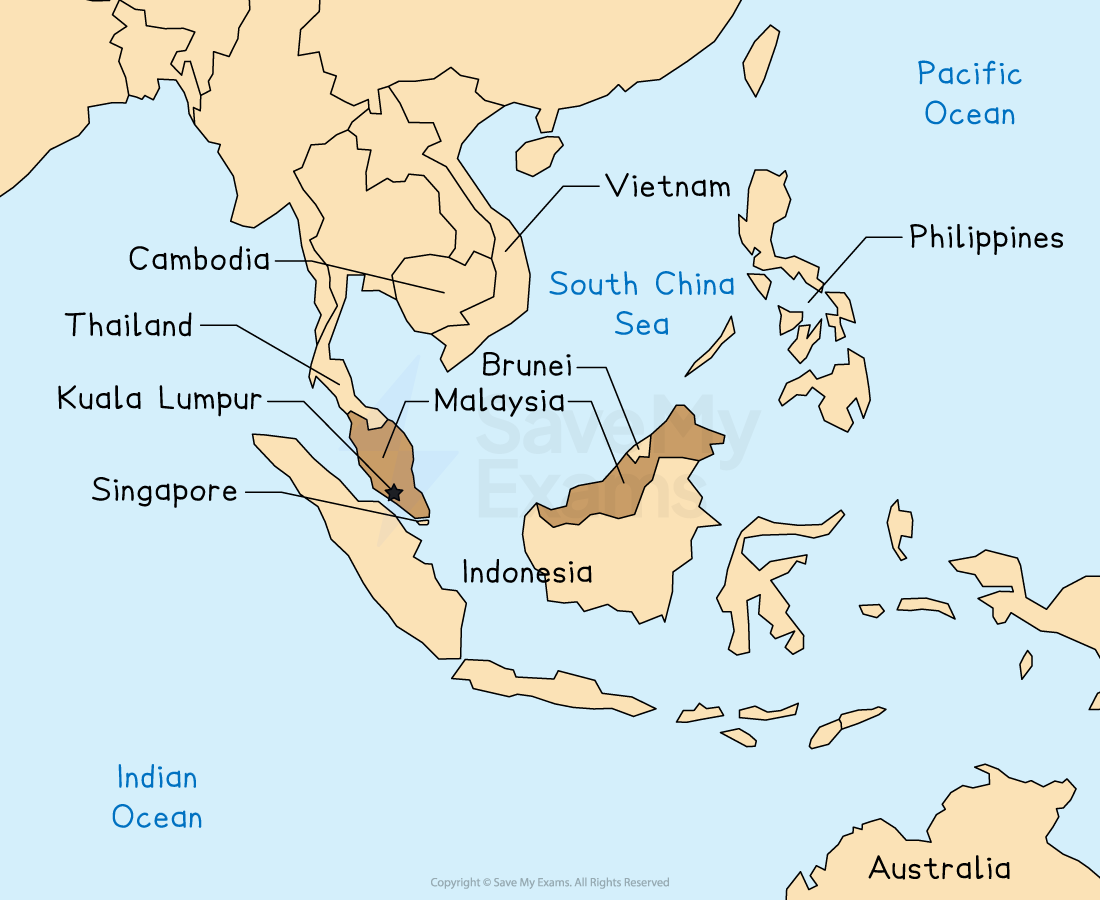
Almost 70% of the land is covered by tropical rainforest
Climate
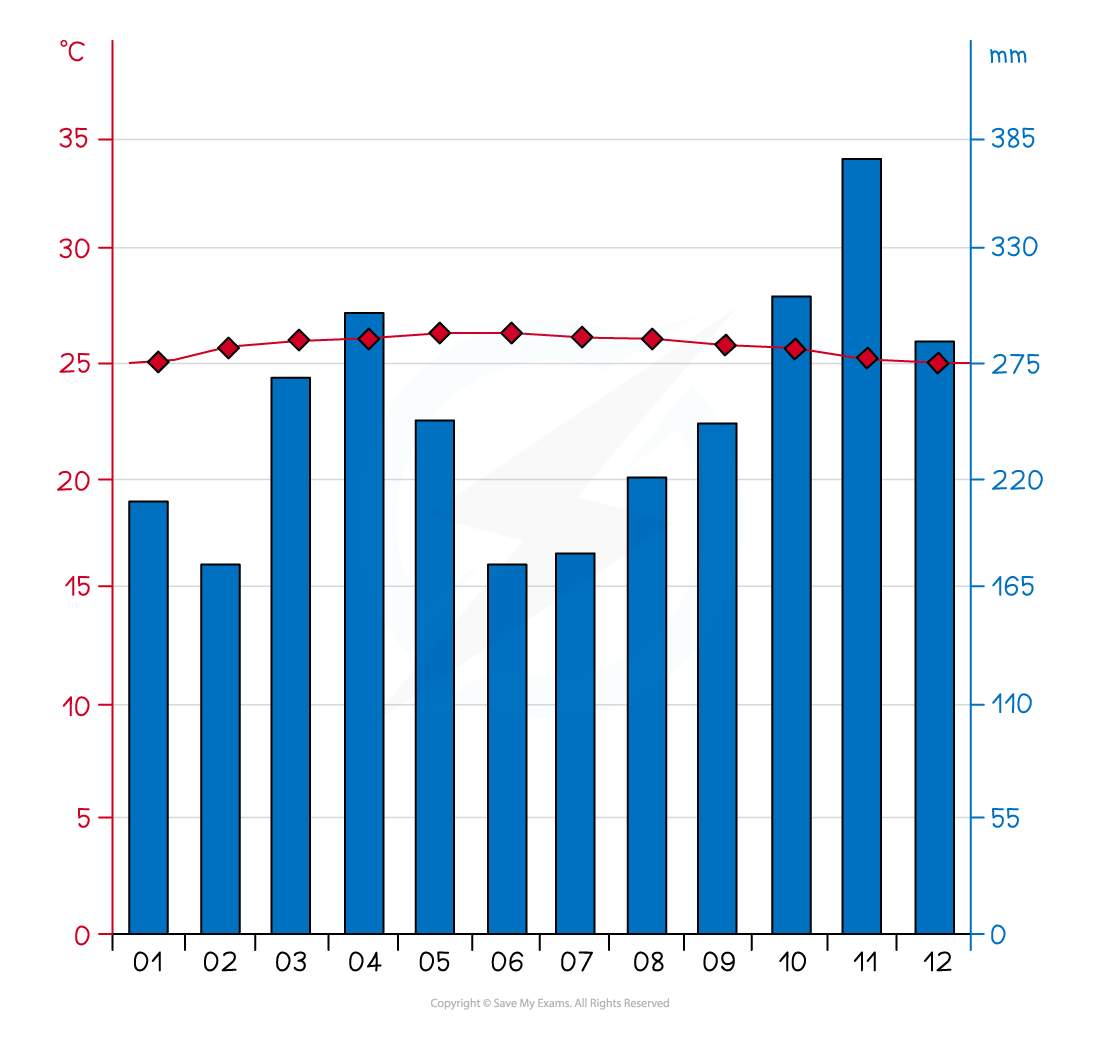
The climate of Malaysia is typical of tropical rainforest climates
High rainfall and high temperatures all year round
The Malaysian rainforest has a high biodiversity with over:
15,000 plant species, including 5,500 flowering plants and 2,600 tree species
750 bird species
250 mammal species
350 reptile species
190 amphibian species
350 fish species
1000 butterfly species
Threats to the tropical rainforest in Malaysia
Threats to the tropical rainforest in Malaysia
It is estimated that Malaysia has the fastest rate of deforestation in the world
Since 2000, an average of over 140,000 hectares of forest has been felled and cleared each year
The main threats to the rainforest in Malaysia include:
Logging
Malaysia is the largest exporter of tropical hardwoods
Although Malaysia has environmental protection policies, there is still evidence of illegal logging in areas of Borneo
Selective logging is the dominant type of logging but this requires road construction and settlements, which result in deforestation
Energy
The construction of dams to provide hydroelectric power results in the flooding of large areas of forest
The Bakun Dam will result in 700 km 2 of land being underwater in Sarawak, Malaysia
Mining
Tin mines are widespread and require deforestation not only for the mine itself but also for road construction
An iron ore mine planned for the Som Forest Reserve will result in the deforestation of over 60 hectares
There is also drilling for oil and gas
Commercial plantations
Malaysia exports over 30% of the world's palm oil and is the second-largest producer
Many palm oil processors are now adopting a zero-deforestation policy so that they do not buy palm oil from deforested areas. However, clear felling permits are sometimes used in Malaysia to clear land and then sometime later another company will plant palm oil
Settlements
Up to 1980, people were encouraged to move to rural areas from the cities to try and reduce the pressure on urban areas
This led to the deforestation of approximately 15,000 hectares of rainforest
Subsistence farming
This can sometimes involve slash and burn, where areas are cleared using fires; these can sometimes get out of control and destroy large areas of rainforest
Impacts of the destruction of tropical rainforest in Malaysia
Impacts of destruction of the tropical rainforest in Malaysia
Soil erosion
Without the tree roots to bind the soil, the soil is more easily eroded by wind and rain
Exposed soil is more vulnerable to the leaching of nutrients and the soil becomes less fertile
Loss of biodiversity
Habitats are destroyed and the ecosystem is affected by deforestation so the variety of plants and animals decreases
Oil Palm plantations lead to a 35% reduction in species
Orangutans, pygmy elephants, Sumatran rhinos, and Malayan tigers are all endangered
Local climate change
Reduced transpiration and evaporation leads to a decrease in precipitation and an increase in temperatures
Rainfall patterns become less reliable and more extreme
Global climate change
The felling of the trees leads to a decrease in the absorption of carbon dioxide
Increases carbon dioxide concentrations in the atmosphere and as this is a greenhouse gas, this increases human-induced climate change
The use of fire for clearance also increases carbon dioxide emissions
Indigenous communities
Indigenous communities such as the Orang Asli and Temiar have been forced off land
Pollination of fruits has reduced due to a decrease in pollinating insects and animals such as bats
This has reduced the available food sources
In Kuala Koh village in 2019, at least 15 Indigenous Batek died after an outbreak of disease possibly transmitted by loggers working near the village
Strategies to protect the tropical rainforest in Malaysia
Strategies to protect the tropical rainforest in Malaysia
The implementation of a range of strategies to protect the tropical rainforest is increasing sustainability in Malaysia
Since 2001 the Malaysian Timber Certification Council (MTCC) has certified 349 timber companies
This means they are using sustainable management methods to fell timber
Education
Education provides people with information about the importance of conserving the rainforest
It also informs people of the damage deforestation can do
Several education strategies have been implemented:
Increased education programmes
The Ministry of Education has developed resources for integrating environmental education into the school curriculum.
They also have partnerships with NGOs such as the World Wildlife Fund (WWF) and IGOs such as UNESCO
Community involvement
Increased involvement of local communities in forest conservation
Recognition of Indigenous community land rights
Support of small-scale economic activities among Indigenous communities such as the Rungus:
Gombizau village – bees and honey
Bavanggazo village – ecotourism
Selective logging and management system
Selective logging has replaced clear felling in many areas
The process involves:
Identification of the trees to be felled and the direction of felling. This avoids damaging other trees
Only trees of a certain size are selected for felling
Felling is carried out
A survey following felling leads to a treatment plan to restore any damage
Ecotourism
The introduction of ecotourism provides income for local communities and educates visitors
The Sungai Yu Forest Reserve is one example where visitors can:
Camp with the Batek Indigenous community, who are semi-nomadic
Collect data about wildlife to help reduce poaching
Ecotourism involves:
Members of the local community as guides, which provides them with an income
Use of local materials for building
Sustainable management of water, energy and waste
Small groups which reduce the damage to the environment
Biosphere Reserves and National Parks
Reserves and national parks are areas where no development or deforestation is allowed
Penang Hill Biosphere Reserve attracts over 1.6 million visitors annually
It consists of the:
Core area: 6,304 ha
Buffer zone: 2,213 ha
Transition zone: 3,964 ha
It includes one of the last coastal rainforests in Malaysia