Characteristics of the Tropical Rainforest
Specification link
This page covers section 3.3.1 , 3.3.2, 3.3.3 and 3.3.4 and of the CIE O Level specification.
3.3.1- The global distribution of tropical rainforests.
3.3.2 - The characteristics of the equatorial climate: overhead sun, low pressure, convectional rainfall, temperature, latitude.
3.3.3 - The characteristics and structure of the tropical rainforest ecosystem.
3.3.4 - The interrelationships between abiotic and biotic factors in the tropical rainforest ecosystem and how flora and fauna adapt to survive.
Global distribution of tropical rainforests
Global distribution of tropical rainforests
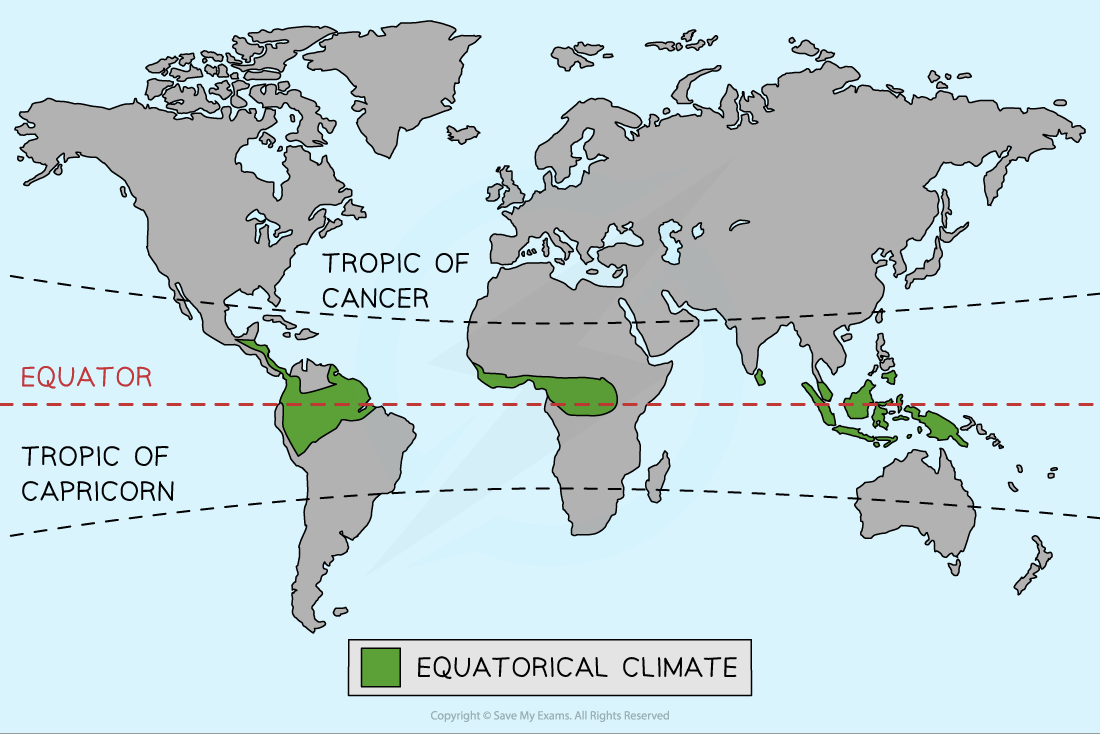
The tropical rainforest (TRF) biome is mainly found in a band between 15° north and 15° south of the equator within the equatorial climate zone
Covering only 6% of the Earth's surface, the main areas of tropical rainforest ecosystems are in the following countries:
Amazon
The largest remaining rainforest on Earth is usually associated with Brazil but covers parts of seven other countries
Central America
Including parts of Belize, Costa Rica, El Salvador, Guatemala, Honduras, Nicaragua, and Panama
Central Africa
Including Cameroon, the Central African Republic, the Republic of Congo, the Democratic Republic of Congo (DRC), Equatorial Guinea and Gabon
Indo-Malaysia
Including Malaysia, Indonesia and several other countries in South-East Asia
Characteristics of equatorial climates
Characteristics of equatorial climates
Equatorial climate distribution
Equatorial climate characteristics
Location
Low latitudes
Within the Tropics, 23.5° north and south of the equator
Amazon in South America, New Guinea, South-east Asia, and the Zaire Basin
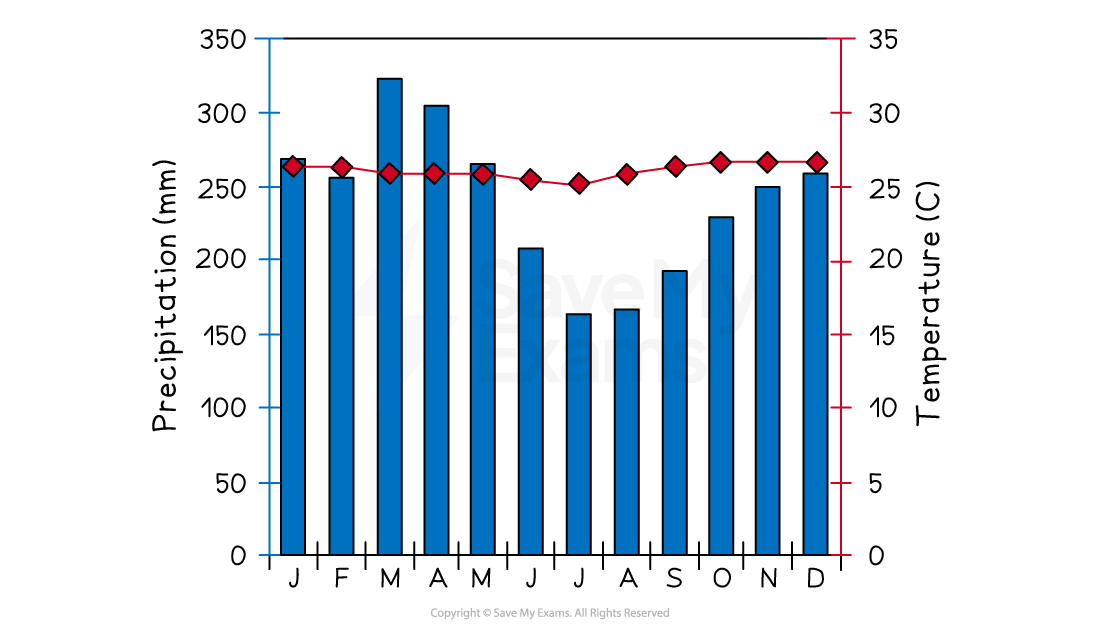
Annual precipitation
Over 2,000 mm
Temperature range
Low range of mean monthly temperatures: 26-28 °C
Constant high temperatures
Diurnal range is about 7 ºC
Seasons
No seasons—hot and wet all year round
Humidity
High, usually over 75-80%
Prevailing winds
Winds blow into the equatorial region from high-pressure areas to the north and south.
The winds from the north blow from the northeast, and the winds from the south blow from the southeast
The winds are known as the trade winds
Factors influencing the equatorial climate
There are a range of factors that influence the climate, including:
The midday sun is almost directly overhead all year, meaning there is maximum insolation
Low pressure all year leads to rising air, condensation, cloud formation, and high precipitation levels
Dense vegetation cover leads to high levels of evaporation and transpiration
The warm air stores large amounts of water vapour until the temperatures start to cool in the late afternoon, which then leads to heavy, daily convectional rainfall
The tropical rainforest ecosystem
The tropical rainforest ecosystem
Biodiversity
TRFs contain the highest biodiversity of plants and animals on Earth
Estimates range from over 50% to 80% of the world's plant and animal species
One 10 km2 area can contain up to 1,500 flowering plants, 750 species of trees, 400 species of birds and 150 species of butterflies
Structure of the tropical rainforest
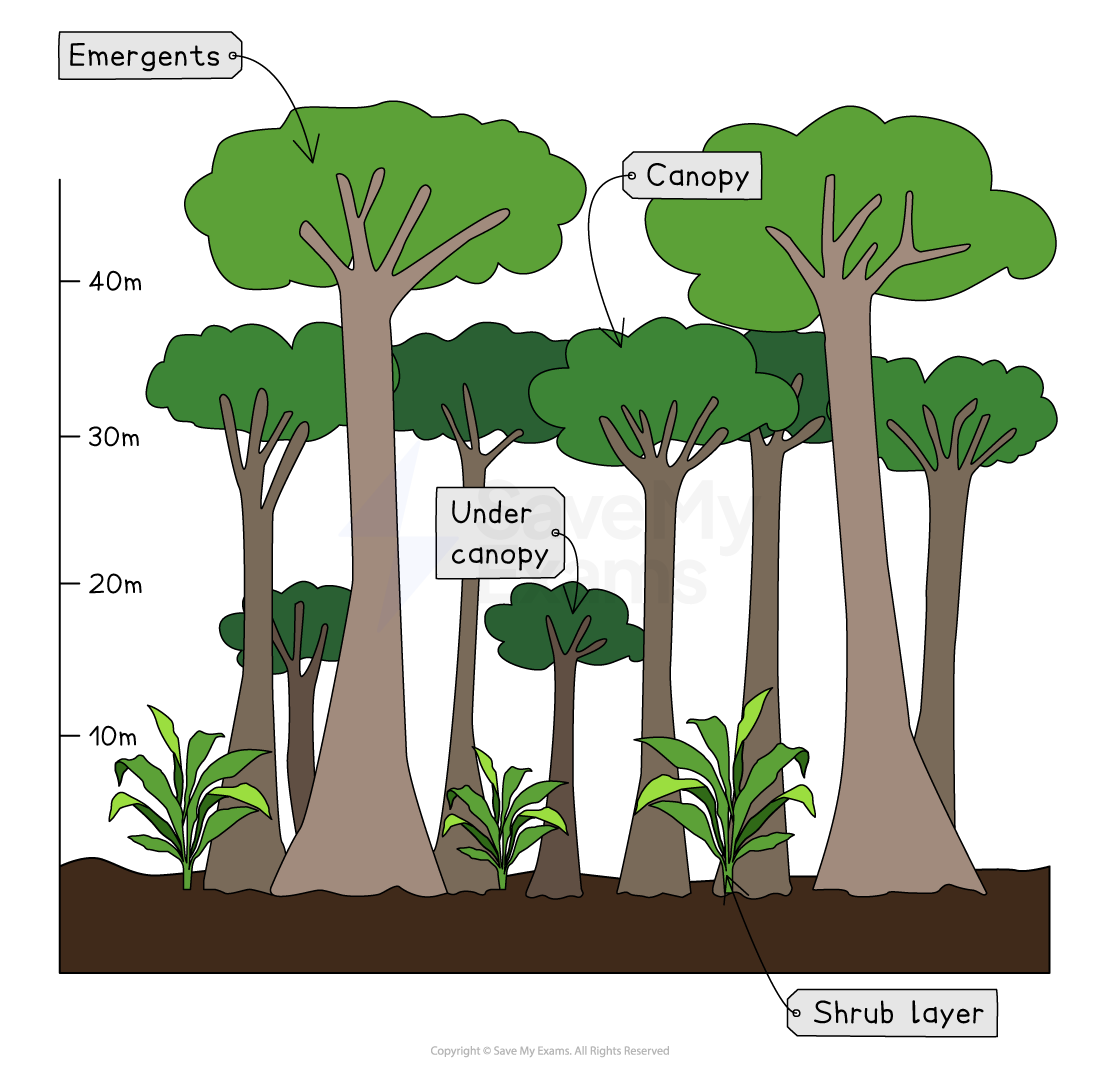
The TRF has five distinct layers:
ground layer (0 m)
shrub layer (3-4 m)
under canopy (15 m)
canopy (30 m)
emergents (45-55 m)
Interrelationships in the tropical rainforest
Interrelationships in the tropical rainforest
Nutrient cycle
The TRFs have a continual growing season with high rainfall and high temperatures all year round
The nutrient cycle in the TRF is rapid
Trees and plants lose their leaves all year round
The high level of moisture and high temperatures lead to rapid decomposition
Plants grow quickly, which leads to the rapid uptake of nutrients from the soil
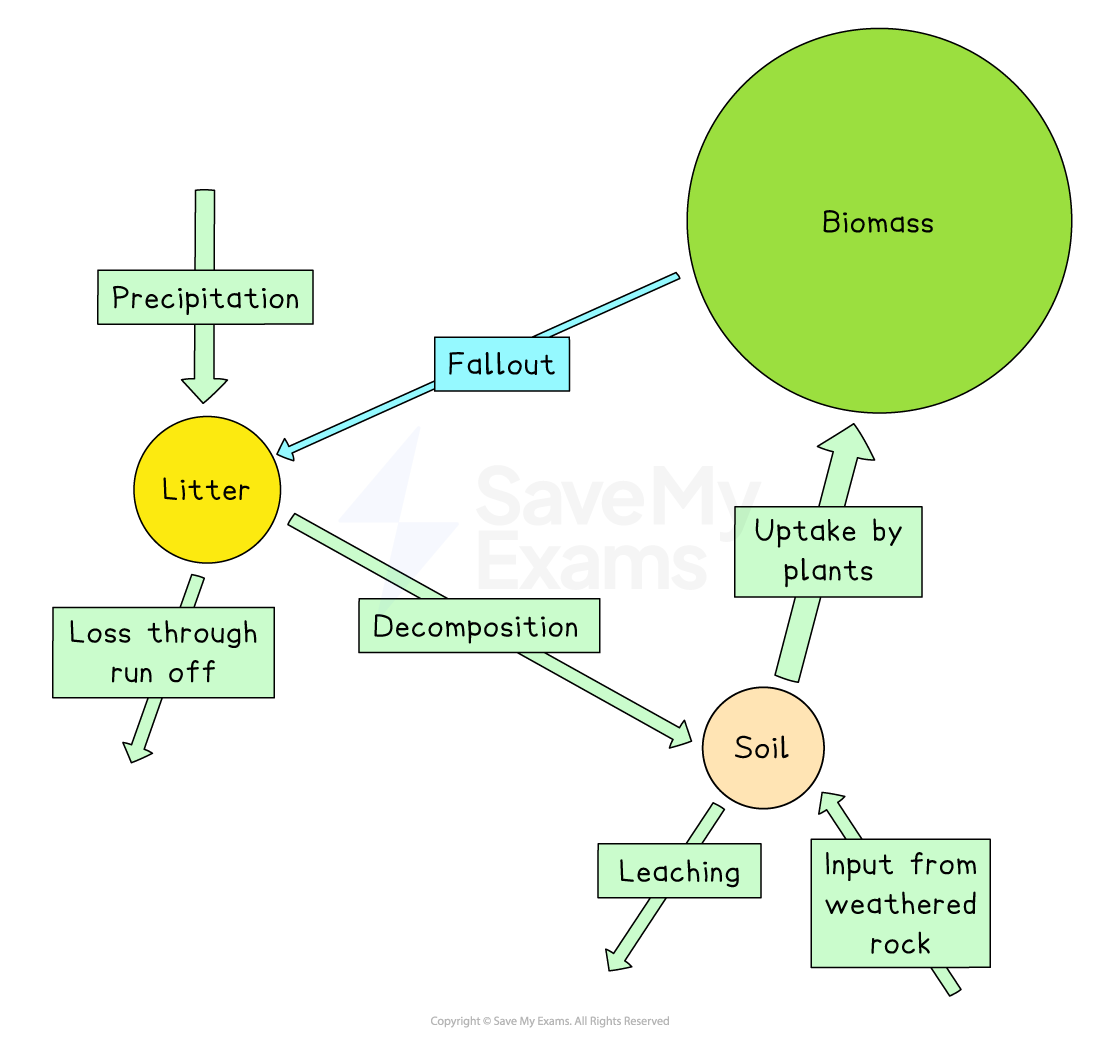
The result of this rapid nutrient cycle is that the soil in the TRF is not very fertile
This is because the nutrients are quickly used by the plants
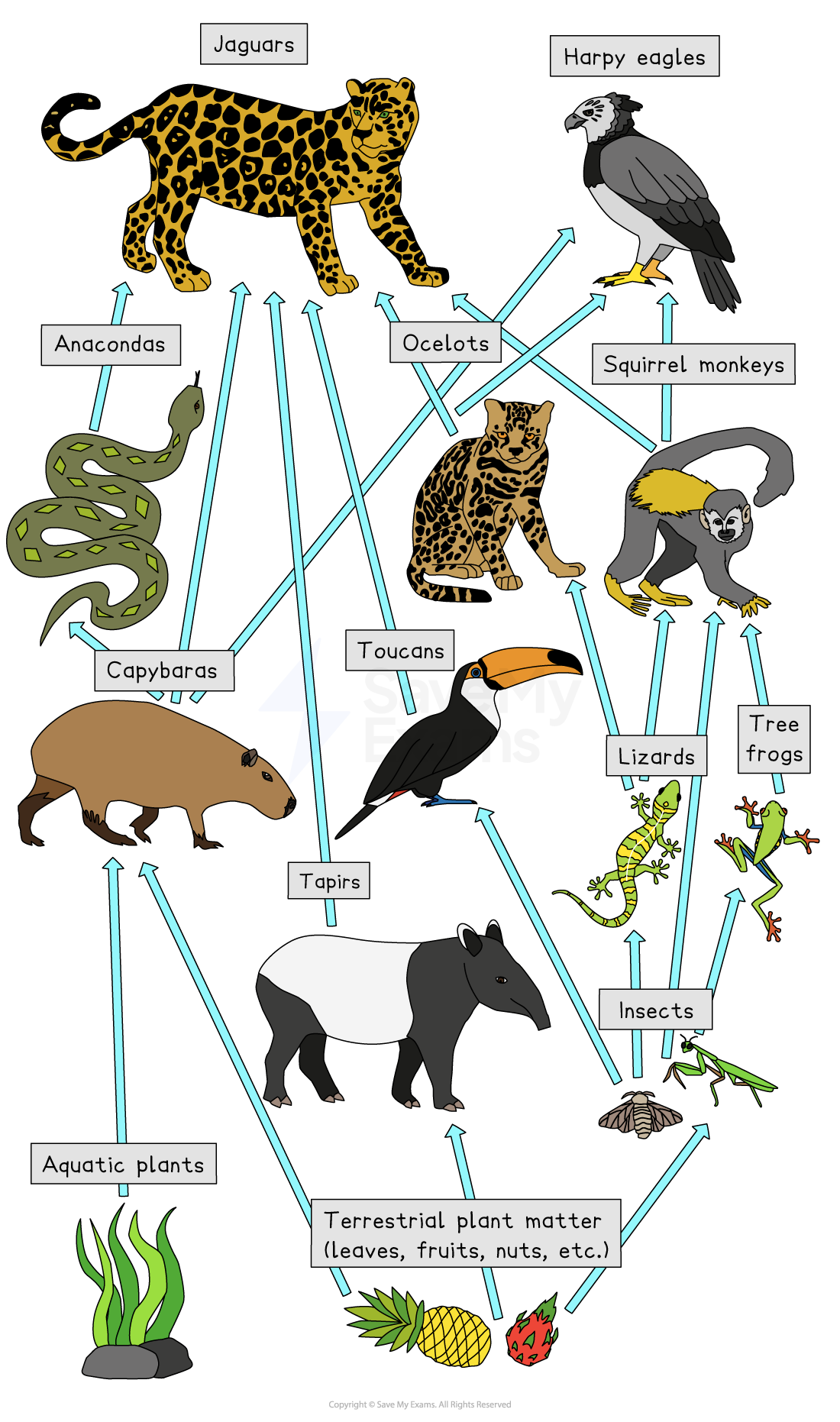
Food web
As with all ecosystems, the TRF has a complex food web, which includes:
producers
primary consumers
secondary consumers
tertiary consumers
Adaptations
The plants and animals within the TRF are very well adapted to the climate conditions
Plant adaptations
Waxy leaves with drip tips
These ensure that rainwater runs off the leaf and does not remain, which would encourage mould growth or break the leaf
Buttress roots
These large roots above the ground help to support the very tall trees because the roots below the surface are shallow
Lianas
Vines which use the tall trees as support to reach the sunlight
Epiphytes
Plants which grow on trunks and branches of trees and get nutrients from air, rain or debris accumulating around the plant
Straight, smooth trunks
To reduce the number of epiphytes using the tree
Animal adaptations
Sloth
Algae grow in the fur of the sloth, helping to camouflage it
Toucan
Has a large bill to reach and cut fruit from the branches of trees
Primates
Have prehensile tails to help them climb trees
Gecko
Have large, flattened toe pads with sticky scales which allow them to grip the smooth tree trunks
Stick insects
Their stick and leaf shapes help them to be camouflaged