DNA Structure
DNA Structure
DNA Structure
DNA, or deoxyribonucleic acid, is the molecule that contains the instructions for growth and development of all organisms
It consists of two strands of DNA wound around each other in what is called a double helix
Structure of DNA in the cell diagram
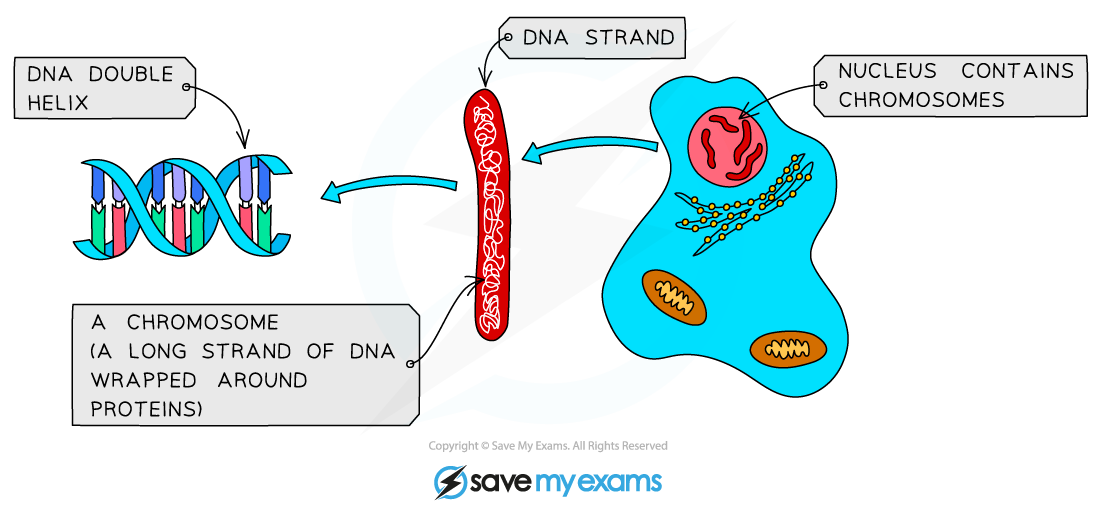
DNA, chromosomes and the nucleus
The individual units of DNA are called nucleotides
Nucleotide structure diagram
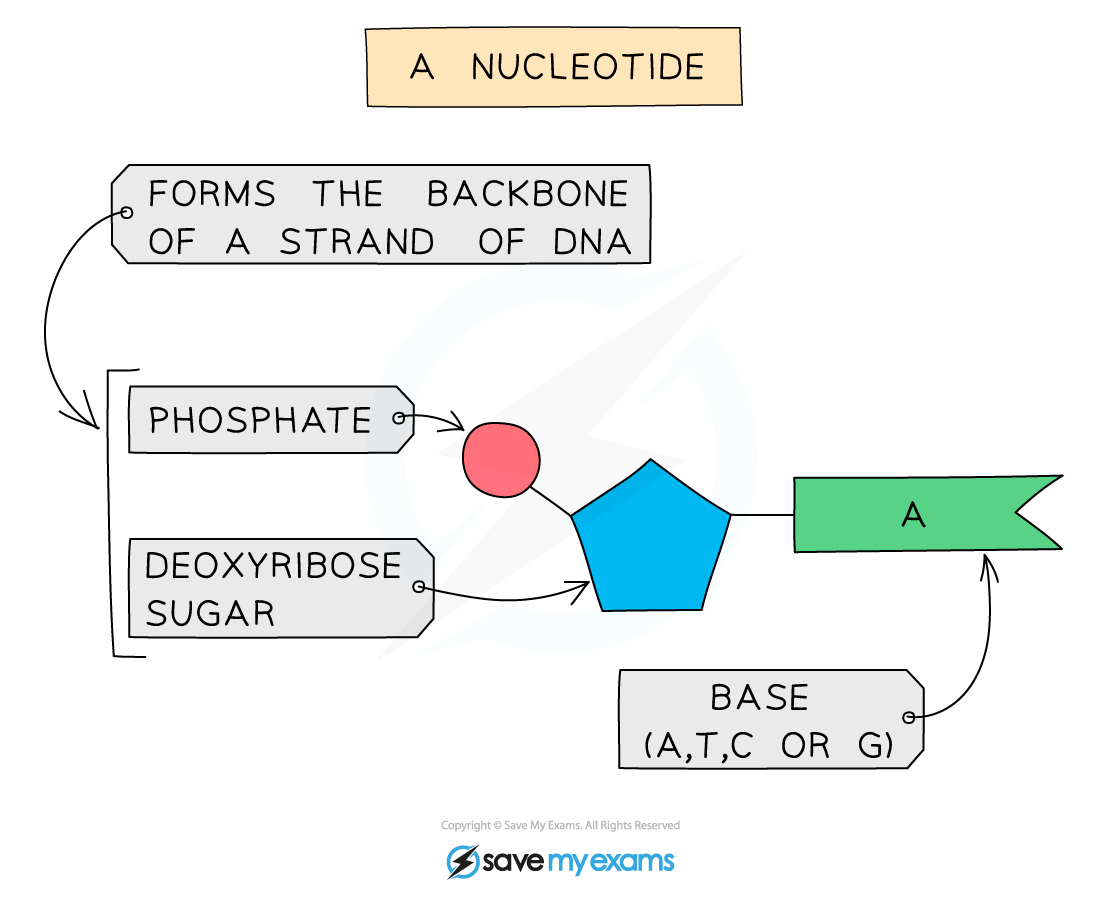
A nucleotide
All nucleotides contain the same phosphate and deoxyribose sugar, but differ from each other in the base attached
There are four different bases, adenine* (A), cytosine* (C), thymine* (T) and guanine* (G)
The bases on each strand pair up with each other and form bonds between the bases, holding the two strands of DNA in the double helix
The bases always pair up in the same way:
A always pairs with T
C always pairs with G
DNA base pairing diagram
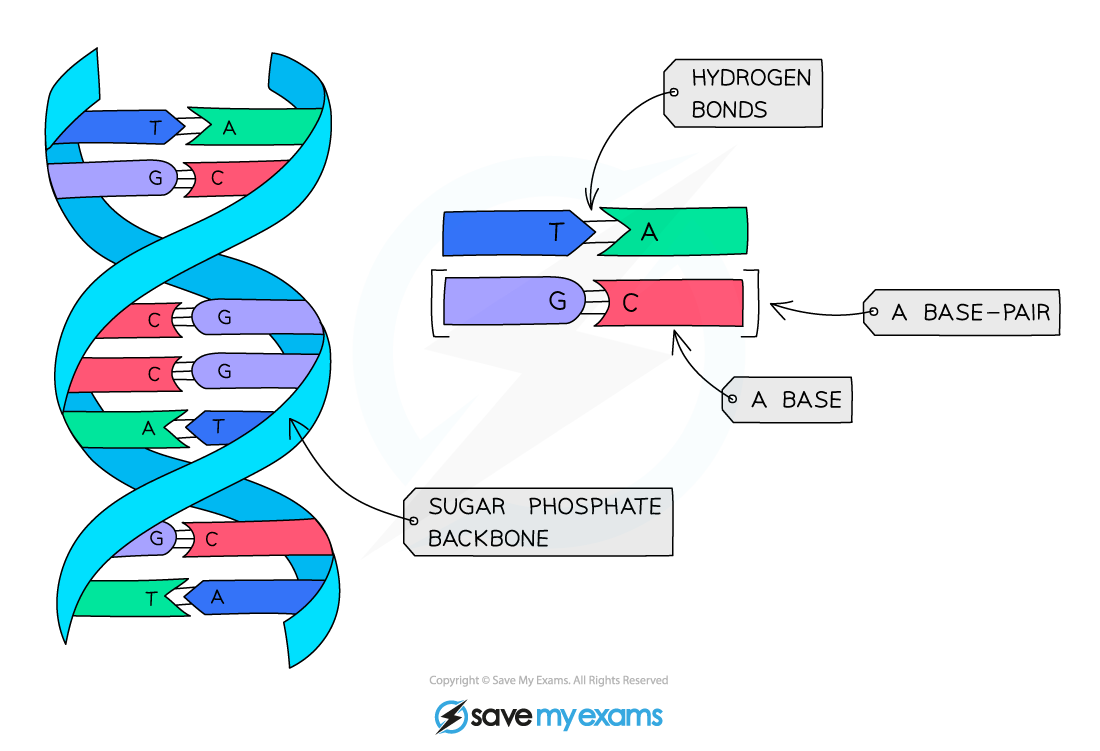
DNA base pairing. A always joins to T and C always joins to G.
The phosphate and sugar section of the nucleotides form the ‘backbone’ of the DNA strand (like the sides of a ladder) and the base pairs of each strand connect to form the rungs of the ladder
Structure of the DNA helix diagram
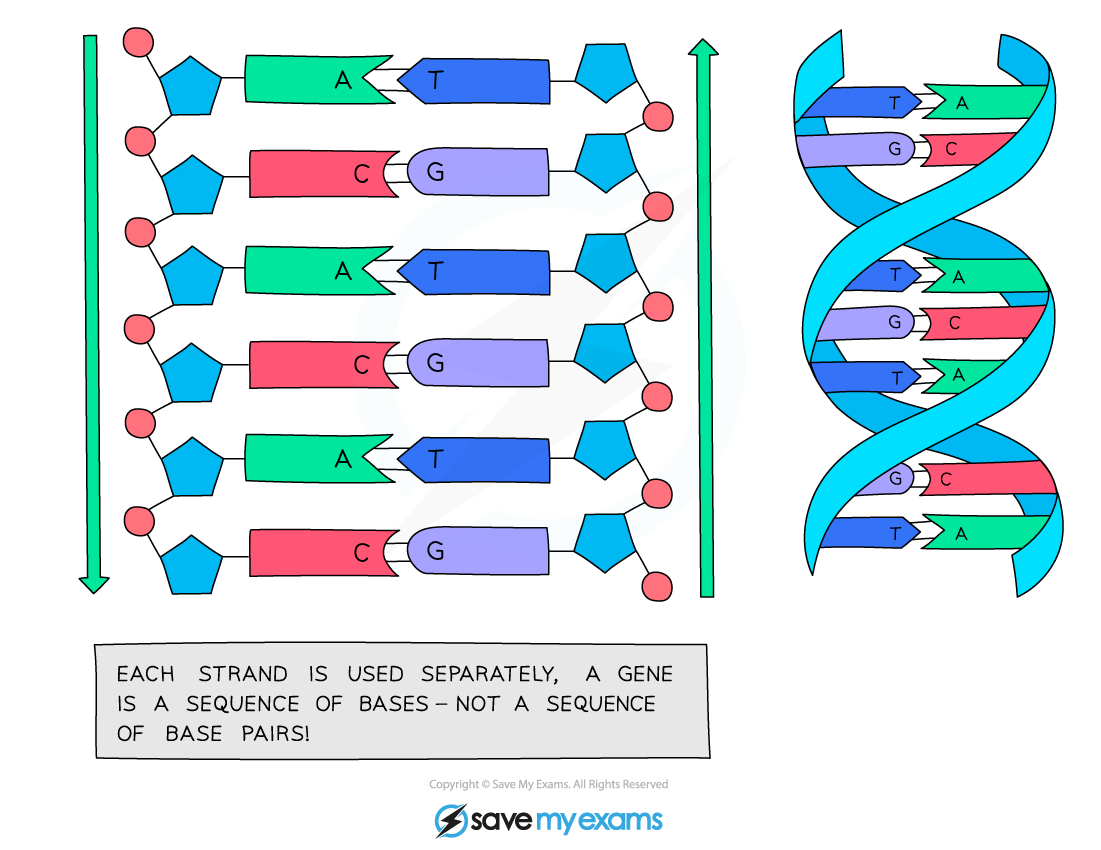
The DNA helix is made from two strands of DNA held together by hydrogen bonds
It is this sequence of bases that holds the code for the formation of proteins