Training
The importance of training
The importance of training
Training is the process of increasing the knowledge and skills of the workforce to enable them to perform their jobs effectively
There are three main types of training that businesses commonly use
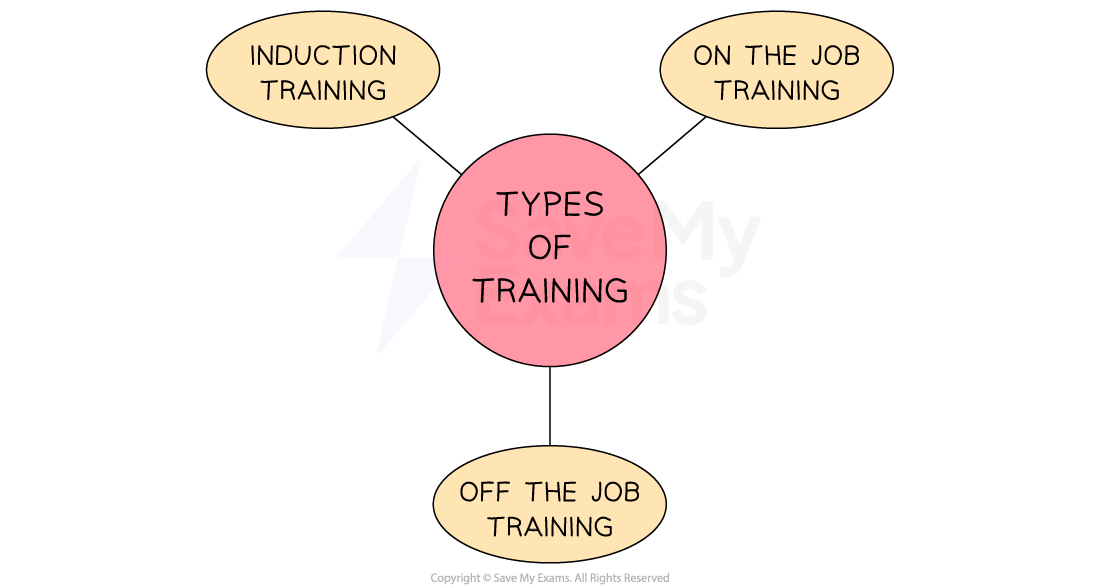
Businesses need to make sure that new and existing staff are trained and developed appropriately
Importance of training for the business:
Staff are more productive and make fewer mistakes
Staff are more adaptable to change
Internal promotion becomes easier, saving recruitment costs
Customers may receive better service
Staff are less likely to leave, reducing turnover
Importance of training for employees:
Feel valued and motivated
Improve their skills and confidence
Safer working environment
Better chances of promotion and higher pay
Induction training
Induction training
Induction training introduces employees to the organisation, its culture, policies, procedures and their job roles and responsibilities
It is usually delivered as soon as possible after new workers join a business
For example, induction training for new employee at Marks & Spencer covers customer service procedures, product knowledge, store policies and safety procedures
Common elements of induction training
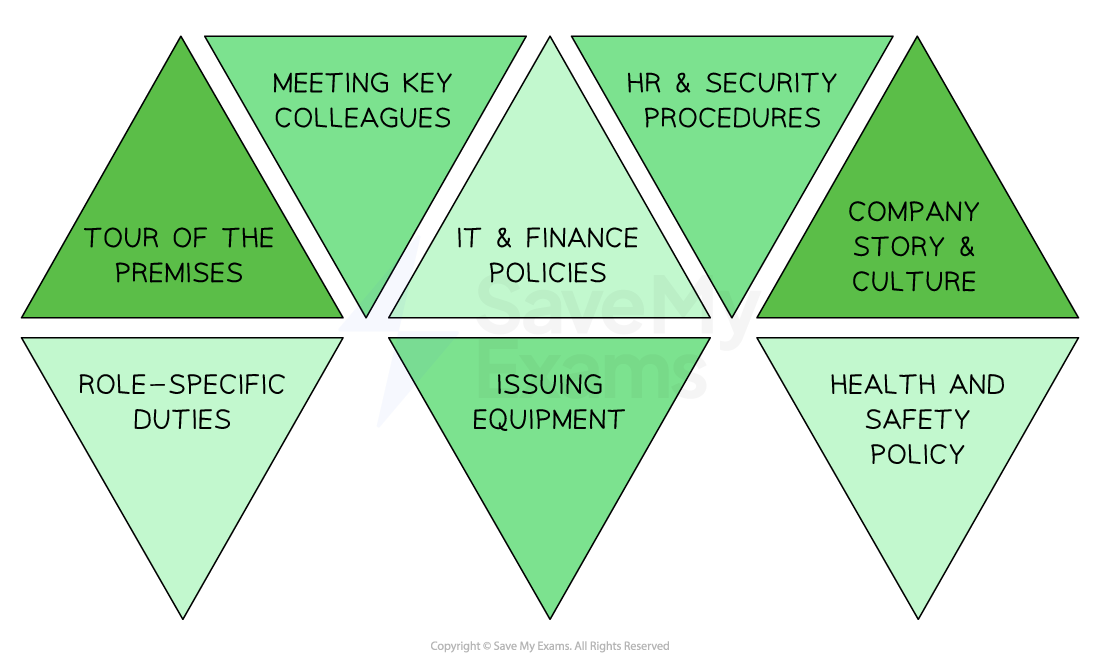
Some aspects of induction training need to be revisited by employees regularly
Health and safety training needs to be carried out regularly, especially when new regulations come into effect
When business policies change, employees need to understand the implications for their job role
Evaluating induction training
Advantages | Disadvantages |
|---|---|
|
|
On-the-job training
On-the-job training
On-the-job training occurs when employees learn skills and knowledge from colleagues while performing their job duties
It takes place while employees are working in their job roles
It can involve work shadowing, in-house training sessions or IT-based training programmes
For example, a sous chef at The Ivy Restaurant in York receives on-the-job training from the Head Chef to learn how to prepare new dishes, use equipment and improve cooking techniques
Evaluating on-the-job training
Advantages | Disadvantages |
|---|---|
|
|
Off-the-job training
Off-the-job training
Off-the-job training takes place away from or outside of the workplace
It can be in the form of college/university courses, workshops, seminars, conferences or online courses
For example, teachers attend exam board training days, where they learn how to deliver the syllabus and help students prepare for exams
Evaluating off-the-job training
Advantages | Disadvantages |
|---|---|
|
|