Functions of Management
The main functions of management
The main functions of management
The responsibilities of managers are similar, no matter the organisation in which they work
In schools
Headteachers organise the school's overall curriculum and staffing
Heads of department manage teaching staff and subject course planning
Pastoral managers focus on pupil behaviour and reward systems
Site managers oversee the safety and maintenance of buildings and equipment
Manager roles
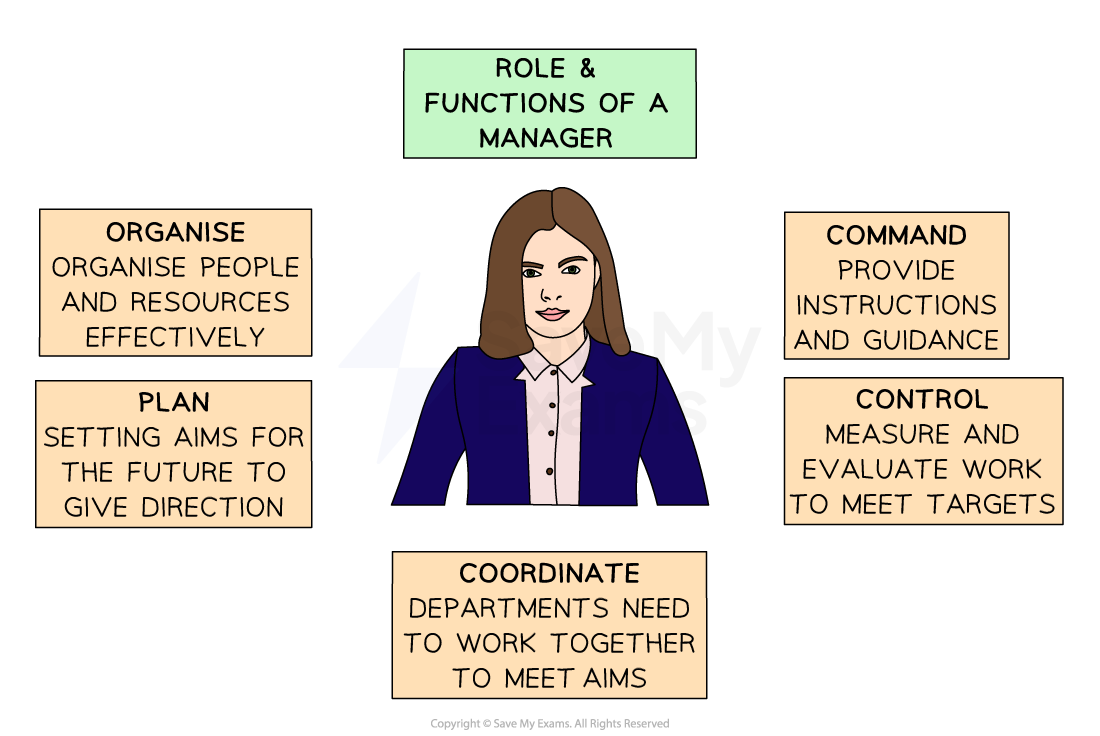
1. Planning
Setting targets or aims for the organisation or department to achieve which provide a clear sense of purpose and direction
Managers also plan and budget for resources required to achieve targets
The number of people required
Finance and capital resources needed
2. Organising
Once targets have been set, managers should then organise resources including
Allocate tasks and delegate responsibility to employees
Make changes to ways of working to improve efficiency
3. Commanding
Managers need to guide, lead and supervise employees in the tasks they do
Make sure staff meet deadlines and achieve individual or team targets
Provide feedback and direct staff to tasks
4. Controlling
Evaluate the performance of employees and teams
Investigate reasons for missed targets and implement changes
Manage budgets and report to senior leaders
Ensure effective coordination between departments to achieve the organisation’s aims
5. Coordinating
Encourage groups of workers to communicate with each other and work towards the same goal
Ensure all of the required resources are available to ensure objectives are met
Delegation
Delegation
Delegation is where responsibility for specific tasks is given to subordinates by managers
Delegation usually involves transferring authority from manager to subordinate
For example, the Human Resources Director of a large company delegates authority for recruitment and training to the HR Manager
The advantages of delegation
Advantages for managers | Advantages for workers |
|---|---|
|
|
Some managers are reluctant to delegate, as they lose some control over decision-making
Managers may need support to be able to balance trust and control to delegate appropriate tasks
Autocratic leaders may not be willing to give authority to others
Some managers may feel threatened by highly skilled subordinates seeking promotion