Apparatus for Measurements
Time, Temperature, Mass & Volume
Time, Temperature, Mass & Volume
Time
Time can be measured using a stopwatch or stopclock which are usually accurate to one or two decimal places
The units of time normally used are seconds or minutes although other units may be used for extremely slow reactions (e.g. rusting)
1 minute = 60 seconds
Temperature
Temperature is measured with a thermometer or digital probe
Laboratory thermometers usually have a precision of a half or one degree
Digital temperature probes are available which are more precise than traditional thermometers and can often read to 0.1 oC
Traditional thermometers rely upon the uniform expansion and contraction of a liquid substance with temperature; digital temperature probes can be just as, if not, more accurate than traditional thermometers
The units of temperature are degrees Celsius (ºC)
Mass
Mass is measured using a digital balance which normally gives readings to two decimal places
Balances must be tared (set to zero) before use
The standard unit of mass in kilograms (kg) but in chemistry grams (g) are most often used
1 kilogram = 1000 grams
Volume-liquids
The volume of a liquid can be determined using several types of apparatus, depending on the level of accuracy needed
For approximate volumes where high accuracy is not an important factor, measuring ( or graduated) cylinders are used
These are graduated (have a scale so can be used to measure) and are available typically in a range of sizes from 10 cm3 to 1 litre (1 dm3)
Volumetric pipettes are the most accurate way of measuring a fixed volume of liquid, usually 10 cm3 or 25 cm3
They have a scratch mark on the neck which is matched to the bottom of the meniscus to make the measurement
Burettes are the most accurate way of measuring a variable volume of liquid between 0 cm3 and 50 cm3 (e.g. in a titration)
The tricky thing with burettes is to remember to read the scale from top to bottom as 0.00 cm3 is at the top of the column
Whichever apparatus you use, you may see markings in ml(millilitre) which is the same as a cm3
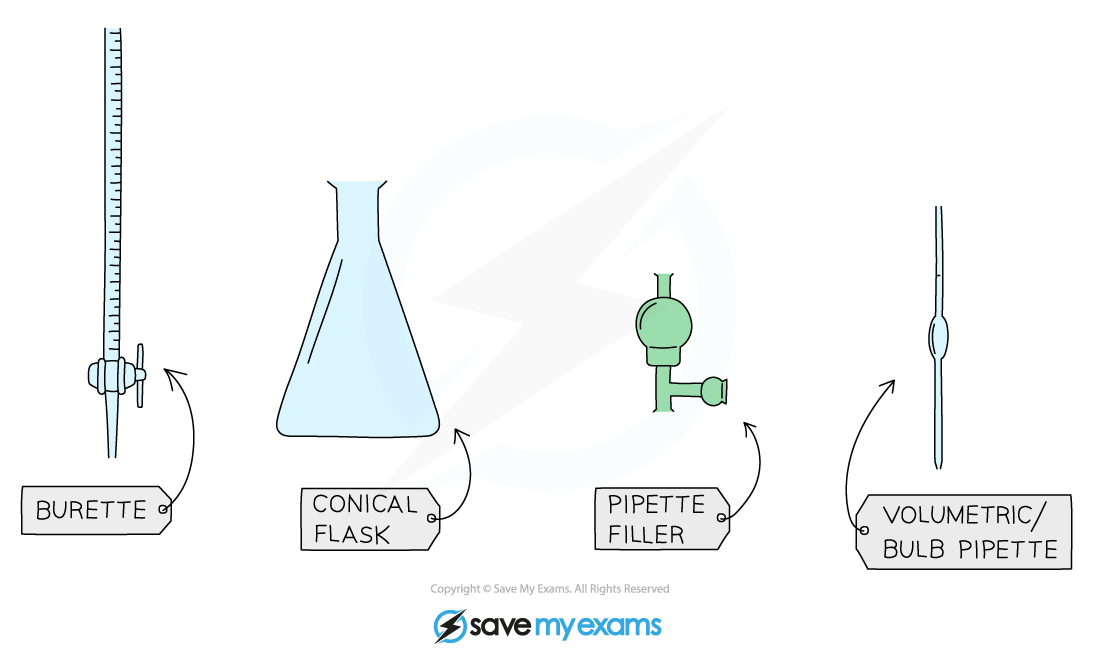
Diagram of a burette with conical flask and pipette with filler
Volume-gases
The volume of a gas sometimes needs to be measured and is done by collecting it in a graduated measuring apparatus
A gas syringe is usually the apparatus used
A graduated cylinder inverted in water may also be used, provided the gas isn't water-soluble
If the gas happens to be heavier than air and is coloured, the cylinder can be used upright
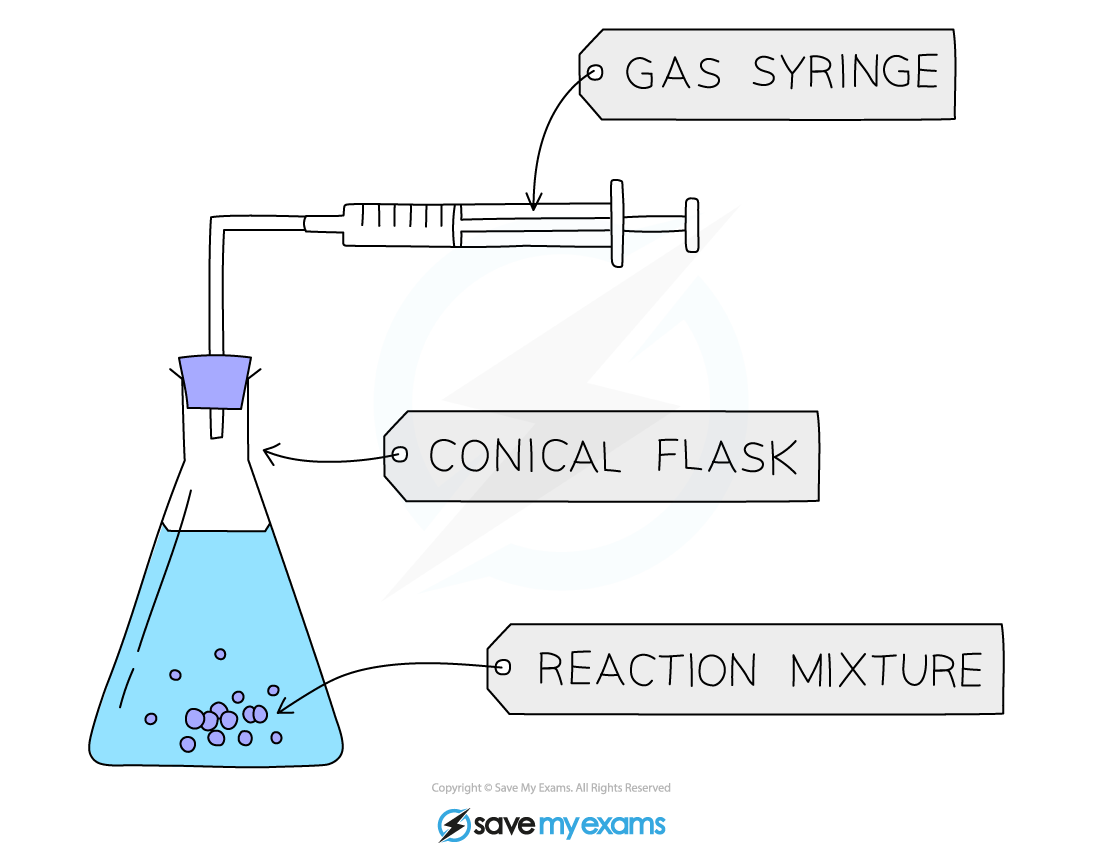
Diagram of the set-up for an experiment involving gas collection
Advantages & Disadvantages of Methods & Apparatus
Advantages & Disadvantages of Methods & Apparatus
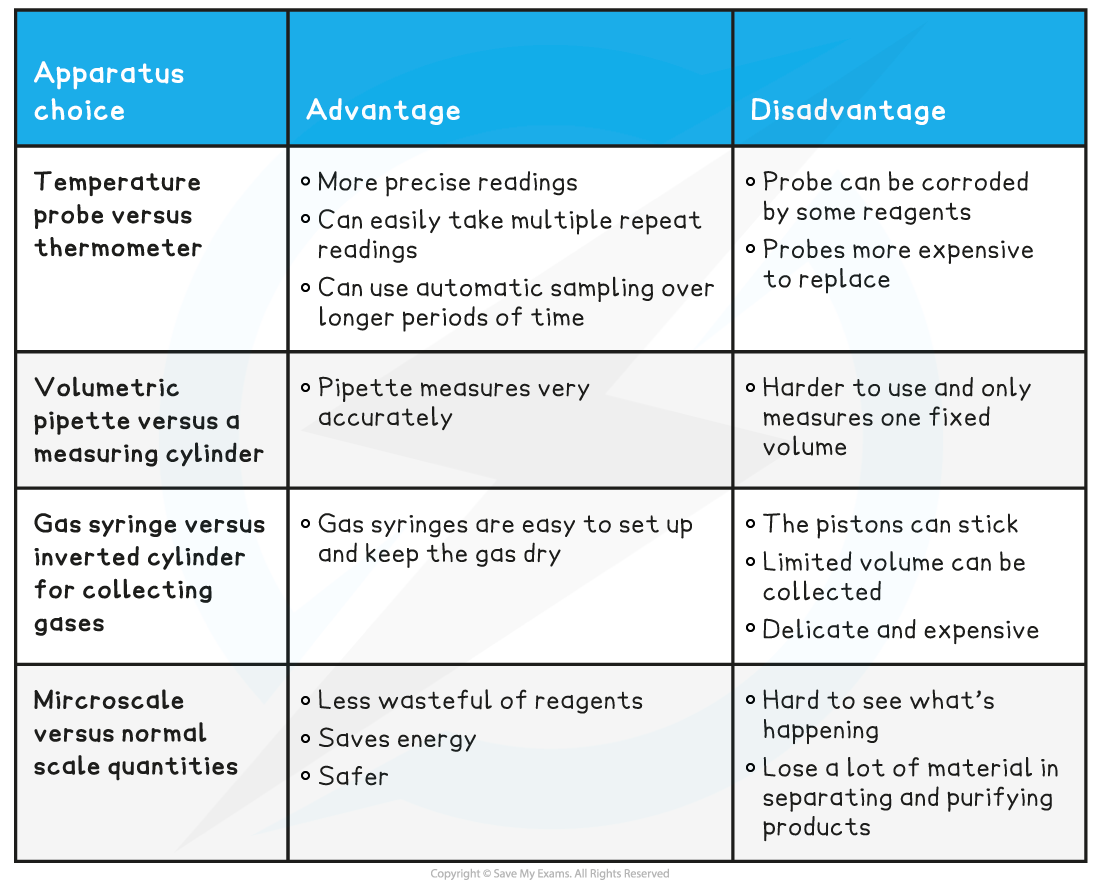
In the lab we often have choices of different apparatus to do the same job
Evaluating what is the best one to use is part of good experimental planning and design
This means appreciating some of the advantages and disadvantages of laboratory apparatus
Table showing examples of Advantages and Disadvantages of Lab Apparatus
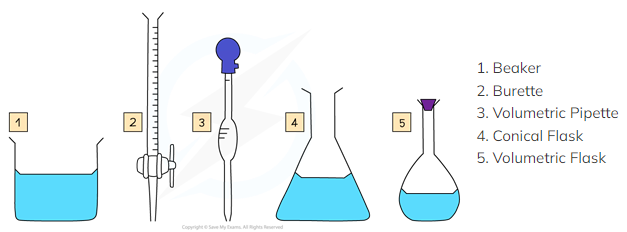
Five pieces of apparatus that can be used to measure the volume of a liquid. They all have their pros and cons
Planning your method
Good experimental design includes the answers to questions like
Have I chosen a suitable apparatus for what I need to measure?
Is it going to give me results in an appropriate time frame?
Is it going to give me enough results to process, analyse and make conclusions?
Does it allow for repetitions to check how reliable my results are?
Does my plan give a suitable range of results?
How can I be sure my results are accurate?
Have I chosen an appropriate scale of quantities without being wasteful or unsafe?
You may be asked about experimental methods in exam questions and your experience and knowledge of practical techniques in chemistry should help you to spot mistakes and suggest improvements