Paper Chromatography
Paper Chromatographyvideo
Paper Chromatography
This technique is used to separate substances that have different solubilities in a given solvent (e.g. different coloured inks that have been mixed to make black ink)
A pencil line is drawn on chromatography paper and spots of the sample are placed on it. Pencil is used for this as ink would run into the chromatogram along with the samples
The paper is then lowered into the solvent container, making sure that the pencil line sits above the level of the solvent so the samples don´t wash into the solvent container
The solvent travels up the paper by capillary action, taking some of the coloured substances with it
Different substances have different solubilities so will travel at different rates, causing the substances to spread apart. Those substances with higher solubility will travel further than the others
This will show the different components of the ink / dye
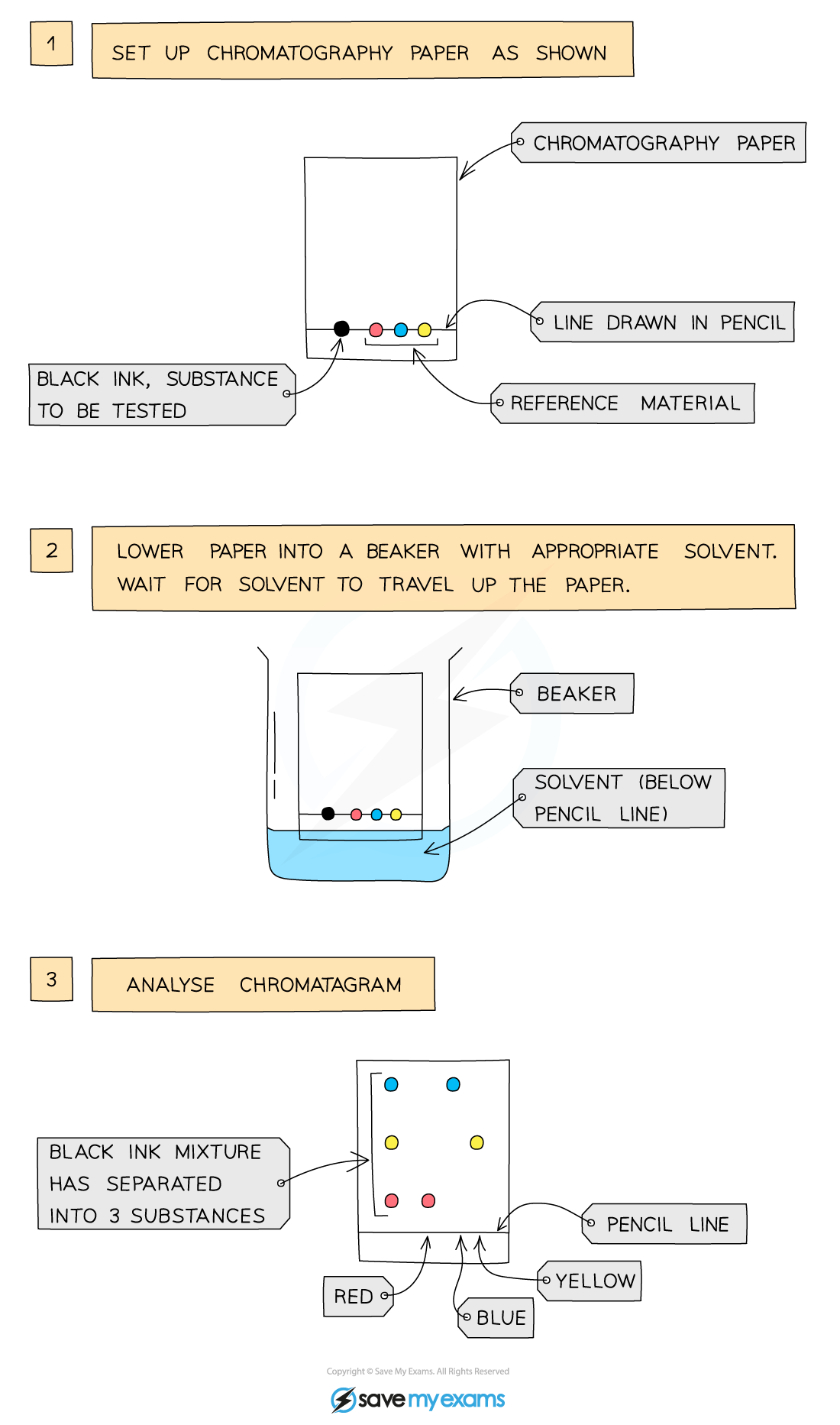
Analysis of the composition of ink using paper chromatography
Interpret Simple Chromatograms
Interpret Simple Chromatograms
If two or more substances are the same, they will produce identical chromatograms
It is common practice to include a known compound as a reference spot
This can help match up to an unknown spot or set of spots in order to identify it
If the substance is a mixture, it will separate on the paper to show all the different components as separate spots
An impure substance will show up with more than one spot, a pure substance should only show up with one spot