Identification of Cations
Identification of Cationsvideo
Identification of Cations
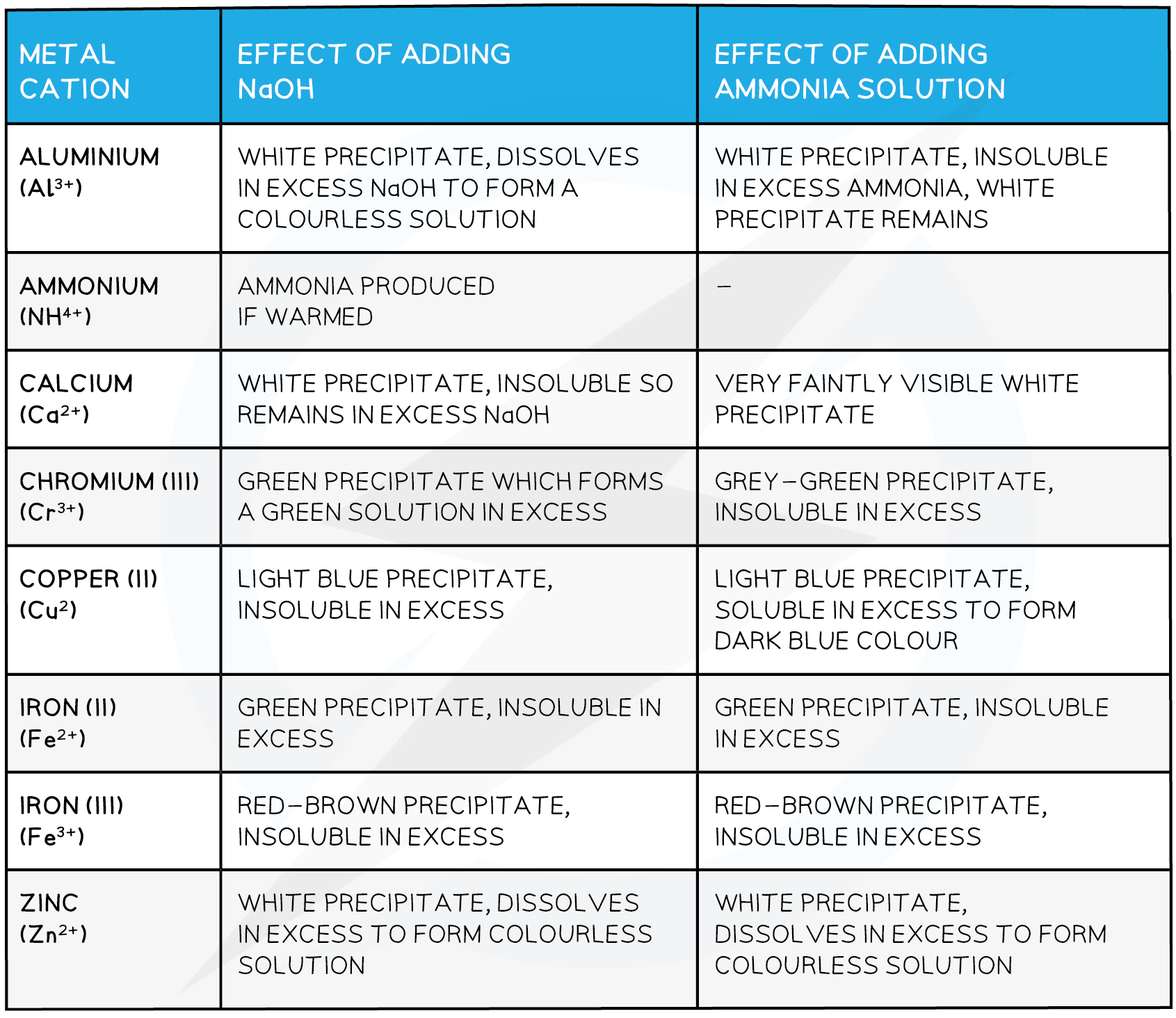
Metal cations in aqueous solution can be identified by the colour of the precipitate they form on addition of sodium hydroxide and ammonia
If only a small amount of NaOH is used then normally the resulting metal hydroxide precipitates out of solution
In excess NaOH some of the precipitates may re-dissolve
A few drops of NaOH is added at first and any colour changes or precipitates formed are noted
Then the NaOH is added in excess and the reaction is observed again
The steps are then repeated for the test using ammonia solution
Analysing results
The table below contains the results for each of the cations included in the syllabus
If a precipitate is formed from either NaOH or aqueous ammonia then it means that the hydroxide is insoluble in water
Zinc chloride, for example, reacts as such:
ZnCl2 (aq) + 2NaOH (aq) → Zn(OH)2 (s) + 2NaCl (aq)
Ca2+ ions can be distinguished from Zn2+ and Al3+ as calcium hydroxide precipitate does not dissolve in excess NaOH but both zinc hydroxide and aluminium hydroxide do
Zn2+ ions can be distinguished from Al3+ ions as Zn(OH)2 dissolves in excess aqueous ammonia but Al(OH)3 does not
Most transition metals produce hydroxides with distinctive colours
The flame test is used to identify the metal cations by the colour of the flame they produce
Ions from different metals produce different colours
Dip the loop of an unreactive metal wire such as nichrome or platinum in concentrated acid and then hold it in the blue flame of a Bunsen burner until there is no colour change
This is an important step as the test will only work if there is just one type of ion present
Two or more ions means the colours will mix, making identification erroneous
This cleans the wire loop and avoids contamination
A small sample of the compound is placed on an unreactive metal wire loop such as nichrome or platinum
Dip the loop into the solid sample / solution and place it in the edge of the blue Bunsen flame
Avoid letting the wire get so hot that it glows red otherwise this can be confused with a flame colour
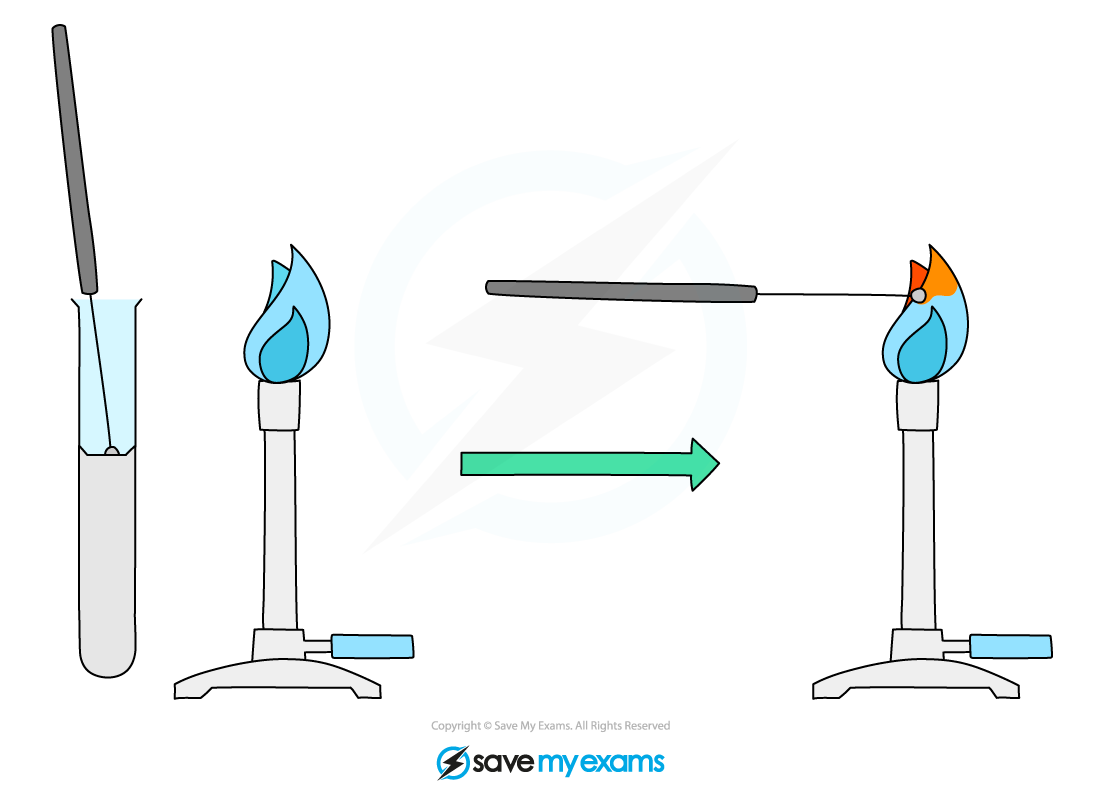
Diagram showing the technique for carrying out a flame test
The colour of the flame is observed and used to identify the metal ion present:
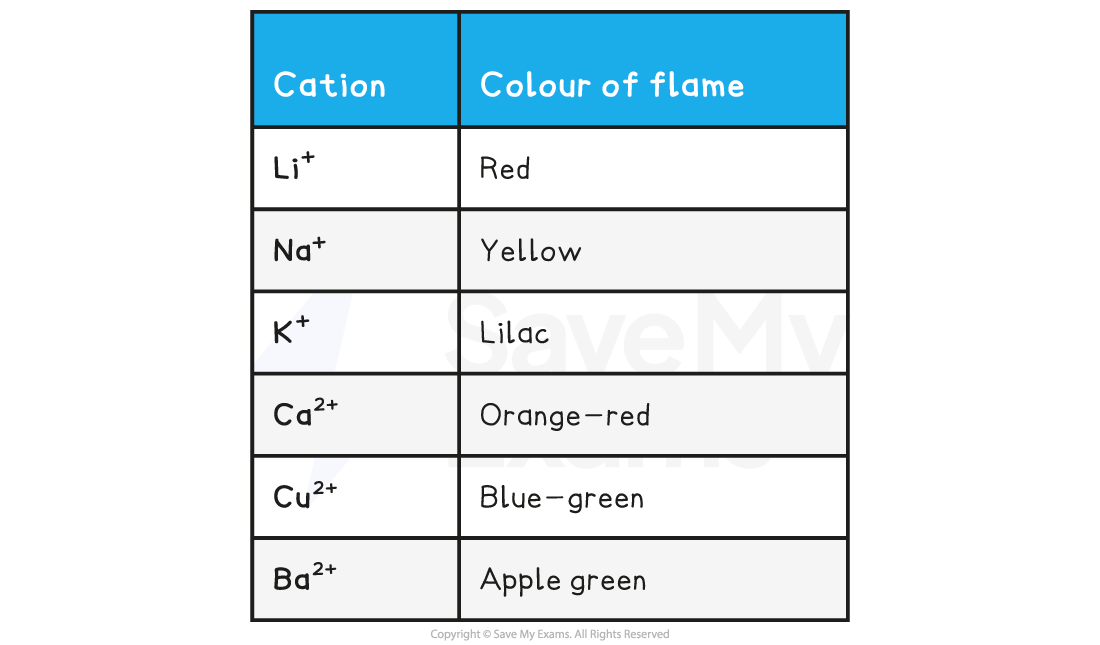
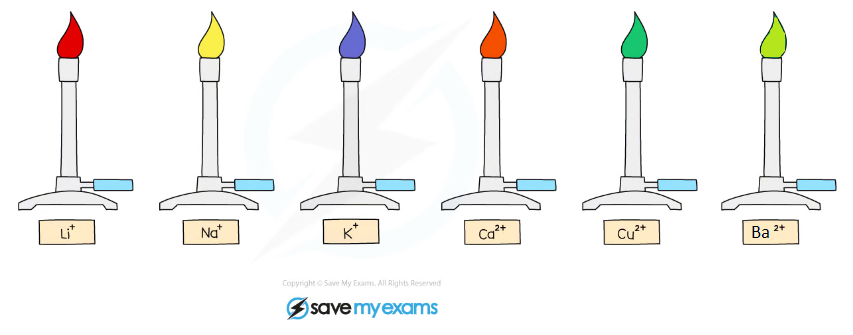
Diagram showing the colours formed in the flame test for metal ions