Alloys
Properties & Uses of Alloys
Properties & Uses of Alloys
An alloy is a mixture of two or more metals or metal with a non-metal such as carbon
Alloys often have properties that can be very different from the metals they contain, for example, they can have more strength, hardness or resistance to corrosion or extreme temperatures
These enhanced properties can make alloys more useful than pure metals
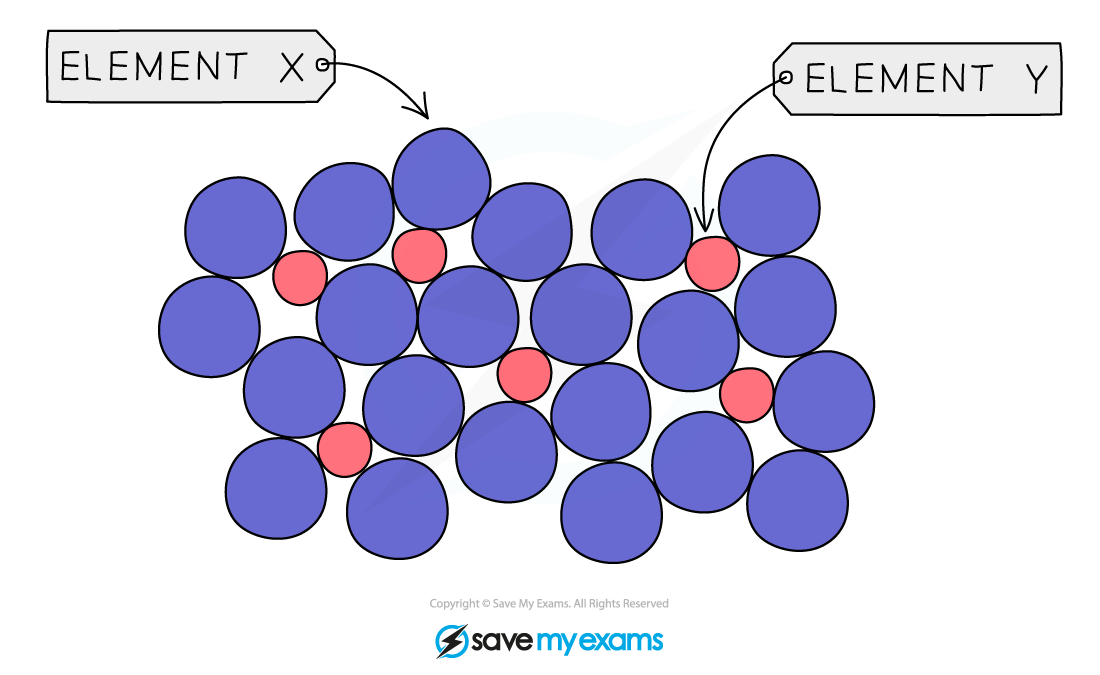
The regular arrangement of a metal lattice structure is distorted in alloys
Common alloys and their uses
Brass is an alloy of copper and zinc and is much stronger than either metal
It is used in musical instruments, ornaments and door knobs
Stainless steel is a mixture of iron and other elements, for example, chromium, nickel and carbon
It is used in cutlery because of its hardness and resistance to corrosion
Alloys of iron with tungsten are extremely hard and resistant to high temperatures
Alloys of iron mixed with chromium or nickel are resistant to corrosion
Aluminium is mixed with copper, manganese and silicon for aircraft body production as the alloy is stronger but still has a low density
Explaining the Properties of Alloys
Explaining the Properties of Alloys
Alloys contain atoms of different sizes, which distorts the normally regular arrangements of atoms in metals
This makes it more difficult for the layers to slide over each other, so alloys are usually much harder than the pure metal