Galvanising & Sacrificial Protection
Galvanising & Sacrificial Protectionvideo
Galvanising & Sacrificial Protection
Iron can be prevented from rusting using the reactivity series
Sacrificial Protection
A more reactive metal can be attached to a less reactive metal
The more reactive metal will oxidise and therefore corrode first, protecting the less reactive metal from corrosion
E.g. using zinc bars on the side of steel ships:
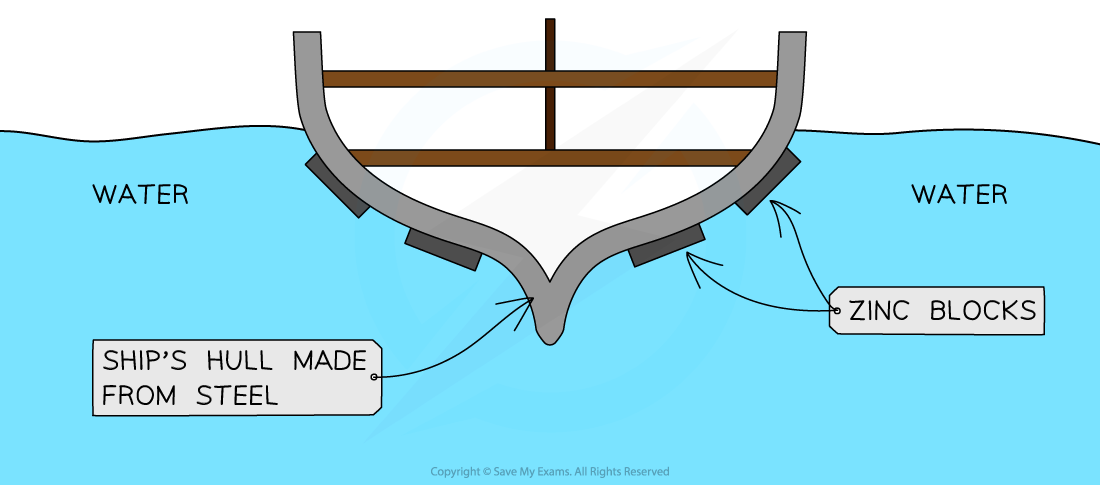
Diagram to show the use of zinc bars on the sides of steel ships as a method of sacrificial protection
Zinc is more reactive than iron therefore will lose its electrons more easily than iron and is oxidised more easily:
Zn → Zn2+ + 2e-
The iron is less reactive therefore will not lose its electrons as easily so it is not oxidised; the zinc is sacrificed to protect the steel
For continued protection, the zinc bars have to be replaced before they completely corrode
Galvanising
Galvanising is a process where the iron to be protected is coated with a layer of zinc
This can be done by electroplating or dipping it into molten zinc
ZnCO3 is formed when zinc reacts with oxygen and carbon dioxide in the air and protects the iron by the barrier method
If the coating is damaged or scratched, the iron is still protected from rusting by sacrificial protection