Extraction of Metals
Extraction of Metals
Extraction of Metals
The Earth’s crust contains metals and metal compounds such as gold, copper, iron oxide and aluminium oxide
Useful metals are often chemically combined with other substances forming ores
A metal ore is a rock that contains enough of the metal to make it worthwhile extracting
They have to be extracted from their ores through processes such as electrolysis, using a blast furnace or by reacting with more reactive material
In many cases the ore is an oxide of the metal, therefore the extraction of these metals is a reduction process since oxygen is being removed
Common examples of oxide ores are iron and aluminium ores which are called hematite and bauxite respectively
Unreactive metals do not have to be extracted chemically as they are often found as the uncombined element
This occurs as they do not easily react with other substances due to their chemical stability
They are known as native metals and examples include gold and platinum which can both be mined directly from the Earth’s crust
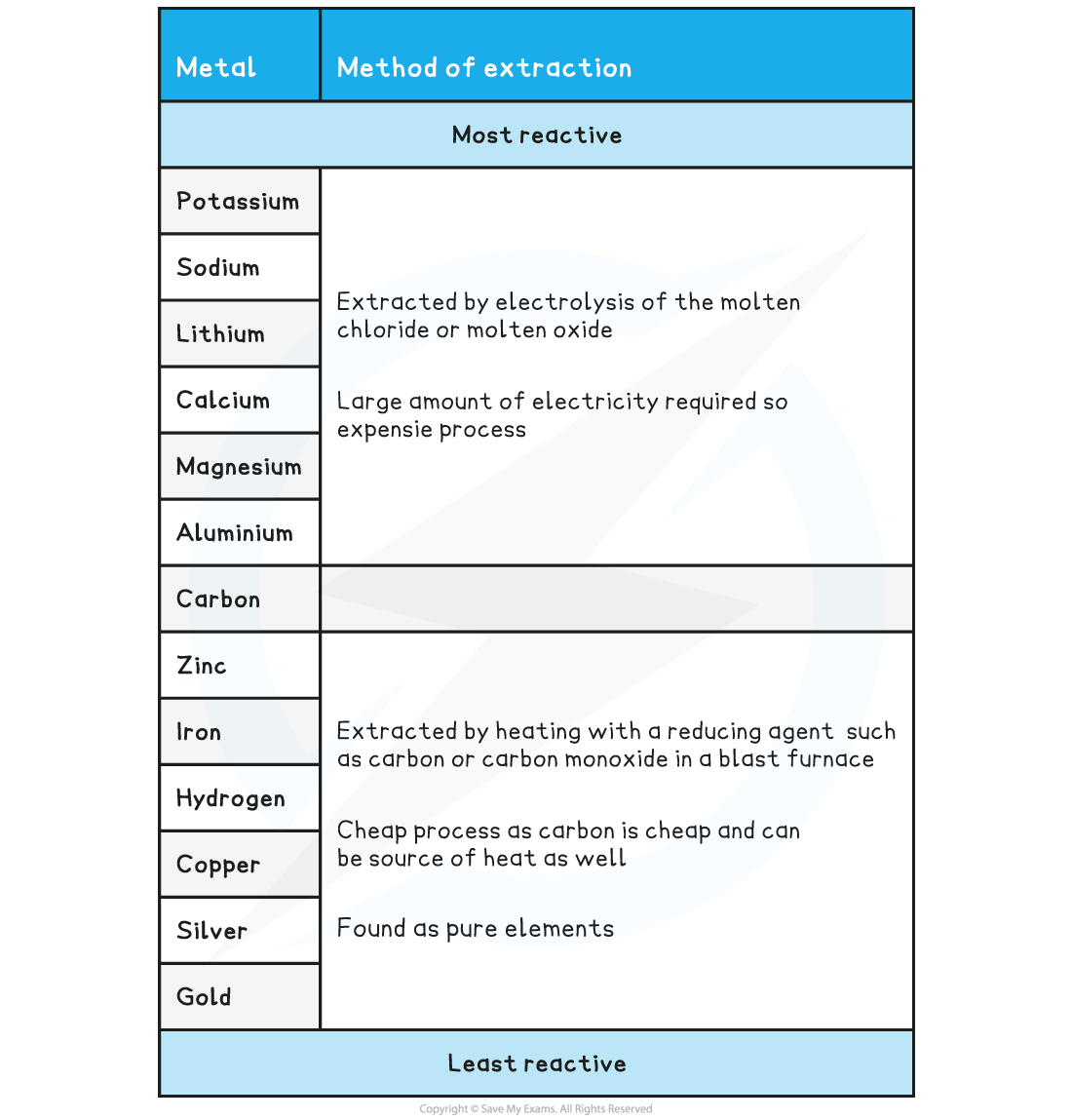
The position of the metal on the reactivity series influences the method of extraction
Those metals placed higher up on the series (above carbon) have to be extracted using electrolysis
Metals lower down on the series can be extracted by heating with carbon
The Extraction Method Depends on the Position of a Metal in the Reactivity Series