Packet Switching
Packet Switching
Packet Switching
What is packet switching?
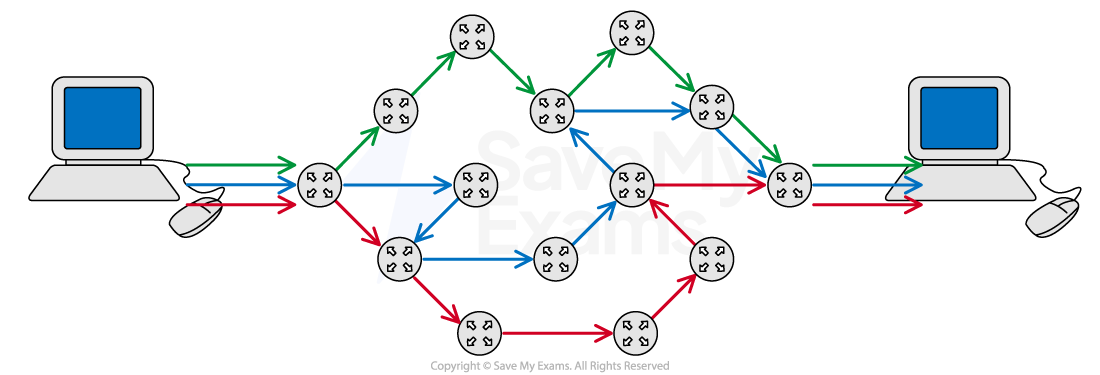
Packet switching is a method of sending and receiving data (packets) across a network
Packet switching can be broken down into five stages:
Stage | Overview | Detail |
|---|---|---|
1 | Data is broken down into packets |
|
2 | Packets are assigned a header | |
3 | Each packet makes its way to the destination |
|
4 | Routers control the routes taken for each packet |
|
5 | Packets arrive and are reordered correctly |
|
What are the advantages of packet switching?
Interference and corruption are minimal as individual packets can be resent if they are lost or damaged
The whole file doesn’t need to be resent if a corruption occurs, this saves time and internet bandwidth
Packet switching is quicker than sending a large packet as each packet finds the quickest way around the network
It's harder to hack an individual's data as each packet contains minimal data, and travels through the network separately