StudyDeck

Pride and Prejudice: Character Quotations

Exam code: 2010
Written by: Ashika|Reviewed by: Caroline Carroll|Updated 2 July 2026

English Literature exam questions usually focus on a theme, a character or a relationship between two or more characters. Examiners reward responses that track the development of characters or themes through the text. 

When revising, try to consider quotes in terms of their dramatic effects — how the words are spoken, what attitudes or relationships are presented and why these ideas have been shown to the audience. 

We’ve included the best Pride and Prejudice quotes — with detailed analysis — to help you to revise and organised them by the following characters:

  • Elizabeth Bennet

  • Fitzwilliam Darcy

  • Jane Bennet

  • Charles Bingley

Pride and Prejudice: Character quotations: Elizabeth Bennet

Elizabeth Bennet
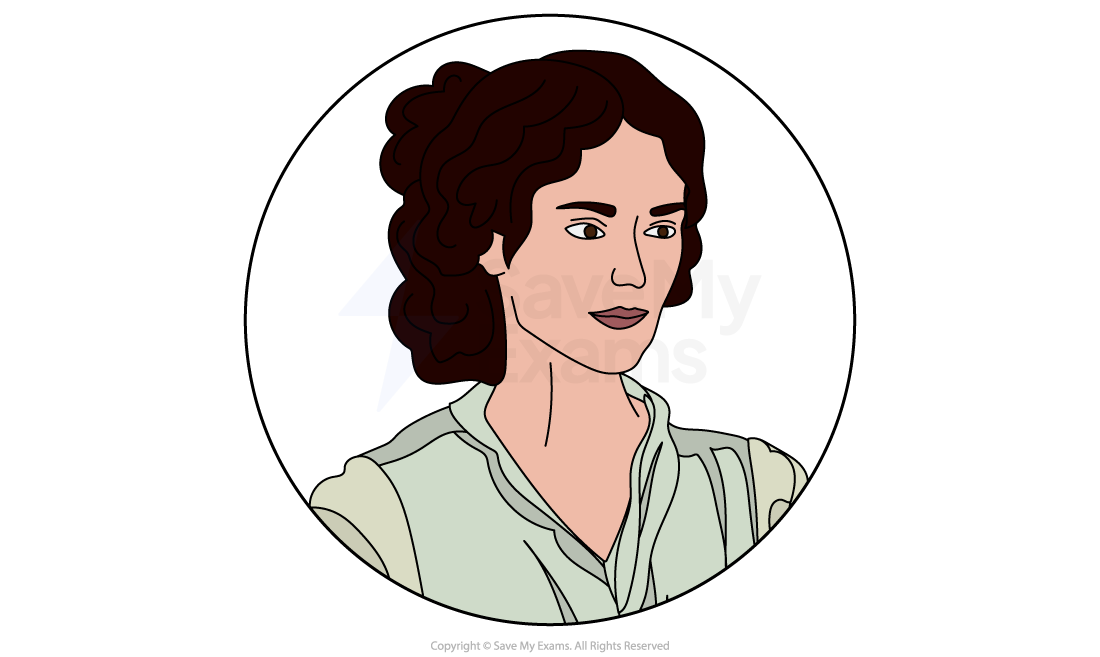
Illustration of Elizabeth Bennet with curly hair looking to the side.
Elizabeth Bennet

Key word or phrase to memorise:  “alter” and “new”

What the quotation means: Elizabeth says that studying someone’s character is pointless, as they change so much

Theme: Social class

  • Challenging Darcy’s complaints about his “unvarying” social life, Elizabeth offers a positive perspective:

    • Austen shows how Elizabeth's outlook contrasts with Darcy’s pessimism

  • Elizabeth emphatically offers his opinion that people should not be harshly judged:

    • The words “alter” and “new” illustrates her magnanimous attitude 

    • Her tolerance for others conveys Austen’s challenge to pride and prejudice, and foreshadows Elizabeth's later attitudes

Illustration of Elizabeth Bennet with curly hair looking to the side.
Elizabeth Bennet

Key word or phrase to memorise: “few” and “more”


What the quotation means: Elizabeth tells Jane that her world is beyond her understanding, and that she finds it challenging to like or trust people because they are inconstant

Theme: Love and marriage

  • Elizabeth tells Jane that she believes Charlotte’s marriage is impossible to explain 

  • Elizabeth’s rhetoric presents her as passionate:

    • Anaphora emphasises her belief that the world is confusing

    • Austen uses juxtaposition to contrast the words “few” and “more”

    • This highlights Elizabeth’s tendency to be extreme and contrary

Illustration of a person with curly hair looking to the side, wearing a green blouse. The image is circular with a white background.
Elizabeth Bennet

Key word or phrase to memorise: “men” and “mountains”


What the quotation means: Elizabeth is ecstatic to be travelling to the Lake District, and tells her aunt that she is very pleased to be going to see rocks and mountains instead of the men in Derbyshire

Theme: Gender roles


  • Elizabeth’s uneasy attitude to romance is clear when she tells her aunt that nature is about “life and vigour”:

    • She contrasts this with an emotive  description of men (“disappointment and spleen”)

    • Her attitude to love and marriage contradicts the attitudes of other female characters

  • The alliterative “men” and “mountains” draws attention to the strong and constant nature of mountains:

  • This highlights the conflict between humans and nature, a Romantic philosophy

Illustration of Elizabeth Bennet with curly hair looking to the side.
Elizabeth Bennet

Key word or phrase to memorise: “courage” and “stubbornness”

What the quotation means: Elizabeth replies to Mr Darcy’s request that she play piano, saying she is aware of his attempts to humiliate her

Theme: Social class

  • Elizabeth’s emotive language portrays her strong feelings about the conduct of her society:

    • She also equates bravery with “stubbornness” 

  • Austen highlights Elizabeth’s boldness with extreme statements:

    • She says she will “never” be “frightened” by others, even Mr Darcy

    • Through Elizabeth, Austen presents a challenge to snobbery

Pride and Prejudice: Character quotations: Fitzwilliam Darcy

Fitzwilliam Darcy
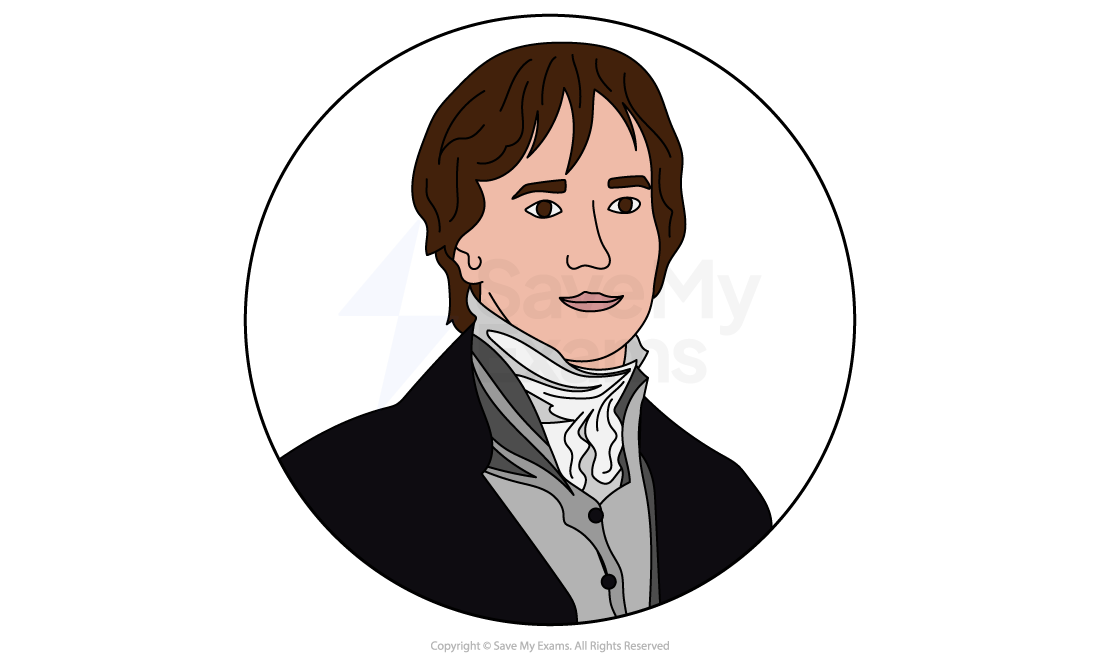
Illustration of Darcy as a man with light brown hair, wearing a high-collared white cravat and black coat.
Fitzwilliam Darcy

Key word or phrase to memorise: “pleasure” and “pretty”

What the quotation means: When Darcy is accused of being bored, he rejects this, saying that he takes “pleasure” in watching Elizabeth, who is “pretty”

Theme: Gender roles


  • Darcy’s attraction to Elizabeth is met with shock as he often takes pleasure in challenging Elizabeth:

    • Austen foreshadows their relationship by highlighting their similar natures  

  • Darcy’s remarks about Elizabeth imply the value placed in a woman’s appearance:

    • This illustrates attitudes to gender roles in Georgian England

Illustration of Darcy as a man with light brown hair, wearing a high-collared white cravat and black coat.
Fitzwilliam Darcy

Key word or phrase to memorise: “evil” and “natural”


What the quotation means: Darcy suggests that there is a flaw (a “defect”) in all personalities which he believes applies to all people, regardless of social class or education

Theme: Social class 


  • Darcy’s pessimism and resentment applies equally to everyone, and thus, Austen presents him as fair:

    • His belief, that it is natural to be flawed, presents him as equally distrustful of all people

  • He implies that there is no such thing as a superior human:

    • Through Darcy, Austen raises questions about whether social standing equates to goodness

Illustration of Darcy as a man with light brown hair, wearing a high-collared white cravat and black coat.
Fitzwilliam Darcy

Key word or phrase to memorise: “unpardonable”


What the quotation means: When Darcy expresses his love to Elizabeth, he is ashamed of his prior snobbery, describing it as hateful (“abhorrent”) and unworthy of forgiveness

Theme: Love and marriage


  • Austen presents Darcy as a worthy match for Elizabeth as he is willing to change:

    • He appears to feel genuine love for her and desires an equal relationship

  • This romantic scene portrays Darcy as humble and apologetic, as well as fair: 

    • Earlier in the novel, Darcy suggests that he is “too little yielding” of “vices”

    • Here, he applies this judgement to his own failings, illustrating integrity

Pride and Prejudice: Character quotations: Jane Bennet

Jane Bennet
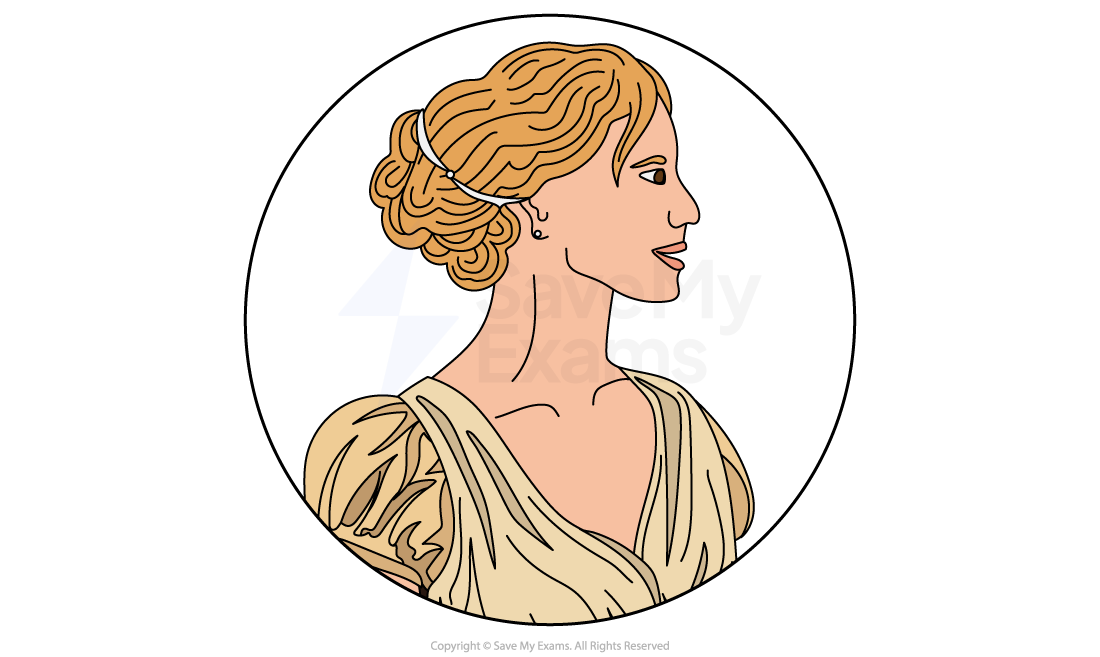
Illustration of Jane in profile with hair in a bun.
Jane Bennet

Key word or phrase to memorise: “ought” and “perfect”


What the quotation means: When Jane describes what a perfect man should be, she mentions typically good qualities, but adds that he should come from a good family

Theme: Gender roles


  • Jane conveys Austen’s ideas about the significance of class in Georgian England:

    • She plainly states that the “perfect” man should be well-bred

    • The adjective “perfect” is suggestive of the high standards required for marriage (a sought after status at the time)

  • Jane’s remarks highlight the strict code of conduct that was required by a “young man”:

    • For example, she mentions “happy manners”, which refers to the importance of politeness

  • The modal verb “ought” suggests obligation and the importance of duty

Illustration of a woman in profile with hair in a bun and wearing an ancient Greek-style dress. She is enclosed in a circular frame against a white background.
Jane Bennet

Key word or phrase to memorise: “confidence” and “suspicion”

What the quotation means: Jane writes that, although Elizabeth was right about Caroline’s insincerity, she still thinks that her decision to trust Caroline is as good as Elizabeth’s choice to suspect her

Theme: Social class

  • Austen picks up on the theme of prejudice in Jane’s letter to Elizabeth:

    • She comments on Elizabeth’s suspicious, distrustful nature 

  • Jane’s kind and tolerant nature is portrayed as she gently admonishes Elizabeth:

    • The oxymoronic “confidence” and “suspicion” highlights the difference between Jane and Elizabeth

Illustration of Jane in profile with hair in a bun.
Jane Bennet

Key word or phrase to memorise:  “do anything” and “affection”


What the quotation means: Jane tells Elizabeth that she should be sure about her marriage to Darcy, and that she should avoid marrying him if she dislikes him

Theme: Love and marriage


  • While Jane’s sensible nature often contrasts with Elizabeth’s passion, here she conveys extreme emotions: 

    • The imperative phrase “do anything” illustrates her concern that Elizabeth is marrying Darcy even though she dislikes him

  • Jane’s words portray the challenges in a society that defines marriage as a means to survival, or improved social mobility:

    • Austen portrays Jane’s uneasiness about her sister’s marriage 

    • Nevertheless, “affection” (meaning fondness or liking) highlights Jane’s stance that marriage is not about passion

Pride and Prejudice: Character quotations: Charles Bingley

Charles Bingley
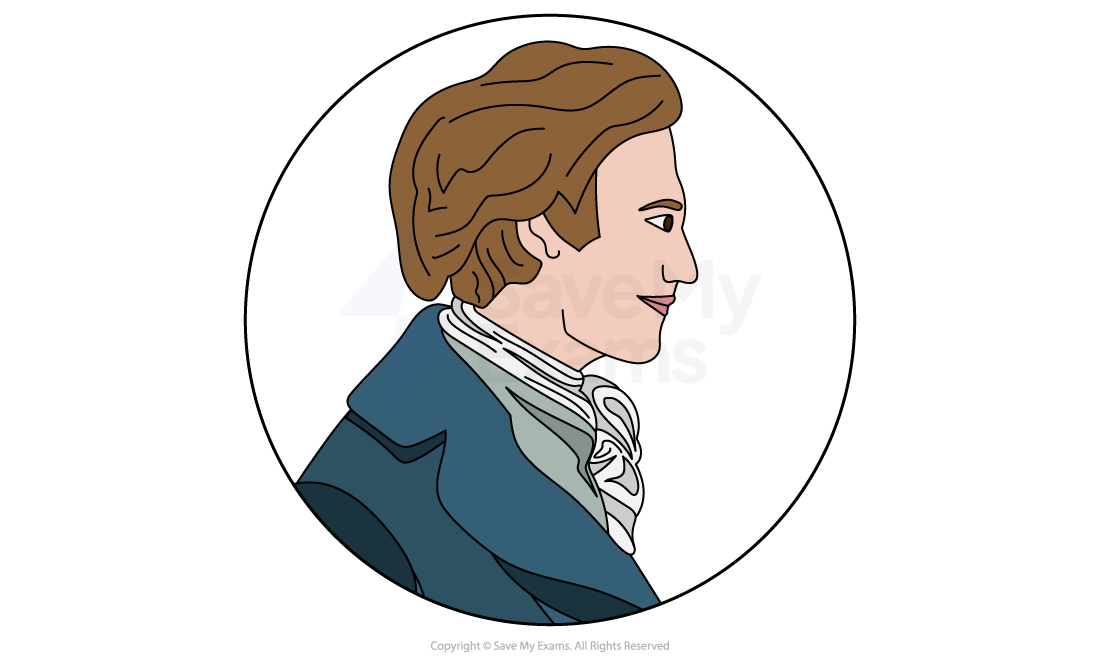
Profile illustration of Bingley as a man with brown hair, wearing a blue coat and a white cravat.
Charles Bingley

Key word or phrase to memorise:  “for your benefit” and “idle fellow”


What the quotation means: Bingley apologises to Elizabeth for his limited collection of books, accepts this lets him down in her eyes, and explains it is because he is lazy

Theme: Social class 


  • Austen juxtaposes Bingley’s humility with Darcy’s arrogance:

    • Bingley’s deference to Elizabeth contrasts with Darcy’s snobbery

  • Here, Bingley states that a large library would “credit” him:

    • This contrasts with Darcy’s library which is the “work of many generations”

    • This conveys Bingley’s insecurities about his social standing

Profile illustration of a man with brown hair, wearing a blue coat and a white cravat, viewed inside a circular frame.
Charles Bingley

Key word or phrase to memorise:  “merely” and “shew off”


What the quotation means: Bingley rejects Darcy’s challenge to his humility and integrity, insisting that he did not assume the identity of a quick writer, or pretend to be something he was not, just to impress the female company

Theme:  Love and marriage

  • Darcy’s suggestion that he assumed an identity in order to flirt is strongly rejected

  • Austen illustrates Bingley’s distaste for falseness with the word “merely”:

    • He is adamant that his intention was not simply to win over the “ladies”

  • Austen illustrates conflicts resulting from her society’s preoccupation with marriage

Sources

Austen, Jane. Pride and Prejudice. Penguin Classics.