To Kill a Mockingbird: Characters
To Kill a Mockingbird: Characters
Characters
Authors of fiction construct characters to embody concepts, represent ideas and convey the key themes they want to communicate. In To Kill a Mockingbird, Harper Lee employs characters to convey themes, explore societal issues, and provide insight into human nature. Each character serves a distinct purpose, adding depth and meaning to the novel.
Main characters
Scout (Jean Louise Finch)
Atticus Finch
Jem Finch
Boo (Arthur) Radley
Other characters
Calpurnia
Dill (Charles Baker Harris)
Bob Ewell
Mayella Ewell
Tom Robinson
Mrs Dubose
Aunt Alexandra
Miss Maudie Atkinson
To Kill a Mockingbird: Characters: Scout (Jean Louise Finch)
Scout (Jean Louise Finch)
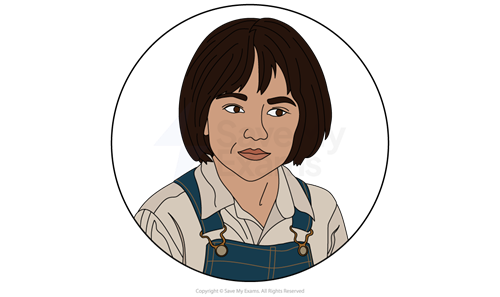
Scout Finch is the protagonist of the story who relays the events of the novel:
She is a retrospective narrator: the text is told by her as a child but is mediated by an adult
This adds a maturity and credibility to the events
By using the voice of a child, Lee is able to expose the injustices and absurdity of racism and discrimination
It also creates pathos for the plight of Tom Robinson by interweaving her loss of innocence with his mistreatment
Scout is intelligent and literate in contrast to her peers, who can only read and write in the “third grade”
She is precocious and unafraid of speaking her mind:
This leads to her being punished at school when she explains why Walter Cunningham does not have his lunch money
However, this quality is shown to be important as it drives Scout to question the social norms that the community in the southern town of Maycomb, Alabama accept and propagate
Scout understands that segregation does not espouse the American value of equality and realises this hypocrisy
Scout is presented as a tomboy who defies gender stereotypes, choosing to wear “overalls” and “britches” rather than dresses:
Even when she is in a dress, she wears her overalls underneath
She defies traditional gender roles with her rejection of feminine clothing, symbolising her rebellious nature
Following the conventions of the bildungsroman genre, Scout is shown to mature and grow throughout the text:
She embraces kindness and empathy epitomised by the evolution of her attitude towards Boo
Similar to her community, she first considers Boo an outcast, but by the end she realises that he is a harmless, kind and vulnerable person:
This allows Lee to comment on Atticus’s parenting style, and the importance of it in educating his children in empathy, kindness and tolerance
This may be seen as Lee offering a wider critique of parenting and education as vital in overcoming the ills of society
By the end of the text, Scout embodies these qualities, suggesting that Atticus has been successful in raising her
To Kill a Mockingbird: Characters: Atticus Finch
Atticus Finch
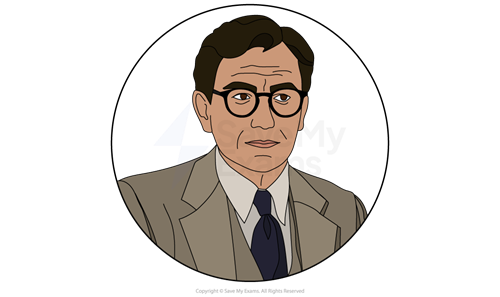
Atticus is a lawyer and state representative who takes on the Tom Robinson case even though he knows he will lose:
It causes him to be intimidated and shunned by others
He symbolises honour, bravery, heroism, intelligence and empathy and is the moral compass of the text
Atticus rejects society’s prejudices even when it puts him in harm’s way and sets him apart from the rest of the town:
For example, he calls Tom Robinson “respectable” in court and visits his wife after his death:
Through his empathy, he considers Tom Robinson an equal and not as the other, undermining the idea of segregation
His shooting of the rabid dog becomes a motif for his attempt to eradicate racism in his community
Atticus empathises with others, even though they do not do the same:
He helps Mr Cunningham with his legal affairs even though he cannot pay
He tells his children to hold their heads high and keep their fists down:
“No matter what anybody says to you, don’t let ‘em get your goat”
Lee uses Atticus to represent the qualities that will help make society a better place:
Walter Cunningham is welcomed into the Finch home for a meal, despite the difficult economic situation of the time
Atticus employs Calpurnia and treats her well, despite prejudice towards black women:
He keeps her in employment during the Great Depression, when there were likely many white women looking for work
Through his insistence that it is a sin kill a mockingbird, Atticus is presented as believing that innocence should be protected:
He protects the vulnerable of the town by telling the children to leave Boo Radley alone, and by representing Tom Robinson
To Kill a Mockingbird: Characters: Jem Finch
Jem Finch
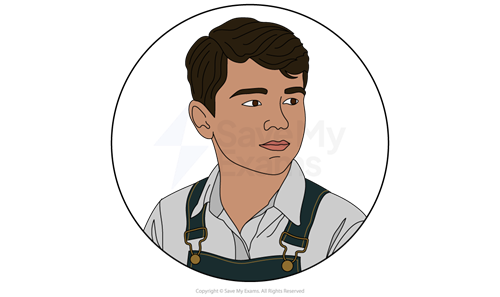
Jem is kind, mature and even tempered and is portrayed as a protective older brother to Scout:
When he catches his sister fighting with Walter Cunningham, he reprimands her and invites him round for dinner
This demonstrates the kindness and generosity of spirit he has learned from his father
Although all of the children are fascinated by Boo Radley, Jem demonstrates leadership in a number of instances:
He takes charge of the idea to re-enact Boo's life, casting himself as the lead character
It is Jem who runs to the Radleys’ front porch to touch the front door
He protects Scout by telling her to run away during the Bob Ewell attack
Lee presents Jem as intelligent and thoughtful, but also emotional:
When Nathan Radley seals the tree hole where the children find gifts, Jem is upset
In a fit of anger, he cuts Mrs Dubose’s camellia flowers, signifying his desire to cut intolerance out of his community:
After her death, he throws the flower she left for him into the fire
As the novel progresses, Jem is presented as more mature than Scout, choosing to isolate himself and spend time reading instead of playing:
Jem’s introspection coincides with the beginning of the second part of the novel, bringing an end to the age of innocence at the start
Jem’s adherence to rules evolves over time, suggesting an understanding of the complexity of right and wrong:
During the midnight scene at the jail, he demonstrates a willingness to accept punishment rather than betray his father's trust
Jem's character undergoes a profound shift following Tom Robinson's conviction:
The verdict shatters his faith in justice and exposes him to the harsh realities of prejudice and hatred:
Struggling to comprehend the divisions within society, Jem grapples with disillusionment and questions the inherent goodness of people
Despite this, like his father, he wants to become a lawyer so he can make a positive impact on the world
To Kill a Mockingbird: Characters: Boo Radley
Boo Radley
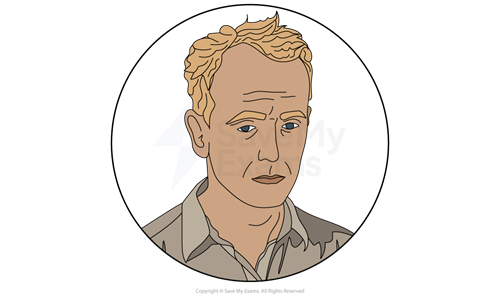
Although Boo Radley is rarely seen in the novel, the symbolism of his character is central to the novel
Boo is presented as being tormented by the children, who are fascinated by rumours that he stabbed his father with scissors and has been confined to the house ever since:
Described as a “malevolent phantom” by Scout at the beginning, it is Boo who saves her life with an act of bravery and selflessness at the end:
As such, he symbolises innocence, kindness and the juxtaposition of hearsay and reality
He is ostracised by the community and stigmatised as an outsider to be feared and shunned as he does not adhere to social norms:
He is a motif for those who are marginalised due to ignorance and rumour
He leaves gifts for the children in the hollow of a tree, suggesting he is benevolent and desires friendship and human connection:
The tree is filled in with cement, signifying social barriers that keep people apart and hinder understanding
After saving Scout and Jem from Bob Ewell, Lee presents Boo as gentle and vulnerable:
He asks to be taken home: “He almost whispered it, in the voice of a child afraid of the dark”
Scout’s realisation at the end of the novel that Boo seems “real nice” is symbolic of her evolution and maturity:
This represents the novel’s central message that people should be treated fairly and not discriminated against
To Kill a Mockingbird: Characters: Minor characters
Minor characters
Calpurnia
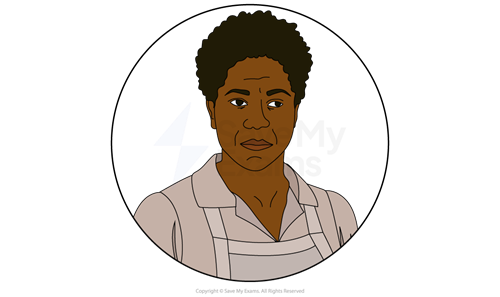
As the sole female presence in Scout's predominantly male household at the beginning of the novel, Calpurnia serves as a strong role model for Scout:
She assumes the role of a teacher, imparting valuable life lessons to Scout and Jem, helping them to understand the intricacies of racial and social divides
By introducing them to her congregation, Calpurnia allows them to experience an aspect of African-American culture:
Scout and Jem’s visit to the church expands their horizons and enhances their comprehension of social justice
Throughout the novel, Calpurnia exhibits strength of character and upholds admirable morals:
Like Atticus, Calpurnia refrains from passing judgement on others, reprimanding Scout for doing so when she comments on Walter’s eating habits
In the era of segregation in the American south, Calpurnia exemplifies resilience and dignity:
Her portrayal epitomises the resilience of the black community during a time of pervasive oppression
Dill (Charles Baker Harris)
Dill is a playmate for Scout and Jem whose presence is associated with the school holidays, games and adventures:
He symbolises the happiness and innocence of childhood in contrast to the complex issues Scout and Jem later encounter
Although he is not from Maycomb, Dill is accepted into the community:
This contrasts with the experience of other characters such as Tom Robinson and Boo Radley
As children, Dill and Scout plan to marry when they are adults:
This alludes to a young understanding of accepted social norms and the impressionability of children
Bob Ewell
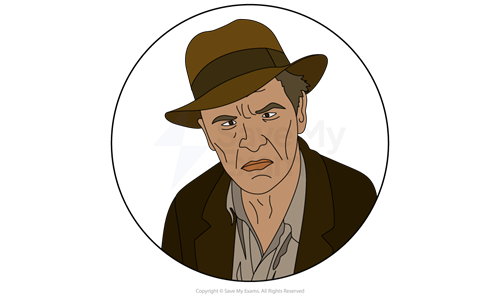
Bob Ewell is the antagonist of the novel, epitomising racial hatred in the story:
Atticus reveals that Bob is responsible for his daughter’s injuries, having caught her trying to kiss Tom Robinson because he is black:
As such, he symbolises racial hatred and is used by Lee to attack the grotesqueness of segregation and racism in America
Bob Ewell is a foil of Atticus, whose racist attitudes and moral corruption set a bad example to his children:
“As Judge Taylor banged his gavel, Mr Ewell was sitting smugly in the witness chair, surveying his handiwork”
In attacking Mayella Ewell and trying to kill Scout and Jem, Bob represents the harm that hatred is able to wreak:
The portrayal of him living at the dump is not only a commentary on poverty and class, but also on the depravity of his attitudes
Mayella Ewell
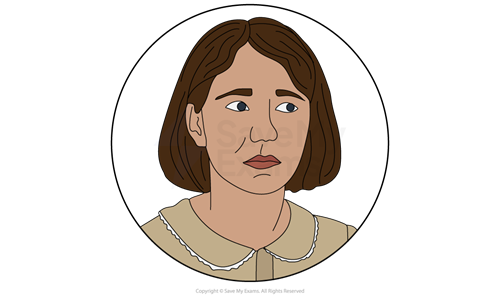
Mayella Ewell is the oldest daughter of Bob Ewell and accuses Tom Robinson of raping her
As a character, she does not appear until Chapter 18 when she gives her testimony in court:
Despite her false accusation, Lee invites the reader to feel some sympathy for her due to her miserable home circumstances
Tom Robinson
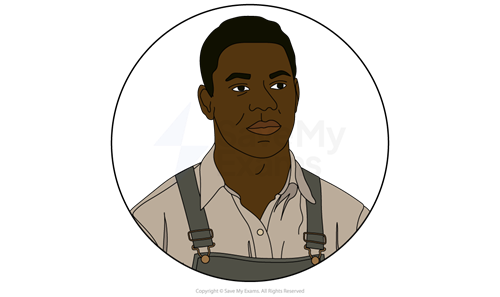
Tom Robinson, a black man, stands as a poignant symbol of the injustice that plagues Maycomb:
Harper Lee depicts him as a hardworking family man wrongfully convicted of a rape he did not commit:
Tom’s portrayal as a compassionate and honest character challenges the dehumanising stereotypes perpetuated by society
By describing the injustice of Tom’s fate, Lee forces readers to consider the prejudices ingrained within the legal system and society at large:
His experience and subsequent death serve as a reminder of the devastating impact of racism and the need for justice and equality
Mrs Dubose
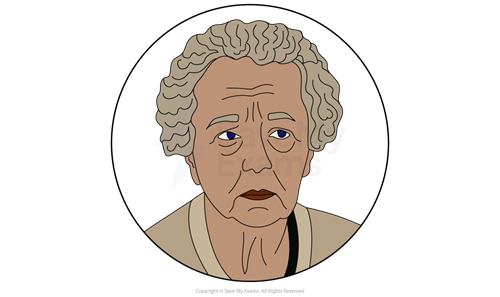
Mrs Dubose is portrayed as a stark embodiment of the racial prejudices deeply ingrained within Maycomb society
Jem does not want to be in her presence but Atticus makes Jem read to her as a punishment for cutting her camellia flowers:
Their encounters with her expose the children to the harsh realities of racism and social injustice
They witness her illness and discomfort and learn about her history of addiction:
It becomes a pivotal moment in their moral education, emphasising the importance of confronting prejudice and fostering empathy
Aunt Alexandra
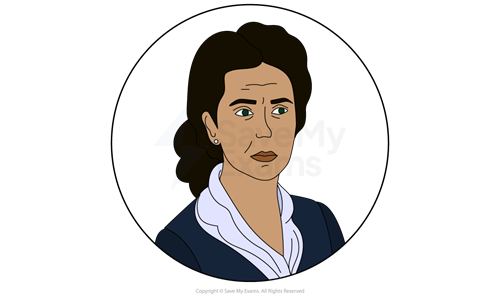
Aunt Alexandra is portrayed as a traditional and conservative character:
She can be seen as the antithesis of her brother, Atticus
She embodies a rigid conception of femininity that stands in contrast to the more unconventional roles embraced by characters like Calpurnia and Scout:
Her presence serves as a reminder of the societal expectations placed upon women in Maycomb, highlighting the tensions between tradition and progress in the novel
Miss Maudie Atkinson
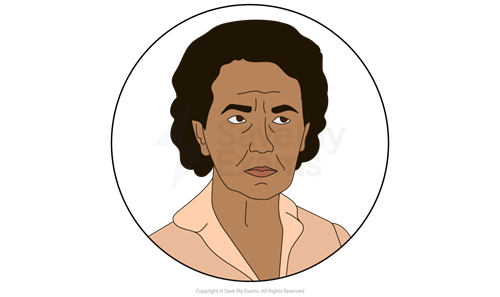
Miss Maudie Atkinson is one of the Finches' neighbours in Maycomb
She is depicted as a kind and compassionate character and provides a source of comfort and understanding for the children
She has progressive views that stand in contrast to the rest of Maycomb society
Sources:
Lee, H. (2010). To Kill a Mockingbird. Arrow Books.