Vector Addition
Vector Additionvideo
Vector addition
What is vector addition?
Adding vectors together lets us describes the movement between two points
To add or subtract vectors numerically simply add or subtract each of the corresponding components
In column vector notation just add the top, middle and bottom parts together
For example:
In base vector notation add each of the i and j components together separately
For example: (2i + j) – (i + 4j) = (i – 3j)
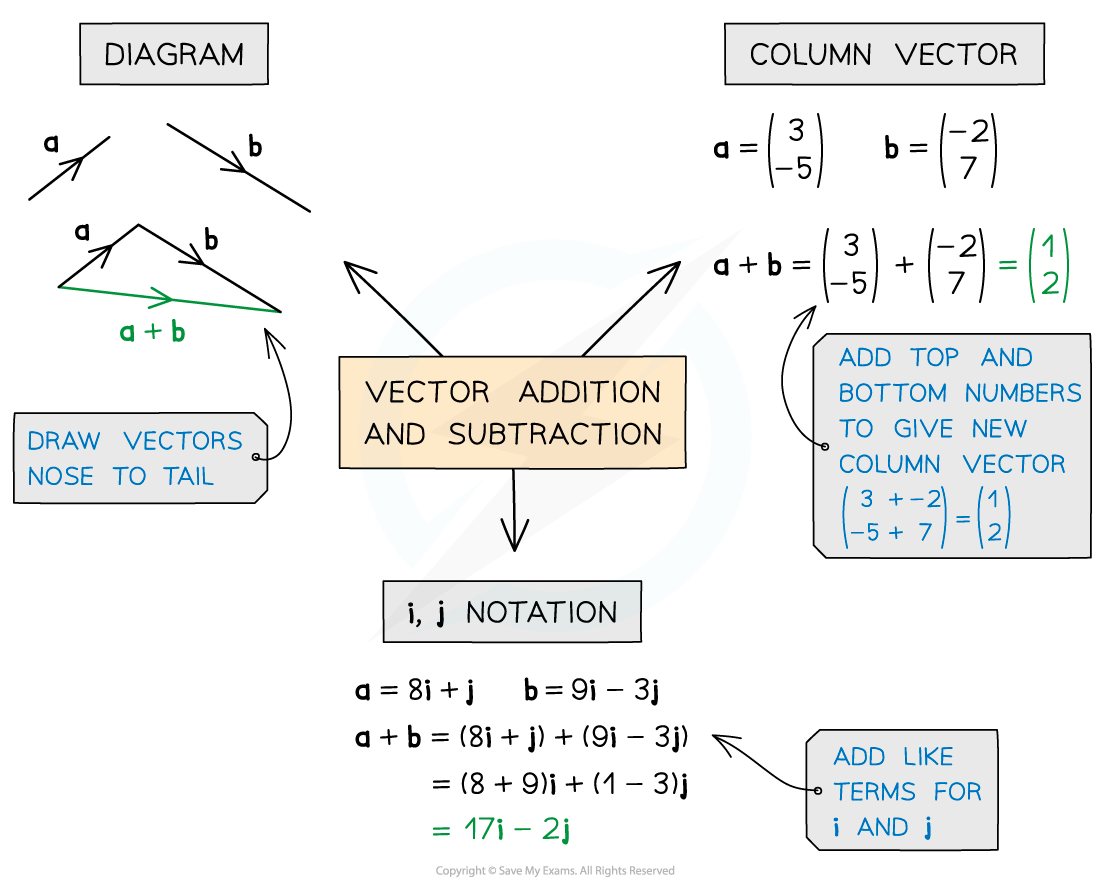
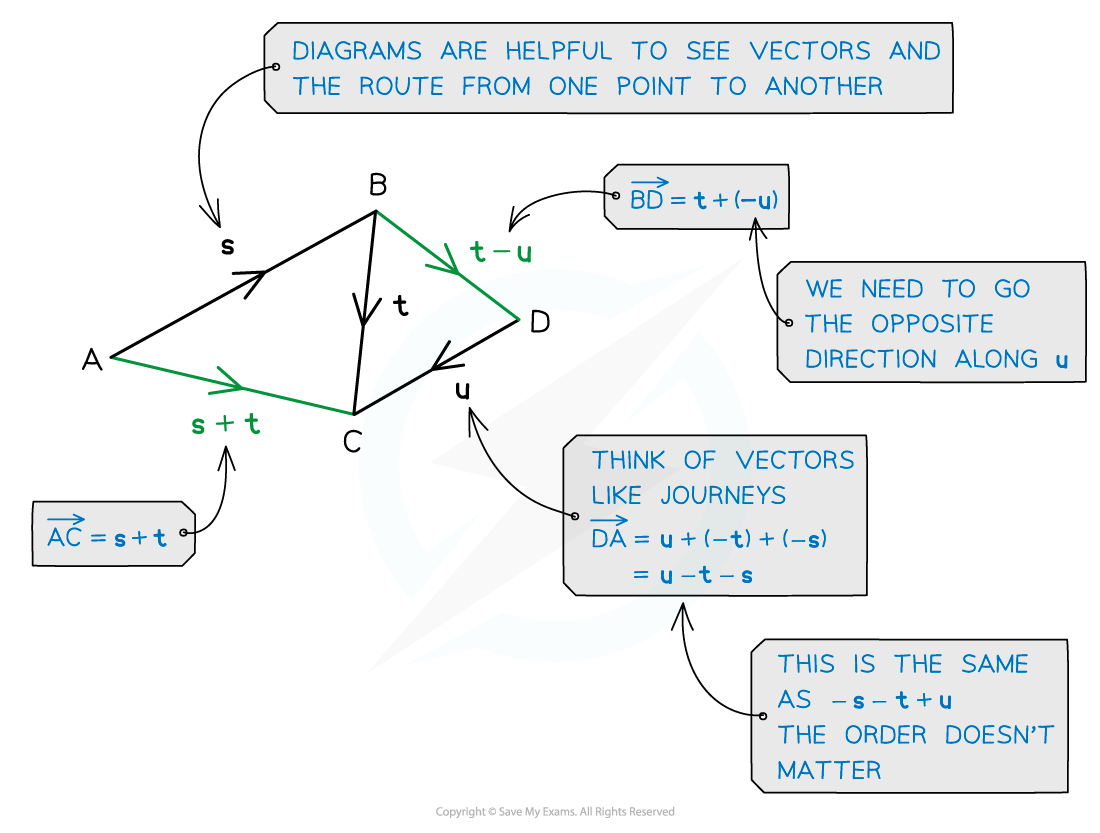
Adding vectors creates a single vector which is called the resultant vector
The resultant vector will be the shortest route from the start of the first vector to the end of the second
Subtracting a vector is the same as adding a negative vector
Adding the vectors PQ and QP gives the zero vector, denoted by a bold zero 0 (0 in handwriting)
What are scalars and parallel vectors?
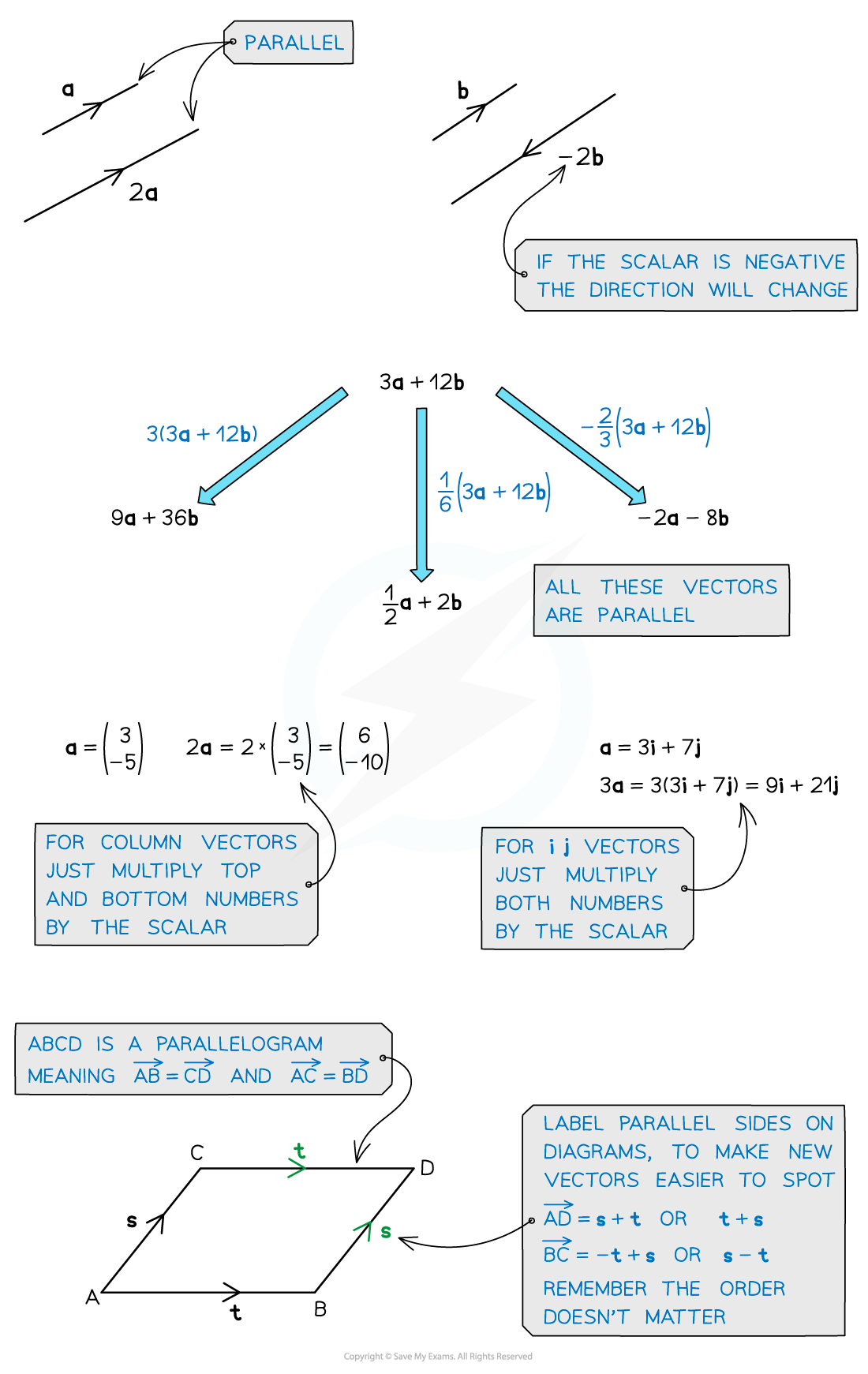
Two vectors are parallel if and only if one is a scalar multiple of the other
i.e both components of the vector have been multiplied by the same constant
Multiplying a vector by a positive scalar changes the magnitude (size) but not its direction
Multiplying a vector by a negative scalar changes the magnitude and the direction would be reversed
How do I find the vector between two points?
If, relative to the origin , the points and have position vectors
then
Similarly,
This result is particularly useful when working with position vectors (as the 'journey' can always go via the origin)
but the result applies to any set of three vectors