1.1.1 Population
Population Increase
Population Increase
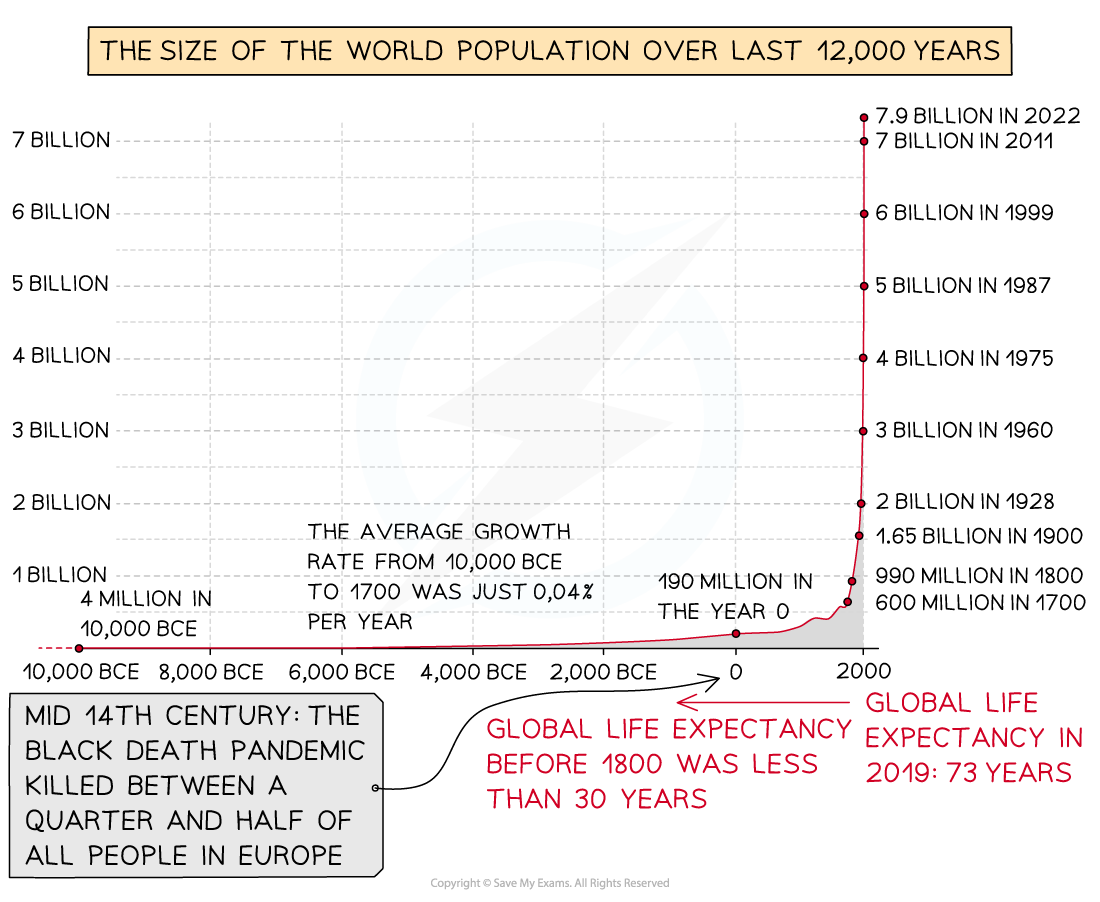
The world's population is increasing by approximately 80 million people a year
In 1804 the world population was 1 billion
Population growth was steady and low
It then took just over 100 years for the population to double to 2 billion
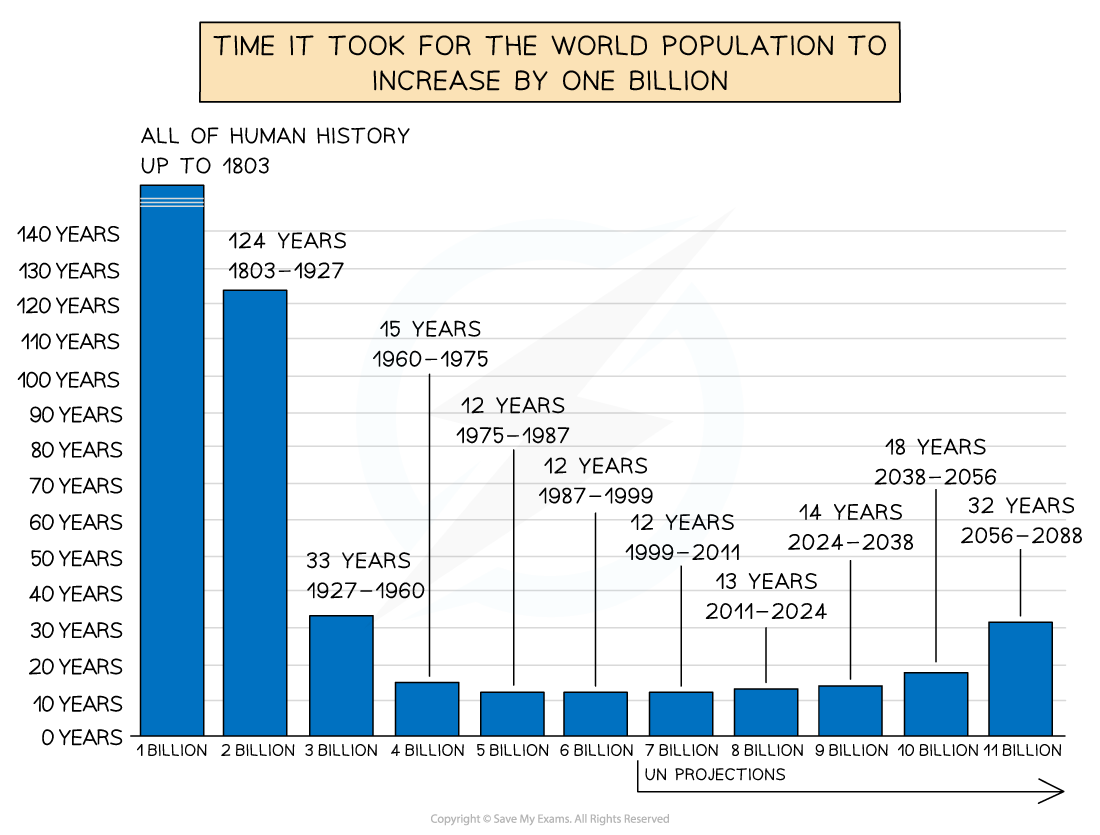
The rate of increase after 1930 was then more rapid and led to a population explosion
The fastest increase in population happened during the 1980s and 1990s
Population growth rate is the average annual change of the population size during a set period of time, usually a year
The population is still increasing but at a slower rate
In 1970 the growth rate was 2%
In 2022 the growth rate is under 1%
It is predicted by the UN that the population will stabilise at around 11 billion in 2100
Overpopulation & Underpopulation
Overpopulation & Underpopulation
Every area has a carrying capacity this is the number of people that an area can support
Overpopulation occurs when there are more people in an area than can be supported by its resources and technology
Underpopulation occurs when there are more resources available than the population can use effectively
Overpopulation can lead to increased:
Levels of pollution
Crime rates
Unemployment or underemployment
Levels of food and water shortages
Pressure on services such as hospitals and schools
Underpopulation also has consequences including:
Fewer people pay taxes which can lead to higher taxes
Underused resources, which can lead to waste
A shortage of workers
Lower levels of exports and production which affects the wealth of an area
Fewer customers for goods and services
The optimum population occurs when there is a balance between the number of people and the resources/technology available
It is the optimum population that results in the highest standard of living because:
There are not so many people or so few resources that the standard of living falls
There are enough people to develop the resources of the country
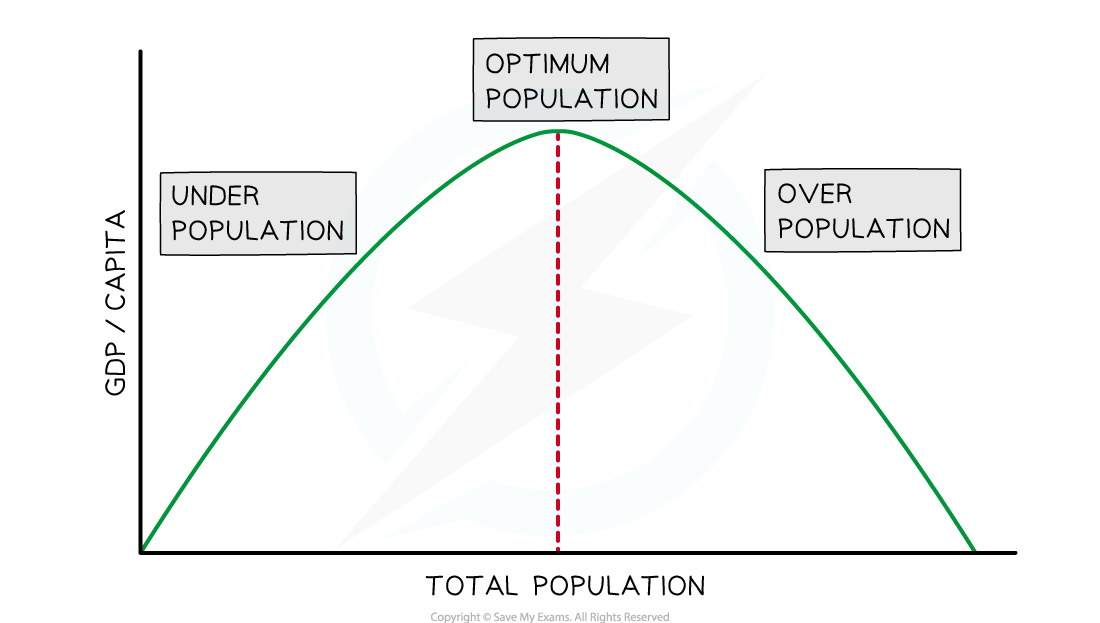
Optimum Theory of Population
Case Study: Nigeria
Case Study: Nigeria
Nigeria's population is over 217 million and is forecast to reach 400 million by 2050 and 1 billion by 2100
Lagos is predicted to become the world's largest city by 2100
30% of the population live in poverty earning less than $515 a year
The urban population has increased from 18% in 1960 to almost 53% in 2021
Nigeria is experiencing rapid population growth at 2.5%
Nigeria's population density is 226 people per km2
In Lagos, the population density reaches 6871 people per km2
Resources
Nigeria has many resources including oil, gas, iron ore, coal, zinc and arable land
The resources do not provide wealth to the whole population due to:
Poor management
Ownership by foreign companies
Corruption
The top 5 richest Nigerians own and control more resources than the remaining 95% combined
Combined with rapid population growth, it means that currently, resources are not supporting the population
Causes of over-population
The high birth and fertility rates are the main cause of the rapidly increasing population
The age of marriage in some areas can be as low as 13 and 45% of women are married before they reach 18
This increases the number of children each woman has; due to being married and of childbearing age for longer
The fertility rate is 5.32 births per woman (2019)
Larger families are traditionally associated with higher social status
In the past infant mortality rates have been high 125 per 1000 (1990) this decreased to 72 per 1000
High infant mortality rates are associated with high fertility rates as women have more children to ensure that some survive to adulthood. It takes time for this to adjust to lower infant mortality rates
Religious beliefs lead to larger family size
Lack of education about family planning and contraception
The decreasing death rate also contributes to the rising population
Life expectancy is increasing
The death rate has fallen from 19 per 1000 (1990) to 11 per 1000 (2020)
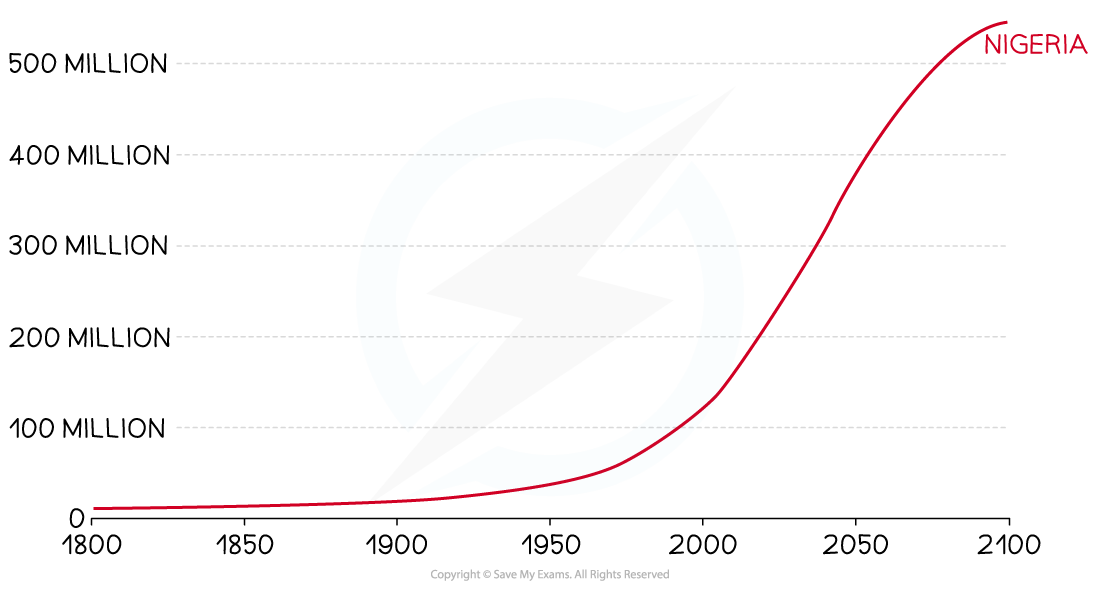
Population of Nigeria
Impacts of overpopulation
Lack of fresh water which leads to the spread of disease
29% of children in Nigeria do not have enough water to meet their daily needs
Increased levels of water, air and land pollution
Lagos has one of the highest levels of air pollution of any city in the world
Increased cultivation of land for food which leads to soil erosion and desertification
40 million people in northern Nigeria are at risk of losing their livelihoods due to desertification
19.5 million faces acute food insecurity
Increased pressure on already poor services such as health and education
Higher crime rates
High youth unemployment has led to increased gang activity and militant groups
Development of informal settlements around cities particularly Lagos
An estimated 70% of the population of Lagos lives in informal settlements
66% live on less than US$1 a day
Case Study: Canada
Case Study: Canada
Canada is the second-largest country in the world
Population of 38.5 million
Population density of 4 people per km2
The rate of natural increase for Canada is 2.42 per 1000
Most of the net population increase is the result of immigration
Resources
Canada has vast resources:
Fishing - it has the longest coastline in the world
Largest producer of zinc and uranium
Timber
Gas, coal and oil
Gold, nickel, lead and aluminium
Major exporter of wheat
Causes of under-population
The main cause of under-population in Canada is the low birth and fertility rates
Low birth rate of 9 births per 1000
Fertility rate is 1.47 children per woman which is below the fertility replacement rate of 2.1
The reasons for these low rates include:
The average age for a woman to have her first child is 31 years, which means that her childbearing years are reduced
Increased levels of family planning and access to contraceptives
Higher levels of education mean that women have careers and delay having children
It has many areas which are remote and difficult to access, building infrastructure for settlements and industry would be costly
Impacts of under-population
Shortages of workers in a number of areas including:
Construction
Engineering
Food services
Health care
Low rates of unemployment
An ageing population means more people of retirement age
Fewer workers to pay taxes
Healthcare and other social costs increase as the population ages
Resources are not exploited fully reducing potential
Lack of services due to low demand particularly in rural areas