Energy types
Specification link
This page covers section 10.4.1 of the CIE O Level specification.
10.4.1 - Types of energy:
Renewable: biomass, geothermal, hydroelectric power (HEP), solar, tidal, wave, wind
Non-renewable: fossil fuels (coal, gas, oil), nuclear
Fuelwood, which can be either renewable or non-renewable.
Energy production
Energy production
Energy sources are needed to power technology, transport, factories, homes
The amount of energy used globally varies from place to place
Each country has it's own energy mix
This will depend on several factors including the availability of:
fossil fuels
sunlight
rivers suitable for dams
steady wind speeds
coastal access
Energy production also relies upon a country's investment in infrastructure and government subsidies
Renewable energy sources
Renewable energy sources
Renewable energy sources are infinite and will not run out. They include:
hydroelectric
wave/tidal
wind
solar
geothermal
biomass/waste
Once in place, except for biomass/waste, they do not produce any greenhouse gas emissions
Greenhouse gases may be emitted in the production, construction and transport of the equipment
Increase in renewable energy
Renewable energy is increasingly important in the global energy mix
This is due to:
Non-renewable fossil fuels will at some point run out and so they need to be replaced with another energy source
The use of non-renewable fuels is damaging to the environment.
Fossil fuels, when burnt, release greenhouse gases and the sulphur dioxide released causes acid rain
Mining and drilling for fossil fuels can destroy habitats and damage the surrounding environment
Increasing awareness of the impact of using fossil fuels has resulted in international pressure to reduce their use
Countries wanting to reduce their reliance on imports of energy sources and improve their energy security
Non-renewable energy sources
Non-renewable energy sources
Over 80% of the world's energy is provided by fossil fuels (coal, oil and gas)
33% oil
27% coal
24% gas
Fossil fuels are fuels formed from the remains of living organisms (plants/animals)
These are non-renewable as they cannot be replaced at a speed that keeps up with consumption
It is estimated that based on current use and availability, gas and oil will run out by 2080
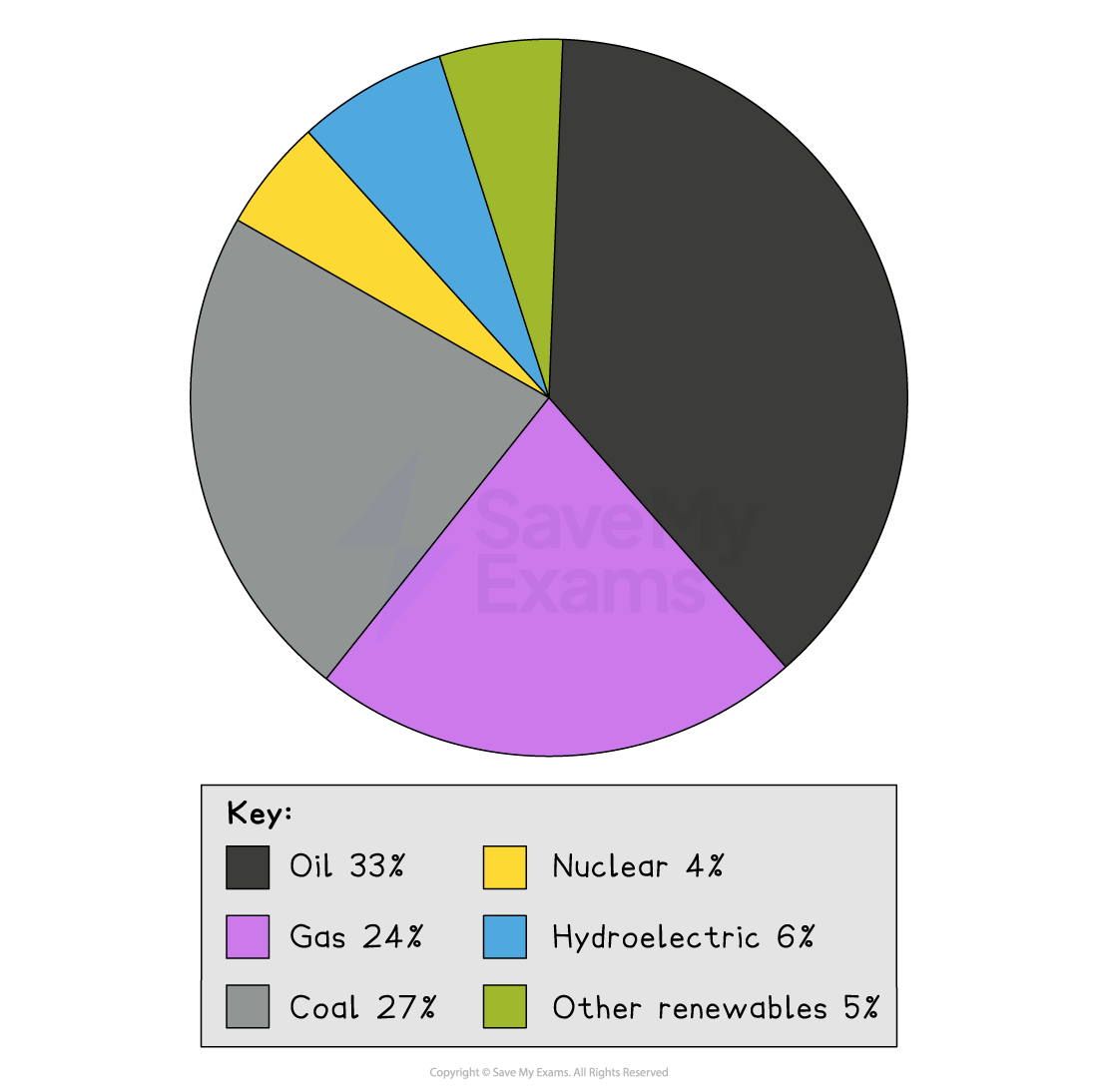
The use of nuclear and renewable energy is growing but non-renewable fossil fuels still dominate energy production
It is predicted that the use of gas and oil will continue to increase over the next 30 years
Fossil fuels are expected to still provide over 75% of the world's energy by 2040
Nuclear
Nuclear
Nuclear fuel has the potential to provide large amounts of energy
It is often used countries who do not have their own supplies of fossil fuels such as France
Nuclear fuel can be reused and is used in small amounts
This means that although non-renewable it is not likely to run out in the near future
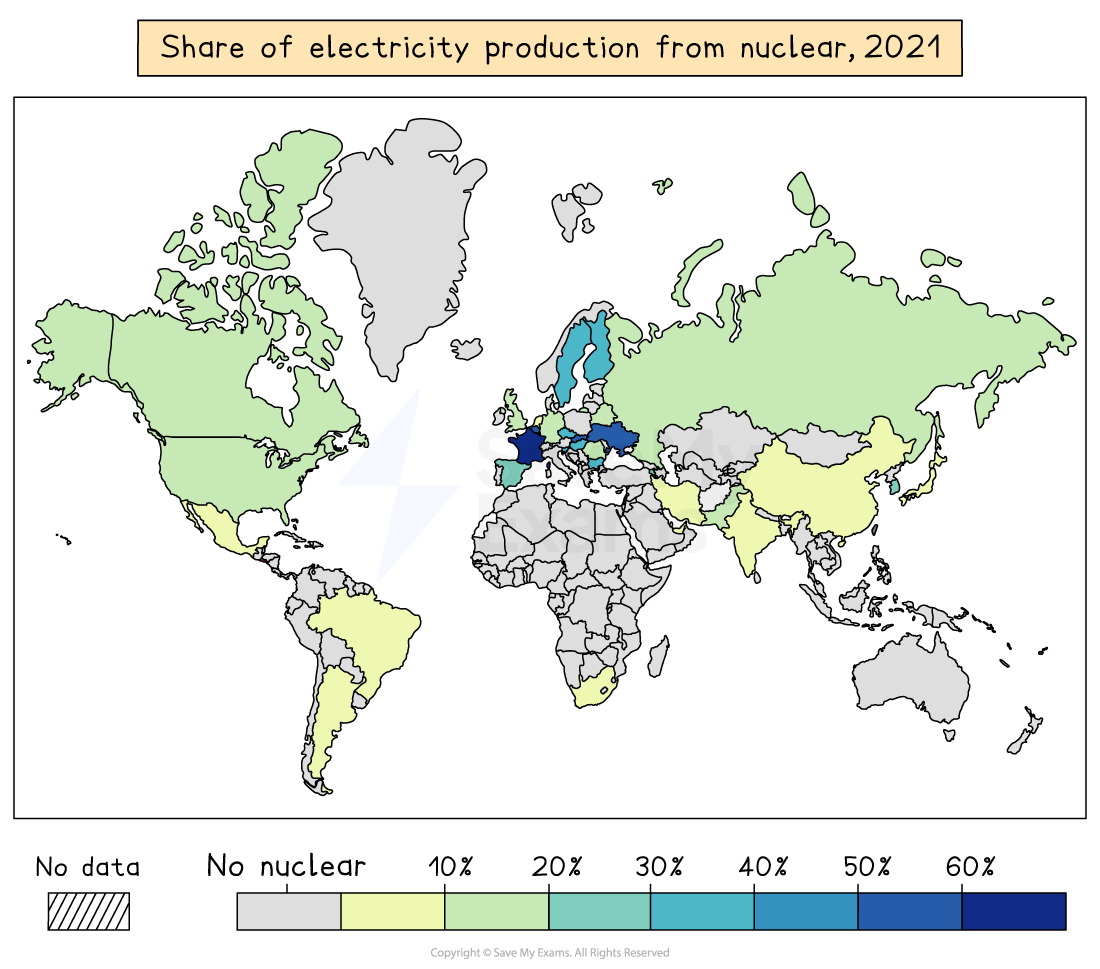
In 2019, approximately 4% of the global primary energy supply was from nuclear power
There are 439 active nuclear reactors across the world
Most of these are in just five countries:
USA (92)
France (56)
China (54)
Russia (37)
Japan (33)
Fuelwood
Fuelwood
It is estimated that between 2 and 3 billion people across the world rely on fuelwood for heating and cooking
This is usually because they do not have access to other forms of energy
Approximately 13% of the world's population does not have access to electricity
This is mostly an issue in LICs within Sub-Saharan Africa and Asia
Fuelwood is often included as a biofuel but the wood is not usually grown specifically for use in heating and cooking
The reasons for this include
It is free
It does not require technology
That it can be renewable if the trees are replaced
No high-technology equipment is needed to use the fuel
If new trees are planted this is a renewable energy source
If the trees are not replaced it is a non-renewable energy source