Variations in energy use
Specification link
This page covers section 10.5.3 of the CIE O Level specification.
10.5.3 -The reasons for variations in types of energy used within a country and between countries at different levels of development.
Reasons for high energy consumption
Reasons for high energy consumption
The global demand for energy is not evenly distributed
Some countries and some regions within countries use more energy than others
Countries with the highest energy consumption per person tend to be HICs, including Canada, Norway and Saudi Arabia
Countries with the lowest energy consumption per person are LICs, which are mainly in Africa and include Niger, Chad and Tanzania
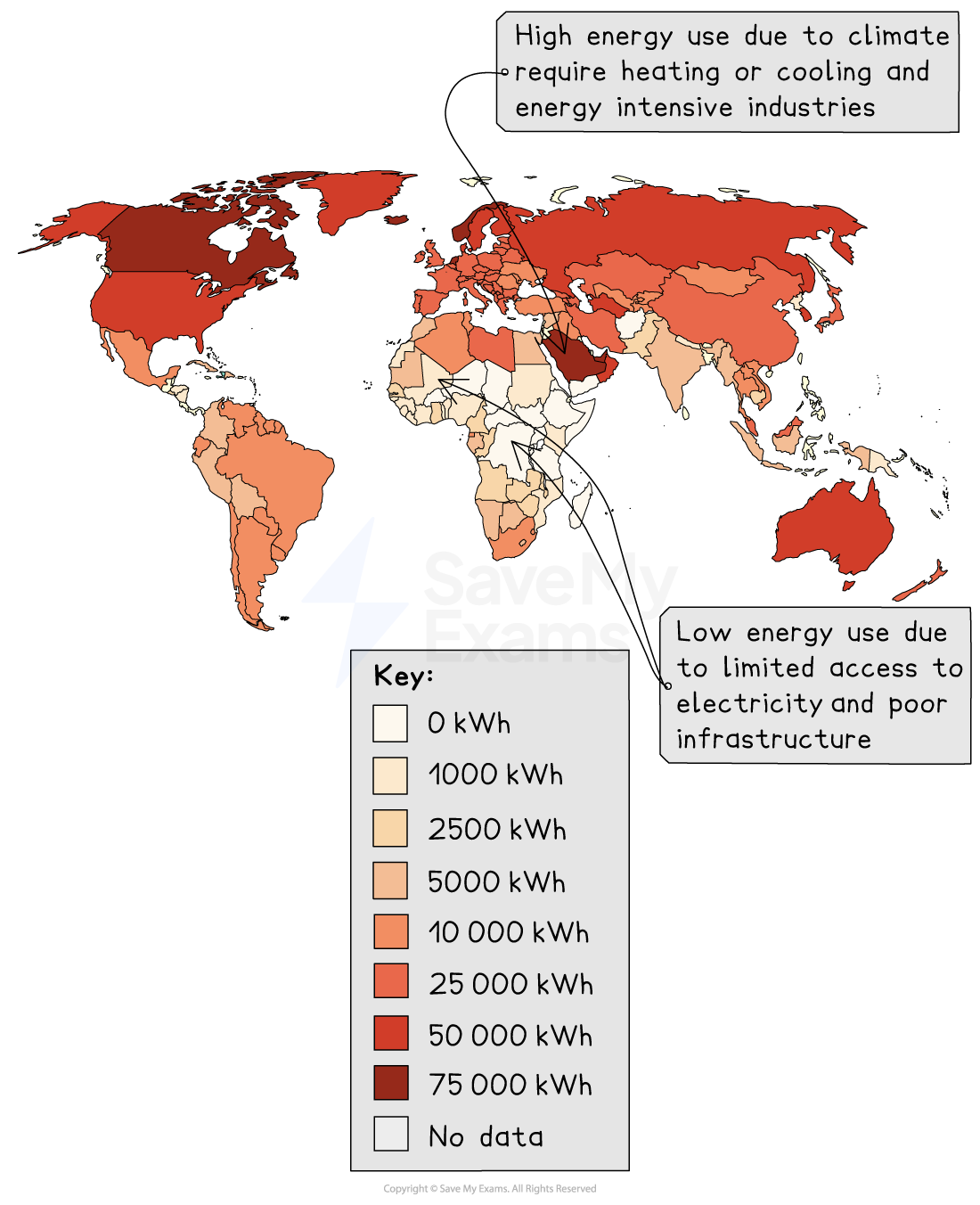
The reasons for high energy consumption vary among countries and regions, but some of the main ones include:
Level of development
Industrialisation
Climate
Population size and growth
Availability of energy
Level of development
Wealthier High Income Countries (HICs) have higher average living standards this means people have more appliances and technology that require energy
There is higher car ownership and people travel more frequently
Industry
Countries with heavy industries such as steel production and where there are lots of factories have high energy demands
Rapid industrialisation in emerging economies such as China and India has led to a significant increase in energy demand in these areas
Climate
In countries with colder climates such as Canada and Iceland more energy is required for heating
In hotter climates such as Saudi Arabia and Qatar more energy is used for cooling
Population
As the population rises so there are more homes, businesses and transport, which increases the demand for energy
Availability of energy
Access to cheap, plentiful supplies of energy tends to lead people to consume more
In countries like Saudi Arabia where there is access to large energy reserves energy is subsidised, which means that people tend to use more
Reason for low energy consumption
Reasons for low energy consumption
The reasons for low energy consumption also vary between countries and regions, but some of the main ones include:
Level of development
Poor infrastructure
High energy costs
Climate
Level of development
In Low Income Countries (LICs), people cannot afford to pay for energy
A greater proportion of the population live a subsistence lifestyle which is based on farming this does not have high energy use
People have limited access to technology and appliances, particularly in rural areas
Poor infrastructure
Access to energy is dependent on infrastructure such as pipes and cables
In many LICs, electricity grids are small, unreliable and don't cover many rural areas
Gas pipelines and petrol/fuel stations may also be limited
High energy costs
In countries with few energy sources, the cost of importing energy supply can be expensive, which increases prices
High prices lead to reduced consumption
Climate
In temperate climates people do not need to use as much energy for heating or cooling
This reduces the consumption of energy in homes and businesses
Variations in energy consumption within countries
Variations in energy consumption within countries
Urban areas usually consume more energy than rural areas
The reasons for this include:
Higher population density
Better access to energy infrastructure
More transport
Higher use of energy for heating/cooling, entertainment and industries
Rural areas tend to consume less energy due to:
Fewer industries
Smaller populations
Less infrastructure and greater reliance on biomass for heating/cooking, particularly in LICs
Industrial and commercial areas consume more energy than residential areas
Colder or hotter parts of countries have different heating and cooling requirements which cause variations in energy demand
Florida in the USA will use more energy for cooling, whereas Minnesota in the USA will use more energy for heating