Planes of Symmetry
Planes of Symmetry
Planes of symmetry
What is a plane of symmetry?
A plane is a flat surface that can be any 2D shape
A plane of symmetry is a plane that splits a 3D shape into two congruent (identical) halves
If a 3D shape has a plane of symmetry, it has reflection symmetry
The two congruent halves are identical, mirror images of each other
All prisms have at least one plane of symmetry
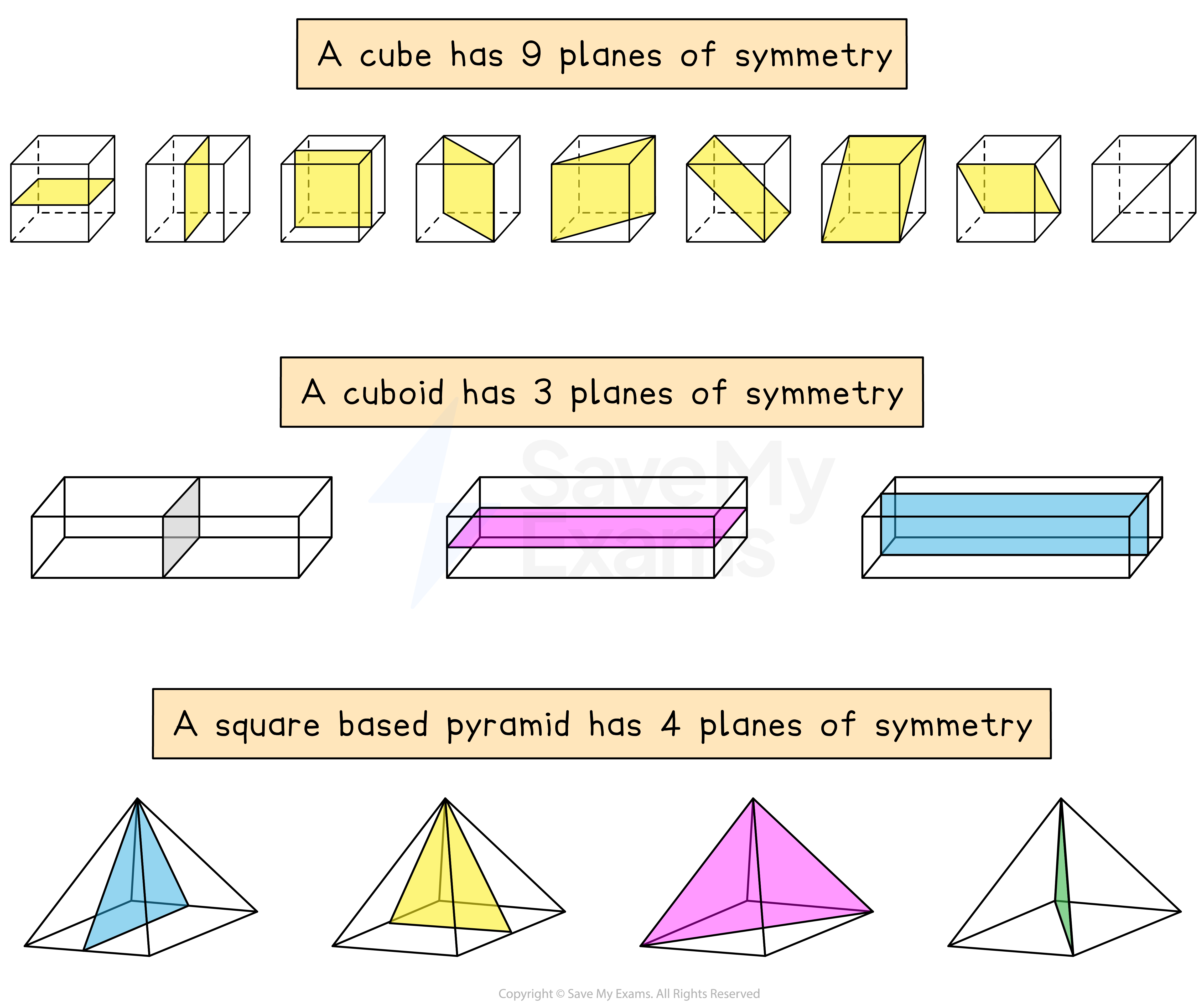
Cubes have 9 planes of symmetry
Cuboids have 3 planes of symmetry
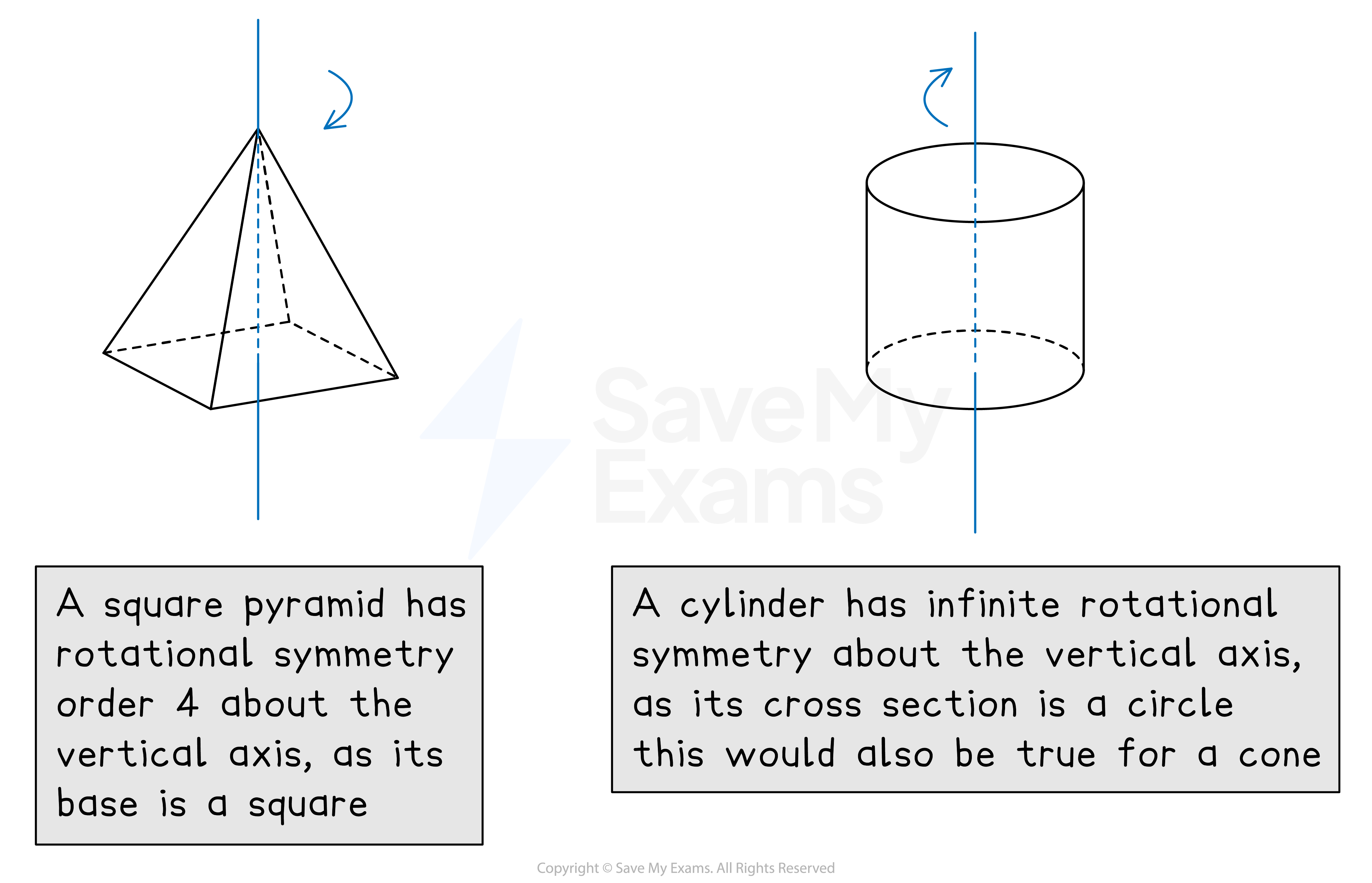
Cylinders have an infinite number of planes of symmetry
The number of planes of symmetry in other prisms will be equal to the number of lines of symmetry in its cross-section plus 1
Pyramids can have planes of symmetry too
The number of planes of symmetry in pyramids will be equal to the number of lines of symmetry in its 2D base
If the base of the pyramid is a regular polygon of n sides, it will have n planes of symmetry
Can a 3D shape have rotational symmetry?
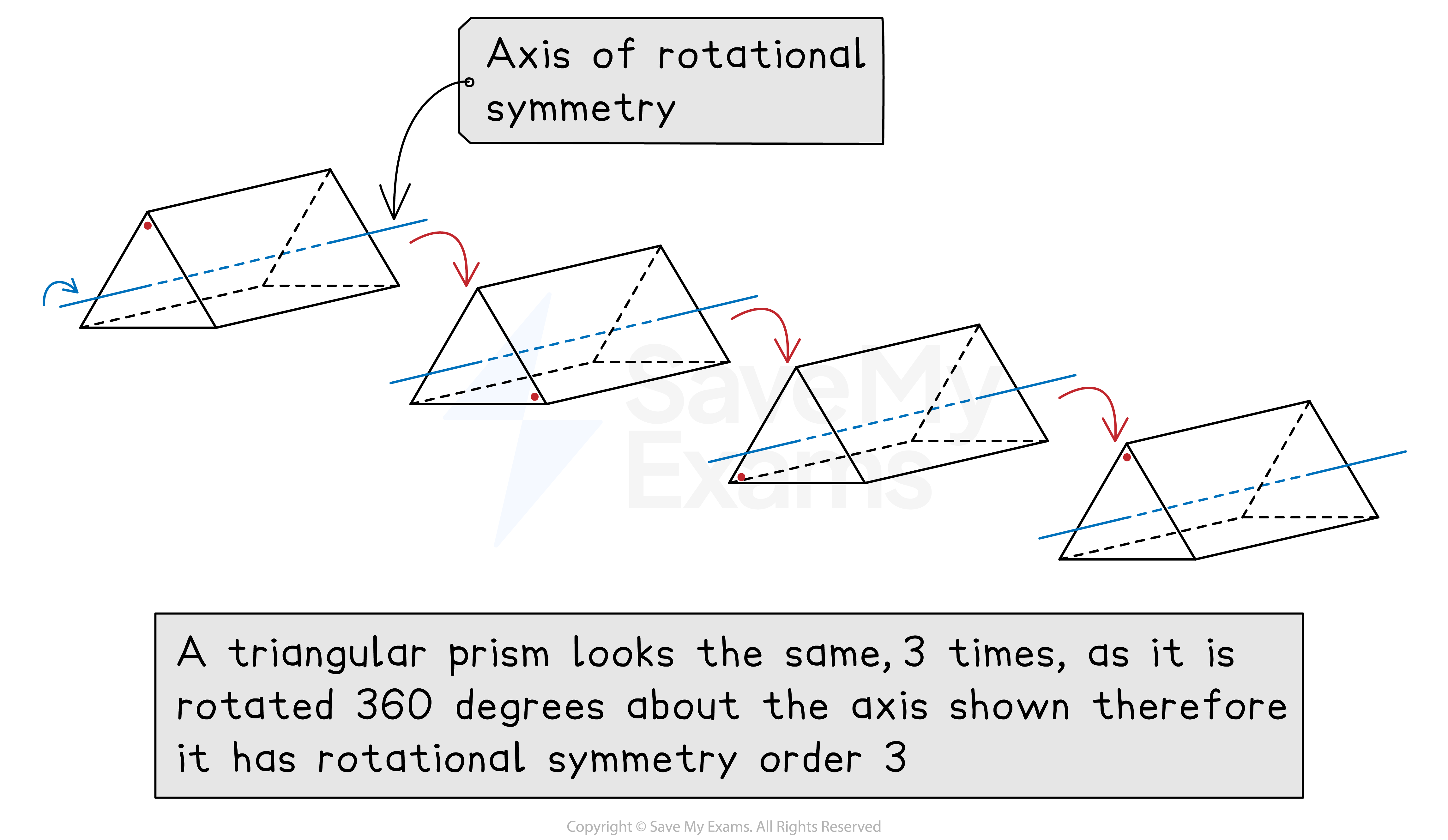
3D shapes are able to be rotated around different axes
Depending on which axis the shape is rotated around, 3D shapes can have rotational symmetry
Recall that rotational symmetry is how many times the shape looks the same (congruent) when rotated through 360 degrees
See the example of the triangular prism where the cross-section is an equilateral triangle