Thermal Conduction
Thermal Conduction in Solidsvideo
Thermal Conduction in Solids
Conduction is the main method of thermal energy transfer in solids
Conduction occurs:
When two solids of different temperatures come in contact with one another, thermal energy is transferred from the hotter object to the cooler object
Metals are the best thermal conductors
This is because they have a high number of free electrons
Thermal Conduction in a Metal
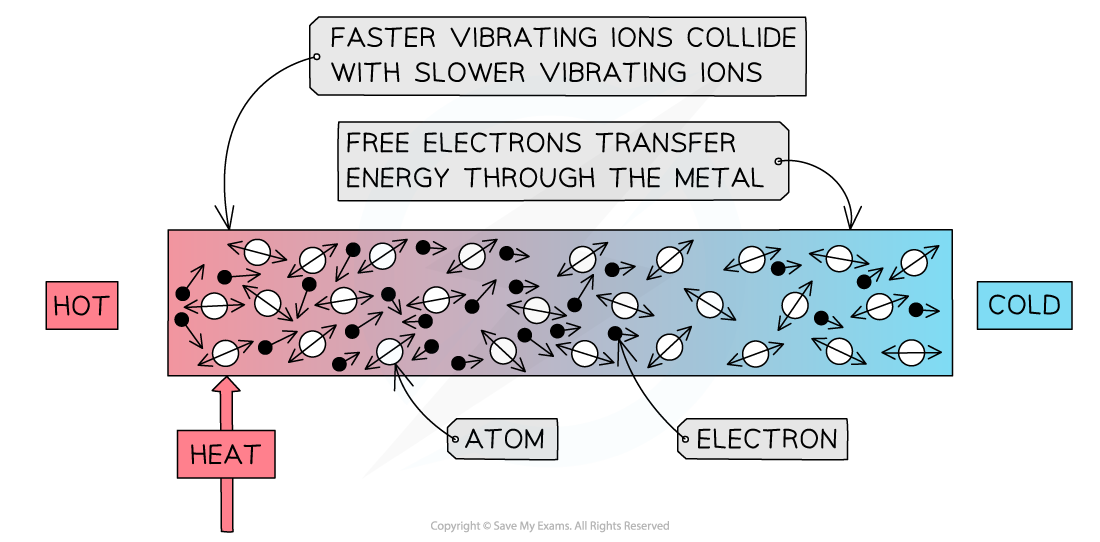
Conduction: the atoms in a solid vibrate and bump into each other
Conduction can occur through two mechanisms:
Atomic vibrations
Free electron collisions
When a substance is heated, the atoms, or ions, start to move around (vibrate) more
The atoms and ions at the hotter end of the solid will vibrate more than the atoms and ions at the cooler end
As they do so they bump into each other, transferring energy from atom to atom
These collisions transfer internal energy until thermal equilibrium is achieved throughout the substance
This occurs in all solids, metals and non-metals alike
When free electrons are also present, such as in a metal:
The free electrons at the hotter end of the solid vibrate more
They bump into other atoms and ions, transferring energy
This speeds up the process of thermal conduction
Hence, metals are good thermal conductors