Downsizing the Workforce
Dismissal & Redundancy
Dismissal and redundancy
Dismissal (firing or sacking) is the termination of employment by an employer against the will of the employee
Employees are usually terminated due to their misconduct (e.g. violating company policy) or poor performance
The employer may choose to dismiss them immediately (without notice or compensation) or provide a notice period which they can work out
In some countries, an employee can take the business to court if they feel they were unfairly dismissed
Redundancy is where a job role is no longer needed by a business and a worker is dismissed, usually with compensation
The legal process for selecting workers for redundancy must be very clear and fair
The factors used to determine who is made redundant
Worker productivity | Lateness or absence data | Length of time employed | Workers with essential skills |
|---|---|---|---|
|
|
|
|
Some workers are happy to be made redundant
This may be because they have another job they can go to, they want to retire early or they want to start their own business
Some businesses offer a good redundancy 'pay out' which is attractive to workers
Downsizing the Workforce
Downsizing the workforce
Workforce planning is the process of determining the human resource needs for the foreseeable future, in terms of the number and skills of employees required
When expanding, a business often requires more employees
However, on some occasions they need to downsize the workforce (reduce the number of employees)
Reasons for downsizing
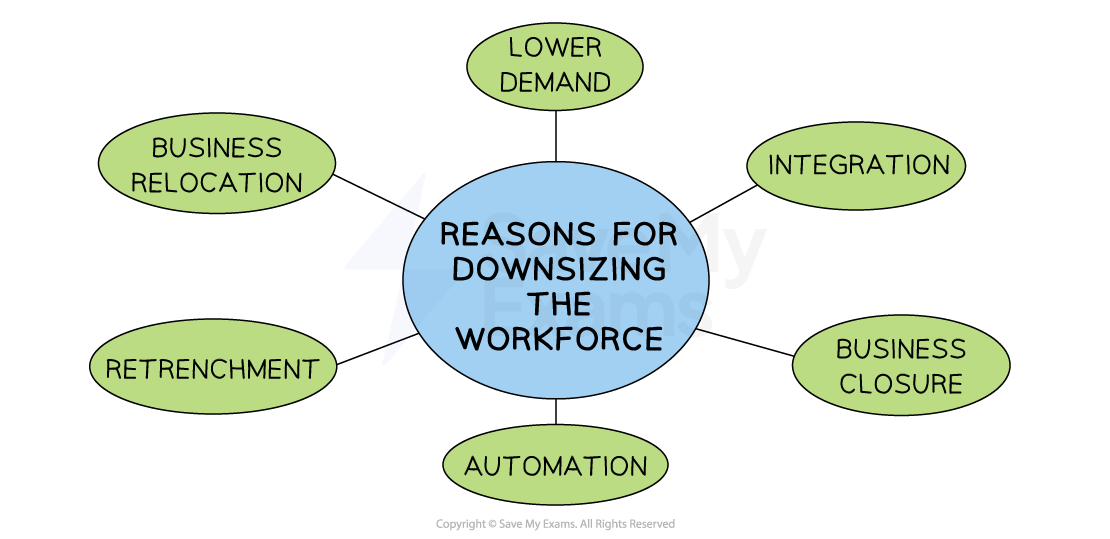
Lower demand
Is likely to reduce the volume of output a business needs to produce
Fewer workers are required to produce a reduced level of output
Integration with other businesses
Through mergers or takeovers could mean that some workers' roles are duplicated
Business closure
Will mean that only a few workers will be required to legally dissolve the organisation
Automation
involves more machinery being used in the business
Workers' jobs are replaced, with remaining workers focused on operating machinery
Retrenchment
Is likely to mean that fewer resources of all types are required, including employees
Business relocation
may allow a business to reorganise its operations, requiring fewer employees