Recruitment Methods
An Introduction to Recruitment and Selection
An introduction to recruitment and selection
Recruitment is the process of attracting and identifying potential job candidates who are suitable for a particular role
Recruitment activities include job advertising, job fairs, social media outreach and referrals from current employees
The goal of recruitment is to create a pool of qualified candidates who can be considered for the role
Selection is the process of choosing the best candidate from applications received
The goal of selection is to hire the most suitable candidate for the job
A business will need to recruit and select a new employee(s) when a vacancy arises within the business
Reasons why vacancies arise
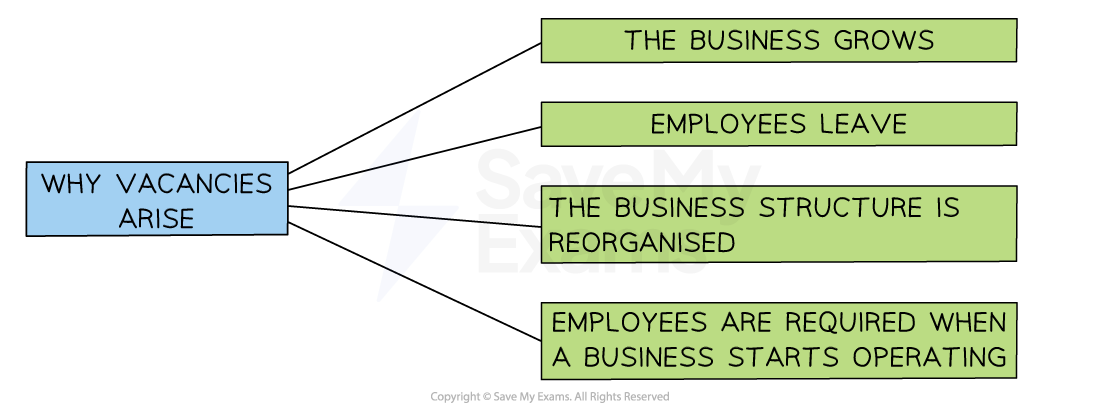
During periods of business growth more employees are needed as the business expands its operations
When an employee leaves their job and needs replacing
Businesses often reorganise their organisational structure which may result in the need for additional staff
A new business start-up needs to recruit workers for the first time
Businesses can choose to use a recruitment agency to carry out the recruitment and selection process on their behalf
New employees may be found quickly from its pool of available talent
Management time can be saved
Recruitment agencies usually charge a finding fee for their specialist services
Internal and External Recruitment
Internal and external recruitment
Internal recruitment involves promoting or redeploying employees that already work for the business
External recruitment involves appointing an employee from outside of the business
Evaluating internal and external recruitment
Advantages of internal | Disadvantages of internal |
|---|---|
|
|
Advantages of external | Disadvantages of external |
|
|