Types of Training
The Importance of Training to a Business
The importance of training to a business
Training is the process of increasing the knowledge and skills of the workforce to enable them to perform their jobs effectively
Businesses need to make sure that new and existing staff are trained and developed appropriately
Training is the teaching of new skills E.g., learning a new process or how to use new equipment
Development is the improvement of existing skills E.g., a refresher course for an existing piece of software used
A well-trained workforce is important for several reasons
Well-trained staff are likely to be more productive
Staff may feel valued if a business invests in training and development
Staff are more likely to be flexible and resilient in the face of change
Training decreases errors or waste in the production process
Improves the opportunities for internal promotion
Types of Training
Types of training
There are three main types of training that a business uses
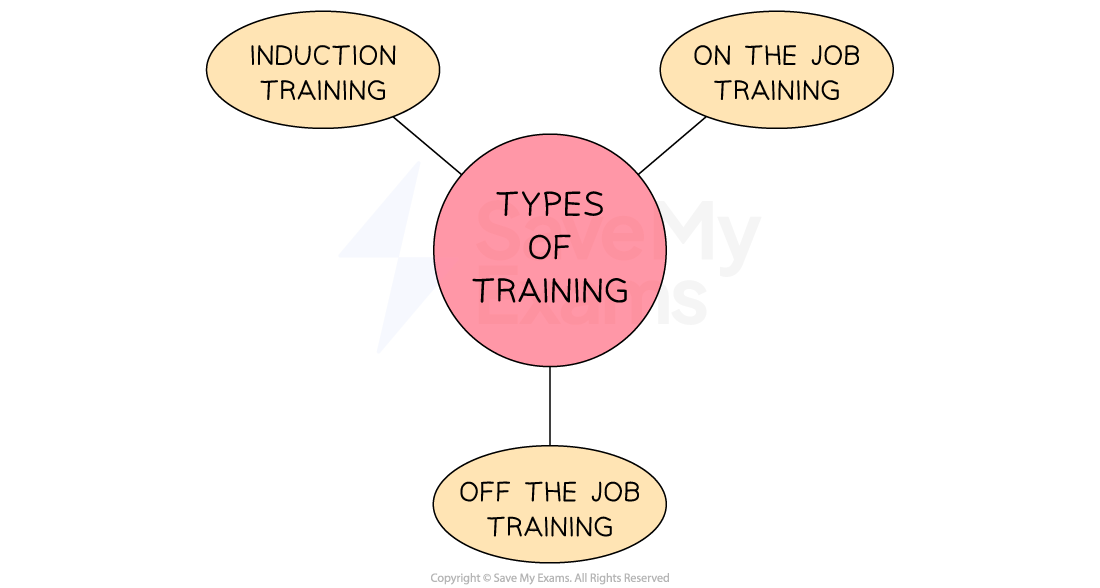
1. Induction training
Induction training is given to new employees when they start working for a business
It introduces them to the organisation, its culture, policies, procedures and their job roles and responsibilities
E.g. when new employee joins Marks & Spencer they receive induction training that covers customer service, product knowledge, store policies, and safety procedures
Evaluating induction training
Advantages | Disadvantages |
|---|---|
|
|
2. On-the-job training
A type of training that takes place while employees are working in their job roles
It allows employees to learn new skills and knowledge from colleagues while performing their job duties
For example, a sous chef at The Ivy Restaurant in York receives on-the-job training from the Head Chef to learn how to prepare new dishes, use equipment or improve cooking techniques
Evaluating on-the-job training
Advantages | Disadvantages |
|---|---|
|
|
3. Off-the-job training
A type of training that takes place outside of the workplace
It can be in the form of workshops, seminars, conferences or online courses
For example, teachers attend exam board training days at which they learn how to deliver the syllabus and help their students to prepare for exams
Evaluating off-the-job training
Advantages | Disadvantages |
|---|---|
|
|