Covalent Bonds
The Formation of Covalent Bondsvideo
The Formation of Covalent Bonds
Covalent compounds
Covalent compounds are formed when pairs of electrons are shared between atoms
Only non-metal elements participate in covalent bonding
As in ionic bonding, each atom gains a full outer shell of electrons, giving them a noble gas electronic configuration
When two or more atoms are covalently bonded together, we describe them as ‘molecules’
Dot-and-cross diagrams can be used to show the electric configurations in simple molecules
Electrons from one atom are represented by a dot, and the electrons of the other atom are represented by a cross
The electron shells of each atom in the molecule overlap and the shared electrons are shown in the area of overlap
The dot-and-cross diagram of the molecule shows clearly which atom each electron originated from
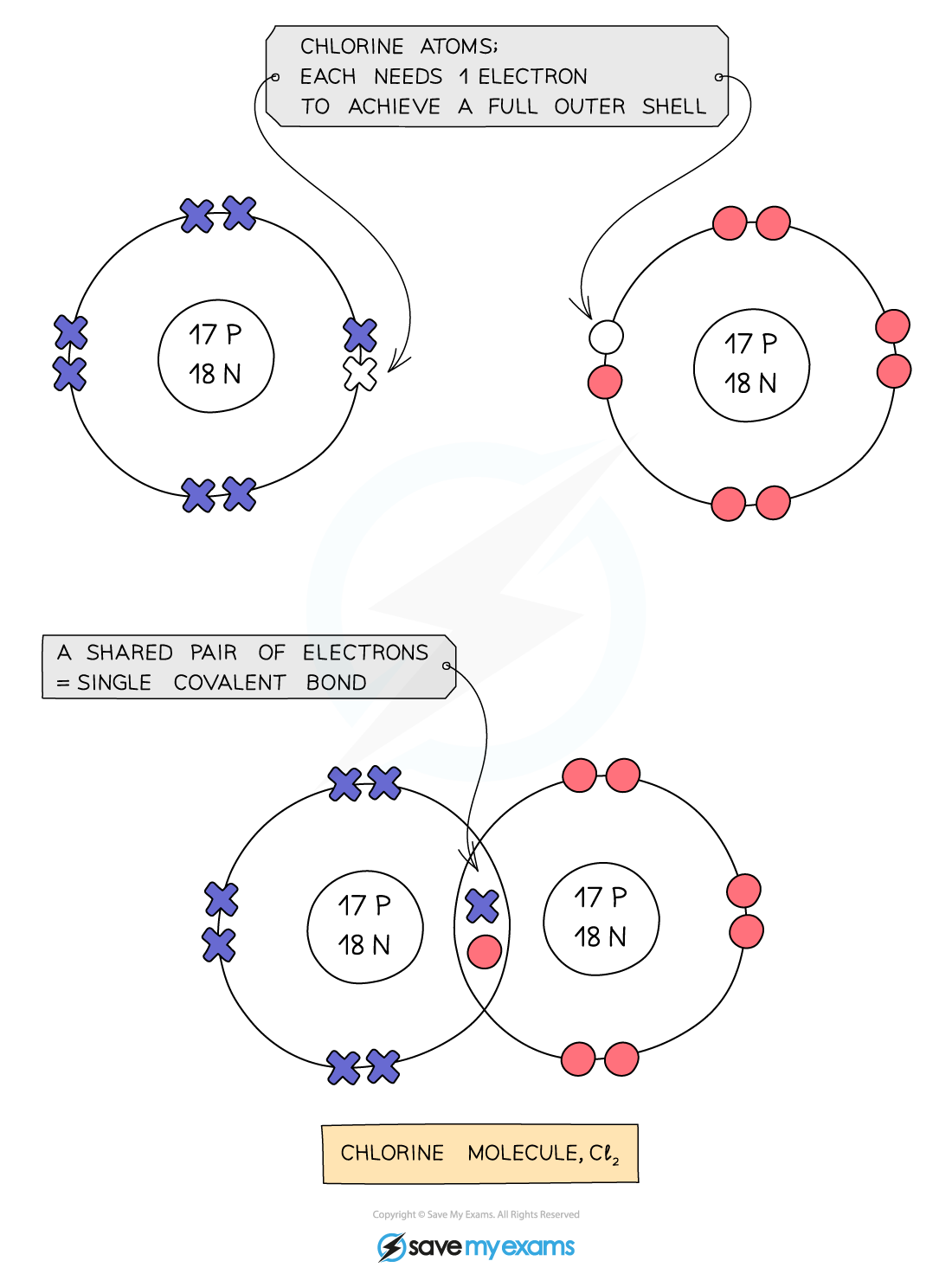
Diagram showing how a covalent bond forms between two chlorine atoms
Dot & Cross Diagrams of Simple Moleculesvideo
Dot & Cross Diagrams of Simple & Complex Molecules
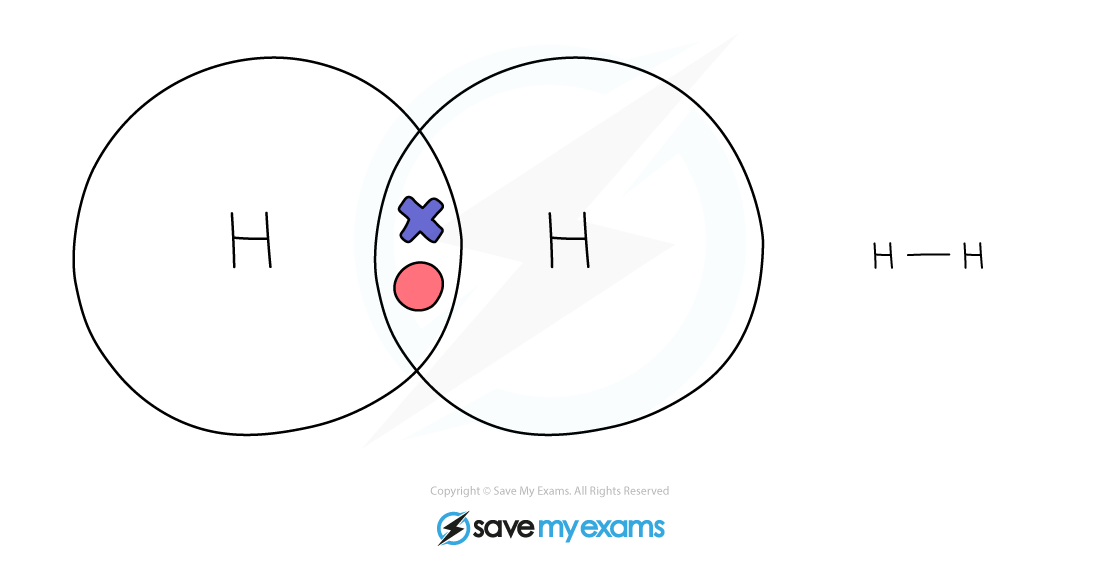
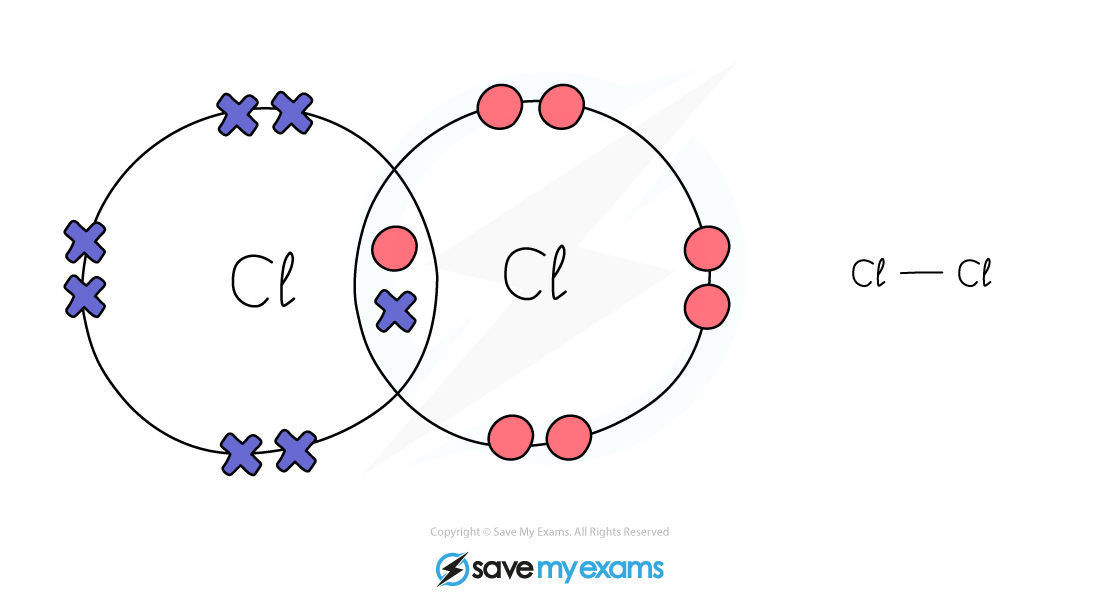
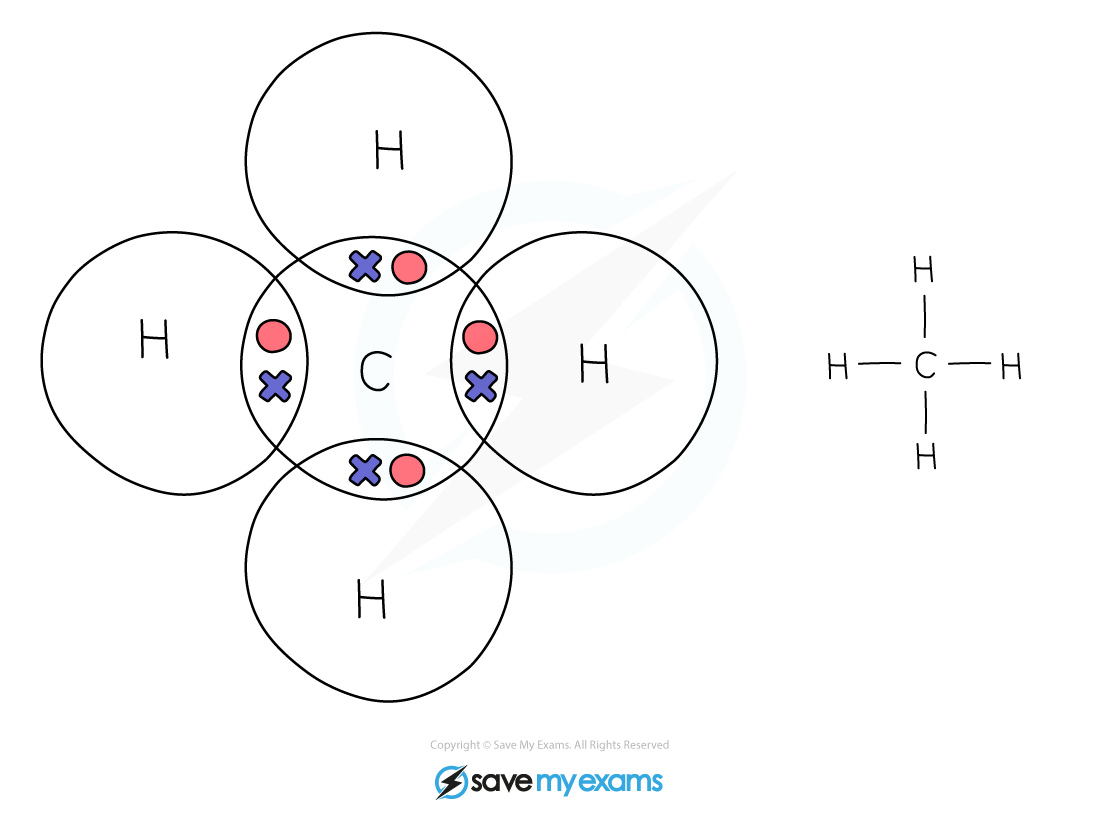
Many simple molecules exist in which two adjacent atoms share one pair of electrons, also known as a single covalent bond (or single bond)
Common Examples of Simple Molecules
Hydrogen:
Chlorine:
Water:

Methane:
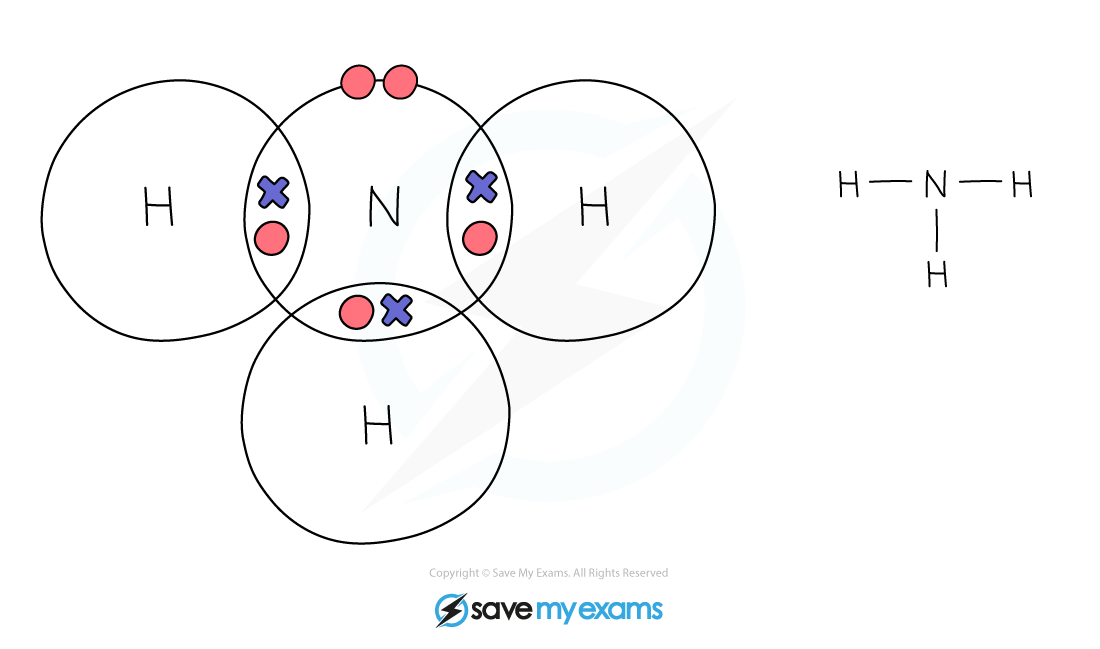
Ammonia:
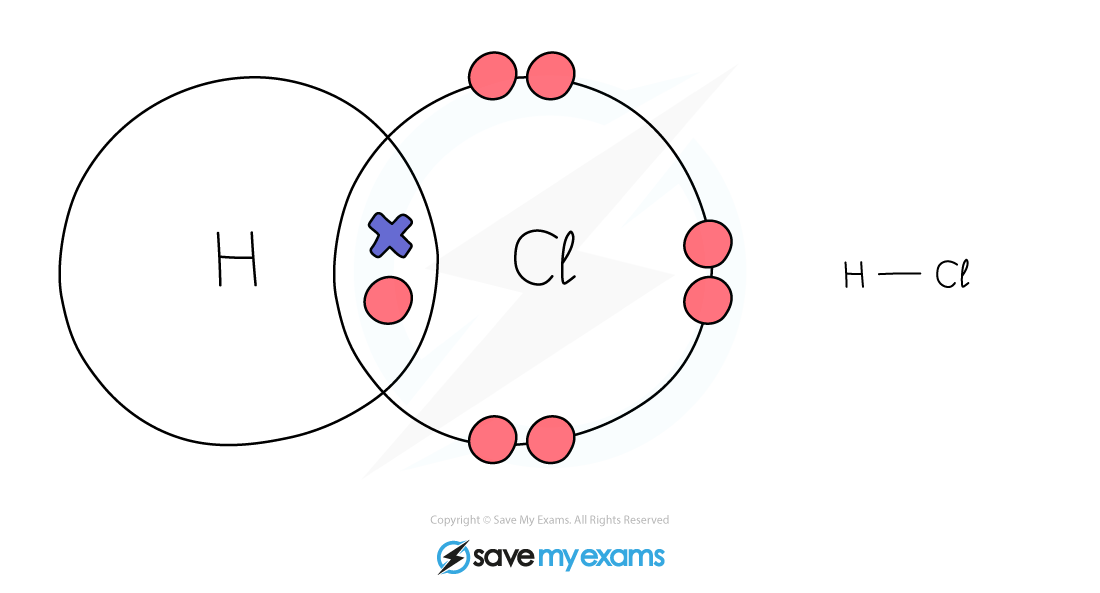
Hydrogen chloride:
Some atoms need to share more than one pair of electrons to gain a full outer shell of electrons
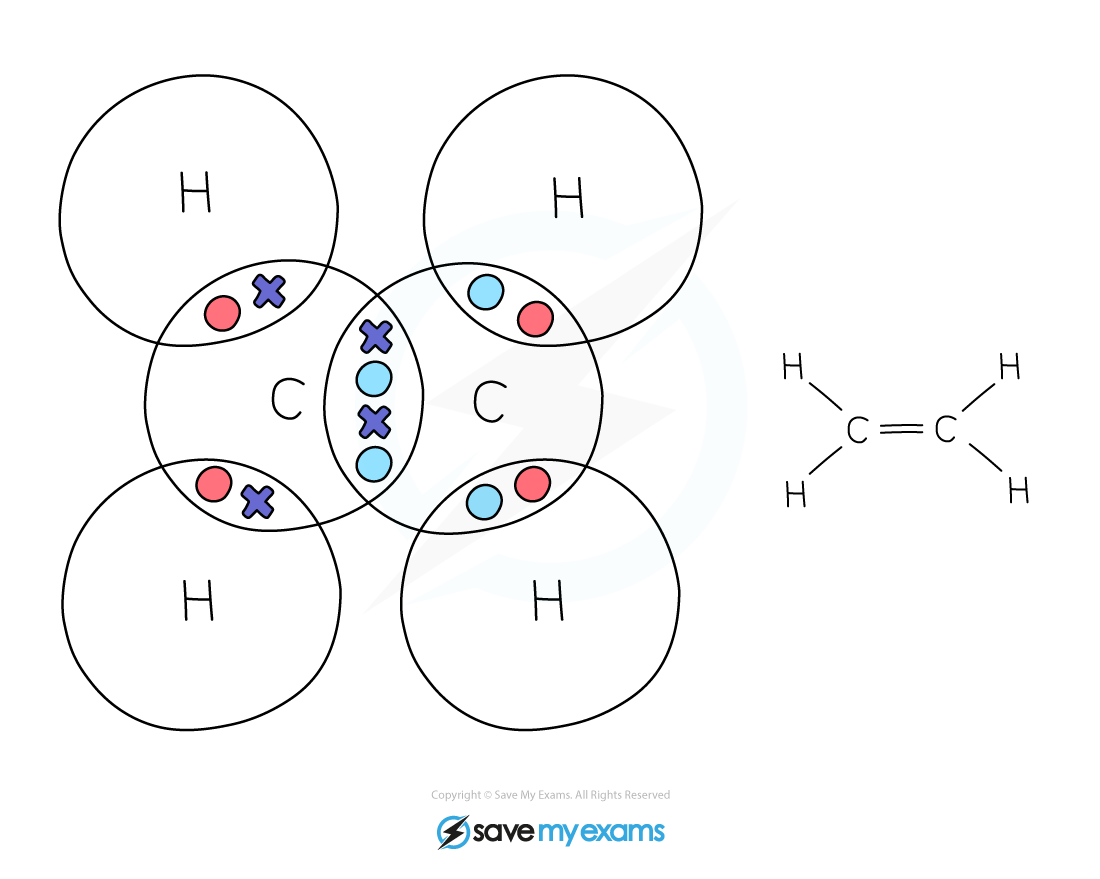
If two adjacent atoms share two pairs of electrons, two covalent bonds are formed, also known as a double bond
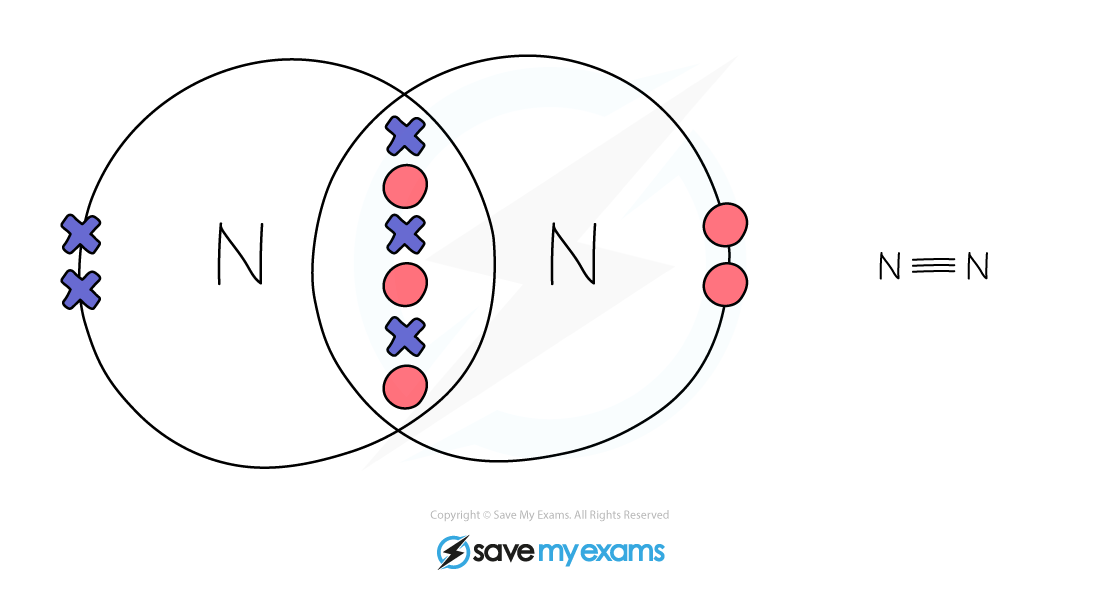
If two adjacent atoms share three pairs of electrons, three covalent bonds are formed, also known as a triple bond
Nitrogen:
When 2 nitrogen atoms react they share 3 pairs of electrons to form a triple bond
Ethene:
In ethene, the 2 carbon atoms share 2 pairs of electrons
This is known as a double bond
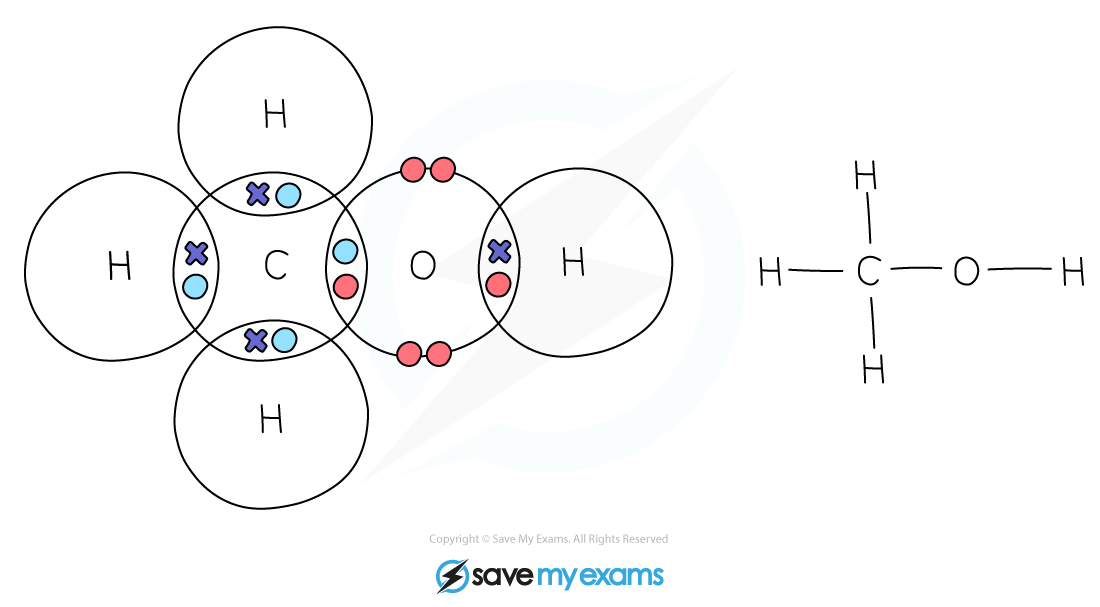
Methanol:
Carbon Dioxide: