Sexual Reproduction
Gametes & Zygotes
Gametes & Zygotes
Sexual Reproduction
Sexual reproduction is a process involving the fusion of the nuclei of two gametes (sex cells) to form a zygote (fertilised egg cell) and the production of offspring that are genetically different from each other
Fertilisation is defined as the fusion of gamete nuclei, and as each gamete comes from a different parent, there is variation in the offspring
Gametes
A gamete is a sex cell (in animals: sperm and ovum; in plants pollen nucleus and ovum)
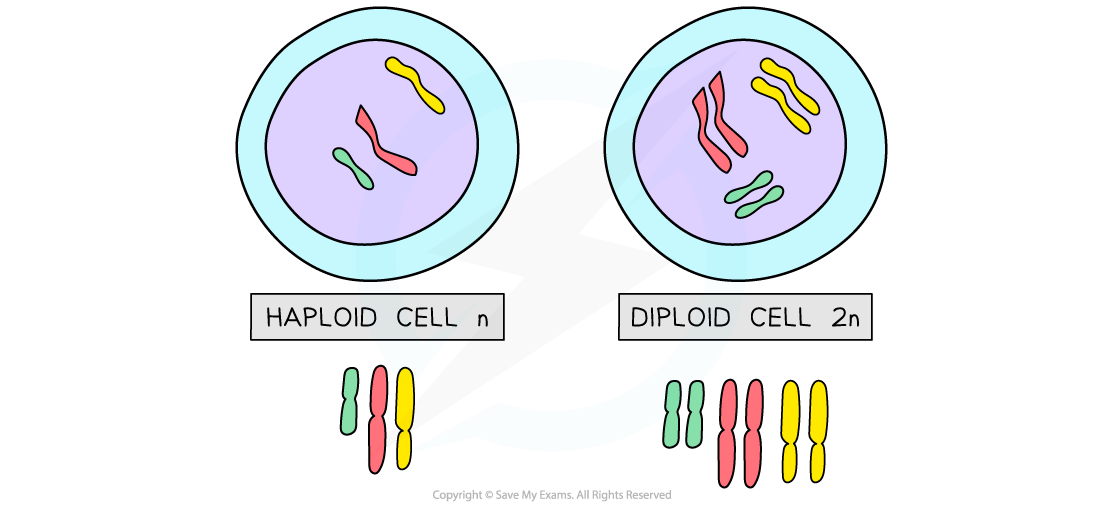
The nuclei of gametes are haploid
They contain half the number of chromosomes of a normal body cell
In humans, this is 23 chromosomes
The zygote
When the male and female gametes fuse, they become a zygote (fertilised egg cell)
This contains the full 46 chromosomes, half of which came from the father and half from the mother
The nucleus of a zygote is diploid
It contains the same number of chromosomes as a normal body cell
In humans, this is 23 pairs of chromosomes
The zygote continues to stay diploid as it grows into a fetus and embryo during pregnancy
Advantages and Disadvantages of Sexual Reproduction
Advantages | Disadvantages |
|---|---|
Increases genetic variation | It takes time and energy to find mates |
The species can adapt to new environments due to variation giving them a survival advantage | Difficult for isolated members of the species to reproduce |
Disease is less likely to affect population (due to variation) |
|
Most crop plants reproduce sexually and this is an advantage as it means variation is increased and a genetic variant may be produced which is better able to cope with weather changes, or produces significantly higher yield
The disadvantage is that the variation may lead to offspring that are less successful than the parent plant at growing well or producing a good harvest