Flower Structure & Pollination Method
Insect-Pollinated Flowersvideo
Insect-Pollinated Flowers
Flowers are the reproductive organ of the plant
They usually contain both male and female reproductive parts
The male reproductive parts are called the stamen
Each stamen consists of an anther and a filament
The female reproductive parts are called the carpel
Each carpel consists of a stigma, style, ovary and ovules
Plants produce pollen which contains a nucleus inside that is the male gamete
Unlike the male gamete in humans (sperm), pollen is not capable of locomotion (moving from one place to another)
This means plants have to have mechanisms in place to transfer pollen from the anther to the stigma
This process is known as pollination and there are two main mechanisms by which it occurs: transferred by insects (or other animals like birds) or transferred by wind
The structure of insect and wind-pollinated flowers are slightly different as each is adapted for their specific function
Parts of the flower table
Structure | Description |
|---|---|
Sepal | Protects unopened flower |
Petals | Brightly coloured in insect-pollinated flowers to attract insects |
Anther | Produces and releases the male sex cell (pollen grain) |
Filaments | Provides support to the anther |
Stigma | Sticky top of the female part of the flower which collects pollen grains |
Style | A stalk that connects the stigma and ovary |
Ovary | Produces the female sex cell (ovum) |
Ovule | Contains the female sex cells (found inside the ovary) |
General flower structure diagram
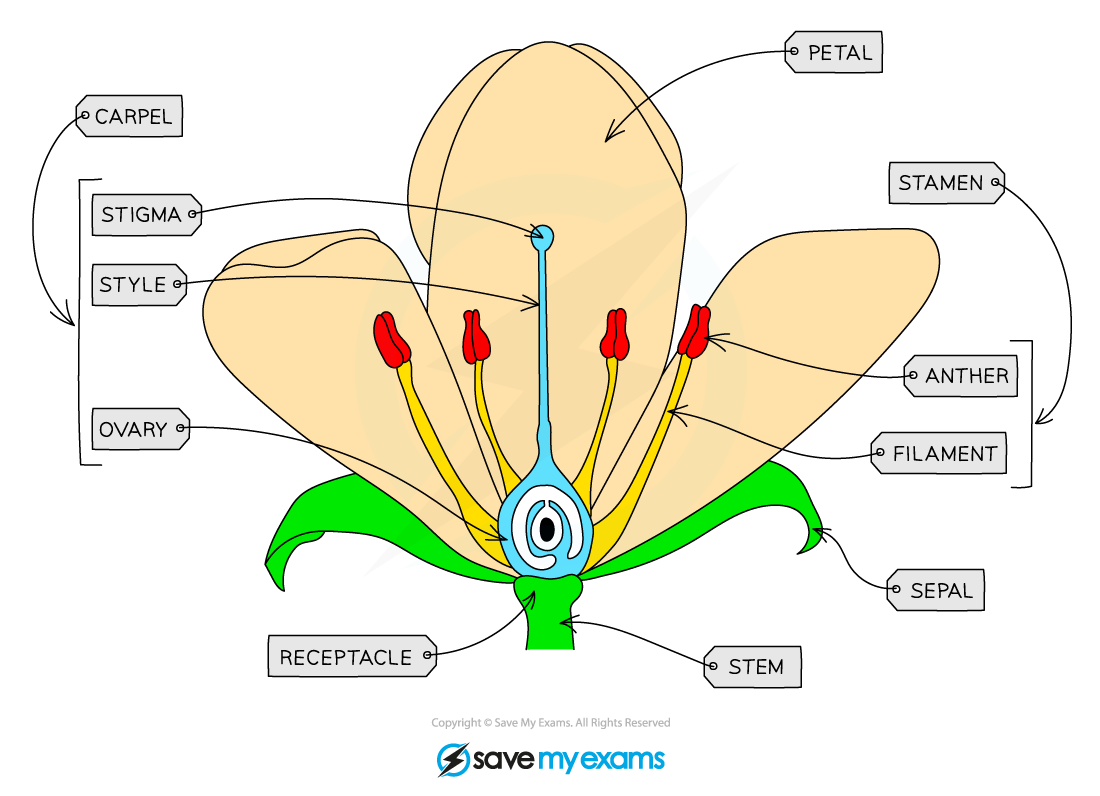
Structure of a flower
Features of an insect-pollinated flower table
Feature | Insect-pollinated flower |
|---|---|
| 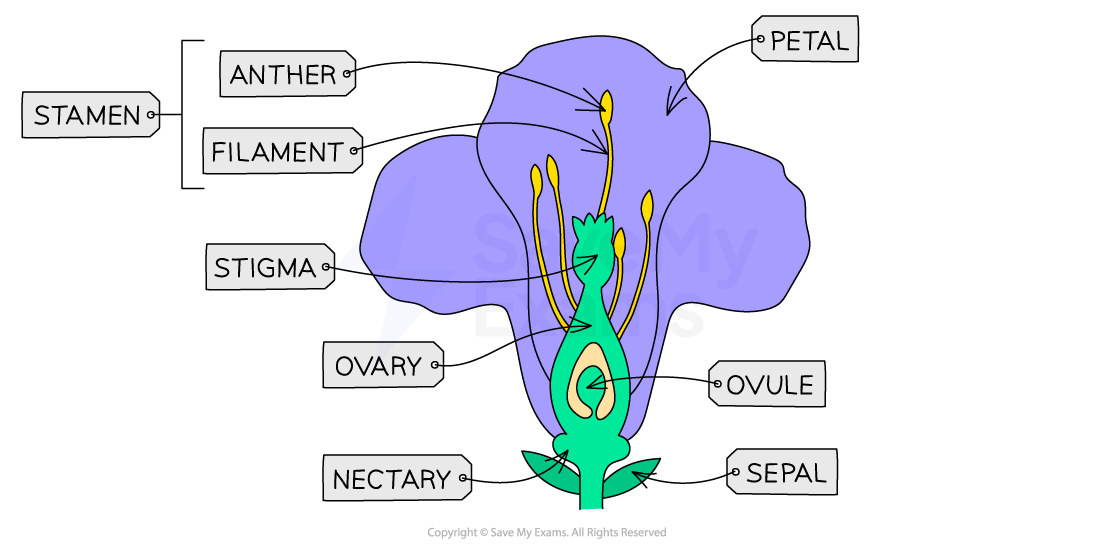 |
Petals | Large and brightly coloured to attract insects |
Scent and Nectar | Present - entices insects to visit the flower and push past stamen to get to nectar |
Number of Pollen Grains | Moderate - insects transfer pollen grains efficiently with a high chance of successful pollination |
Pollen Grains | Larger, sticky and / or spiky to attach to insects and be carried away |
Anthers | Inside flower, stiff and firmly attached to brush against insects |
Stigma | Inside flower, sticky so pollen grains stick to it when an insect brushes past |
Wind-Pollinated Flowersvideo
Wind-Pollinated Flowers
Features of a wind-pollinated flower table
Feature | Wind-pollinated flower |
|---|---|
| 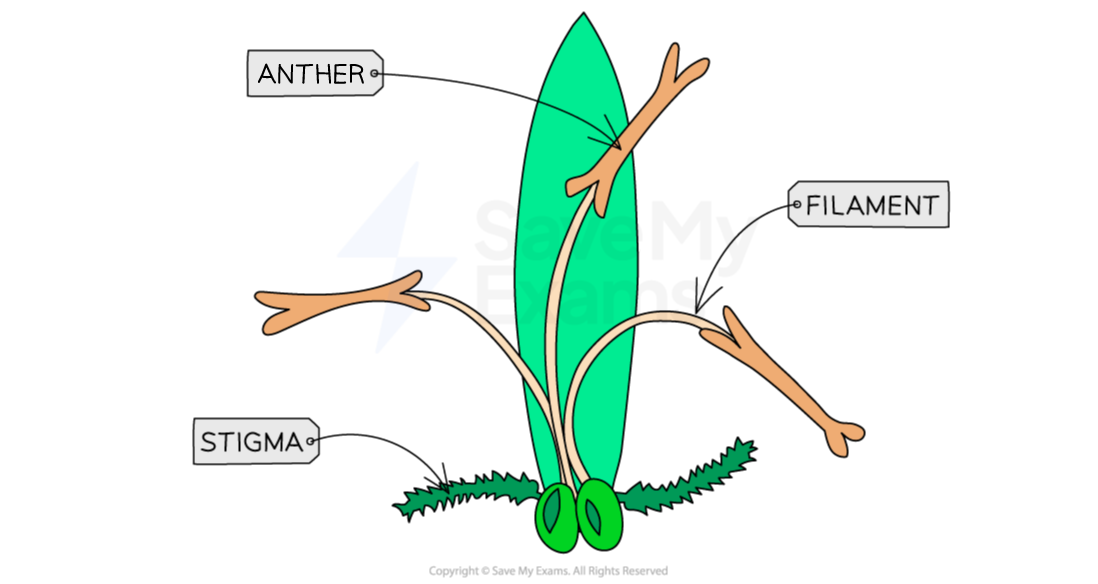 |
Petals | Small and dull, often green or brown in colour |
Scent and Nectar | Absent - no need to waste energy producing these as no need to attract insects |
Number of Pollen Grains | Large amounts - most pollen grains are not transferred to another flower so the more produced, the better the chance of some successful pollination occurring |
Pollen Grains | Smooth, small and light so they are easily blown by the wind |
Anthers | Outside flower, swinging loose on long filaments to release pollen grains easily |
Stigma | Outside flower, feathery to catch drifting pollen grains |
The pollen produced by insect and wind-pollinated flowers is also different:
Insect-pollinated flowers produce smaller amounts of larger, heavier pollen grains that often contain spikes or hooks on the outside so they are better able to stick to insects
Wind-pollinated flowers produce large amounts of small, lightweight pollen grains that are usually smooth