Fertilisation in Plants
Fertilisation
Fertilisation
Fertilisation
Fertilisation occurs when a pollen nucleus fuses with an ovum nucleus in the ovule
As the pollen has no ‘tail’ to swim to the ovary of a plant, in order to reach the ‘female’ nucleus in the ovary it has to grow a pollen tube
This only happens if the pollen grain has landed on the right kind of stigma (i.e. of the same species as the flower the pollen came from)
The nucleus inside the pollen grain slips down the tube as it grows down the style towards the ovary
The ovary contains one or more ovules which each contain an ovum with a female nucleus that a male pollen nucleus can fuse with
Once the nuclei have joined together, that ovule has been fertilised and a zygote has been formed
The zygote will start to divide and eventually form a seed within the ovule
As different plants have different numbers of ovules, this explains why different fruits (which develop from the ovary) have different numbers of seeds (which develop from the ovules)
Growth of pollen tube & fertilisation diagram
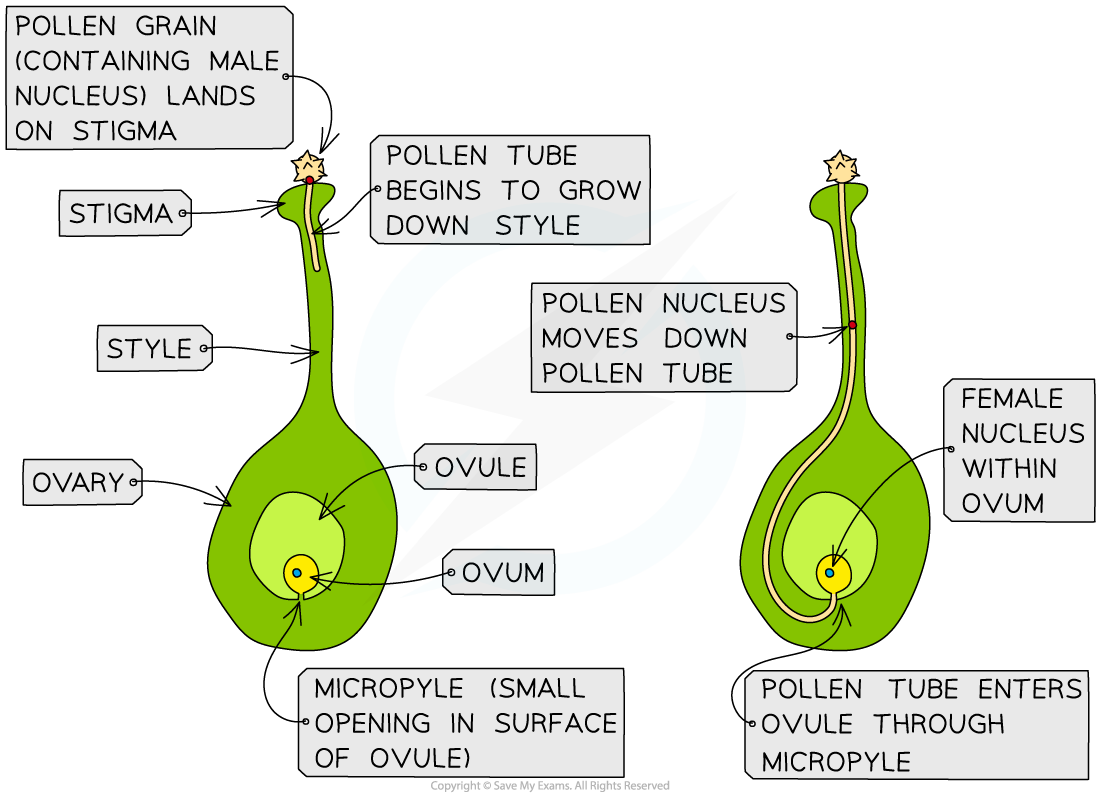
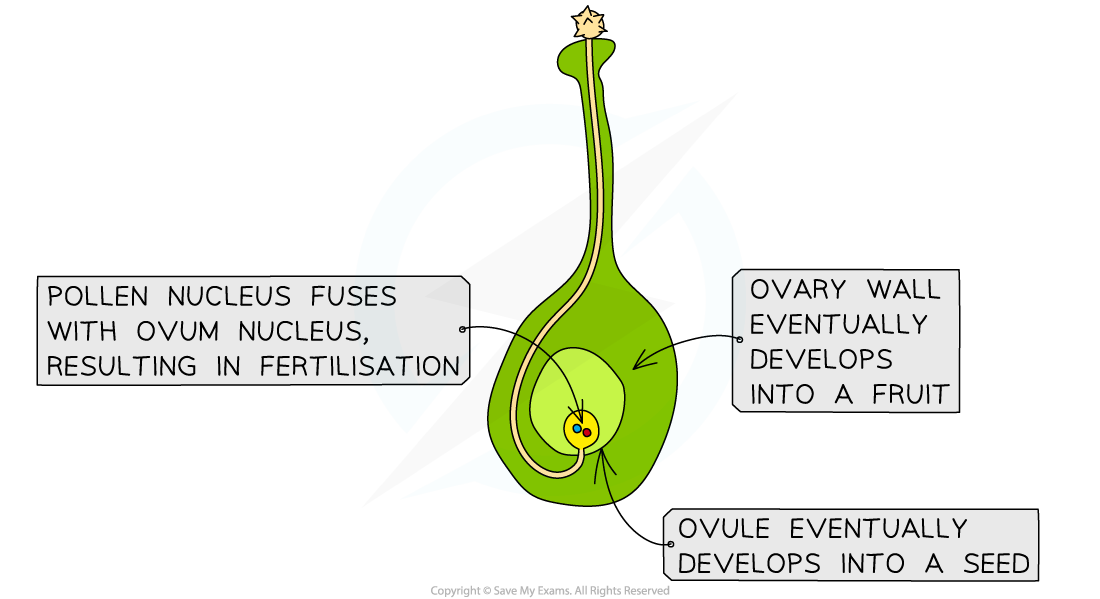
Growth of the pollen tube occurs after pollination and is necessary to provide a means for the pollen nucleus to fuse with the ovum nucleus during fertilisation