Self & Cross-pollination
Self- & Cross-Pollinationvideo
Self- & Cross-Pollination
Self- & Cross-Pollination
Cross-pollination occurs when the pollen from one plant is transferred to the stigma of another plant of the same species
This is the way most plants carry out pollination as it improves genetic variation
Occasionally, the pollen from a flower can land on its own stigma or on the stigma of another flower on the same plant - this is known as self-pollination
Self-pollination reduces genetic variety of the offspring as all the gametes come from the same parent (and are therefore genetically identical)
Lack of variation in the offspring is a disadvantage if environmental conditions change, as it is less likely that any offspring will have adaptations that suit the new conditions well
The advantage of self-pollination is that the plant is not reliant on pollinators, so they will be able to reproduce in environments lacking pollinators
On the other hand, cross-pollination relies completely on the presence of pollinators and this can be a problem if those pollinators are missing (e.g. the reduction in bee numbers is of great importance to humans as bees pollinate a large number of food crops)
Types of pollination diagram
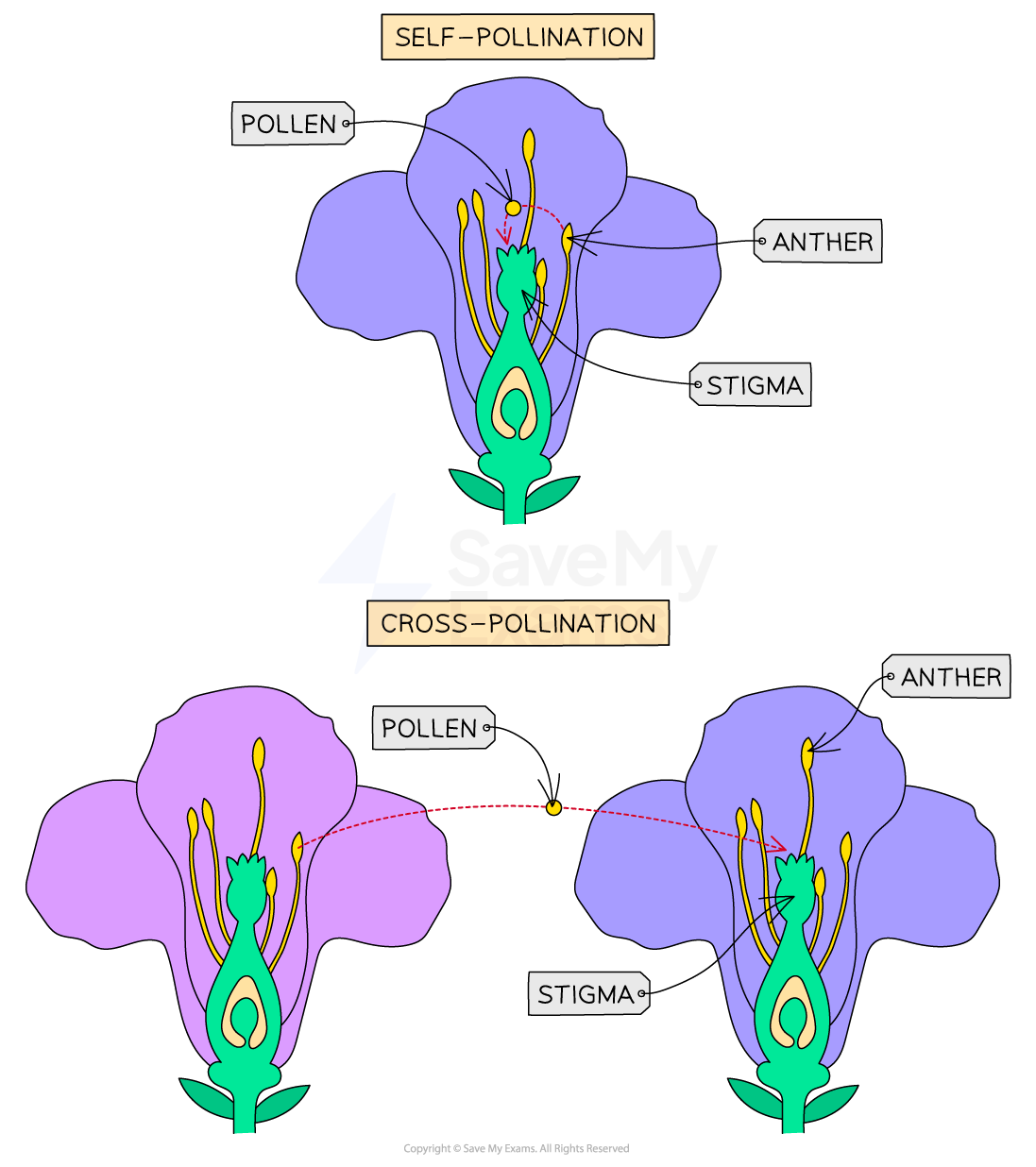
Differences between self-pollination and cross-pollination