Statement of Profit or Loss
Introduction to the statement of profit or loss
Introduction to the statement of profit or loss
A statement of profit or loss records the income and costs of a business incurred over a period of time (usually one year)
The statement is also known as an income statement
Theprofit or loss statement identifies
Revenue
Cost of sales
Gross profit
Expenses
Operating profit (often known, simply, as profit)
The extract from the statement for Toys and Trikes PLC shows figures for both 2022 and 2023, which enables year-on-year comparisons to be made
Profit or loss statement for Toys and Trikes Ltd
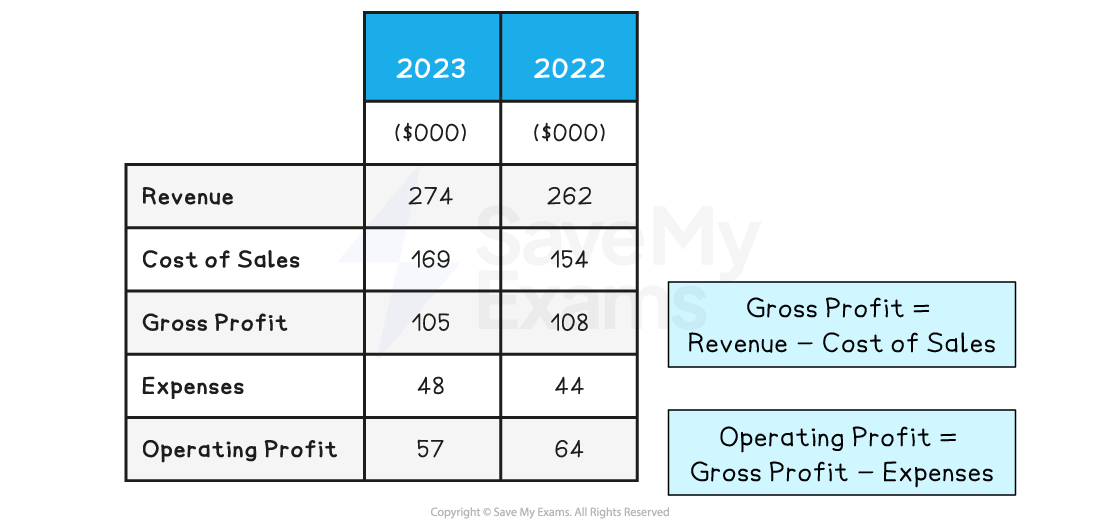
Features of the statement of profit or loss
Features of the statement of profit or loss
Sales revenue
This is money generated through selling goods and services
Calculated by Price x Quantity
Cost of sales
The cost of producing or buying in the goods sold by the business during a time period
They include the costs of raw materials, components, labour and packaging used to produce goods
Gross profit
Gross profit is made when revenue is greater than the cost of sales
Calculated by Sales revenue - Cost of sales
Expenses
Expenses are all of the other costs incurred by a business that are not directly related to each unit of output
Examples include rent, salaries and utilities
Operating profit
This is profit made by a business after all costs have been deducted from revenue
Calculated by Gross profit - Expenses
Decisions based on the statement of profit or loss
Decisions based on the statement of profit or loss
Profit or loss statements inform managers whether the business is making a profit or loss
They allow the comparison of performance to previous years, aid with future forecasts and can be used to make comparisons with competitors
Finance managers are able to interrogate the data in order to make beneficial changes or set new strategic objectives
If the business is making a profit
Is the profit higher or lower than last year?
If higher, what has the business done that could have led to this?
For example, finding a cheaper supplier of raw materials or increasing sales due to a new promotional campaign
If lower, why is profit falling?
Have costs increased, such as higher energy bills for the premises, or have sales fallen due to a new competitor entering the market?
Is the profit higher or lower than that of competitors?
If lower, what can be done to become as profitable as other businesses?
For example, does the business need to improve the quality of the products or increase the product portfolio?
If the business is making a loss
Is this a short-term or long-term problem?
Lower profits may be a result of an external shock affecting all businesses, such as the 2020 Covid pandemic, in which many businesses had to close or reduce working hours
Some losses may be more long-term
For example, ecommerce growth has led to many high-street stores closing down as the number of customers has dwindled
Are competitors making losses?
If they are, the business needs to consider whether the industry is changing to the point that it may become extinct
Alternatively, it needs to ask tough questions about what can be done to evolve with changing market conditions