Understanding the Statement of Financial Position
Introduction to the statement of financial position
What is the statement of financial position?
The statement of financial position shows the financial structure of a business at a specific point in time
It identifies a business's assets and liabilities and specifies the capital (equity) used to fund the business operations
The statement of financial position is also known as the balance sheet
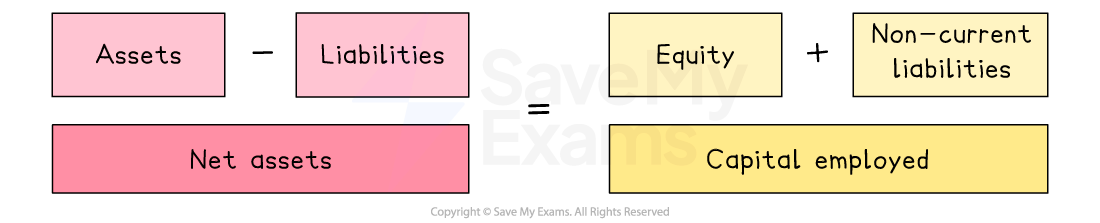
It is called the balance sheet, as net assets are equal to the total equity – the net assets and equity balance
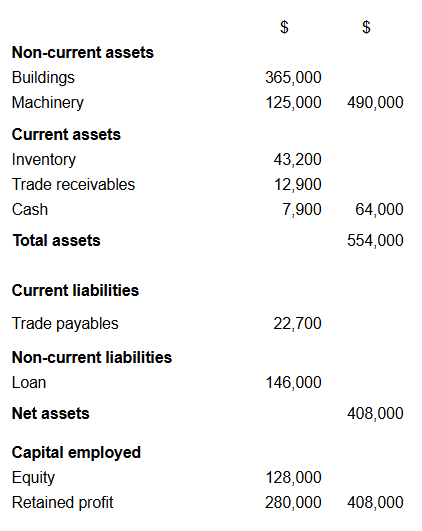
A statement of financial position
Assets
Assets
Assets are items owned by a business
There two type, namely, non-current assets and current assets
Non-current assets
Non-current assets are owned by a business in the long-term, usually a period more than 12 months
Examples include tangible assets such as buildings, land, machinery and vehicles
Non-current assets may be intangible, such as patents, goodwill or brand value
Current assets
Current assets include cash and items that can be turned into cash relatively quickly, usually within 12 months
The three main types of current assets are cash, trade receivables and inventory
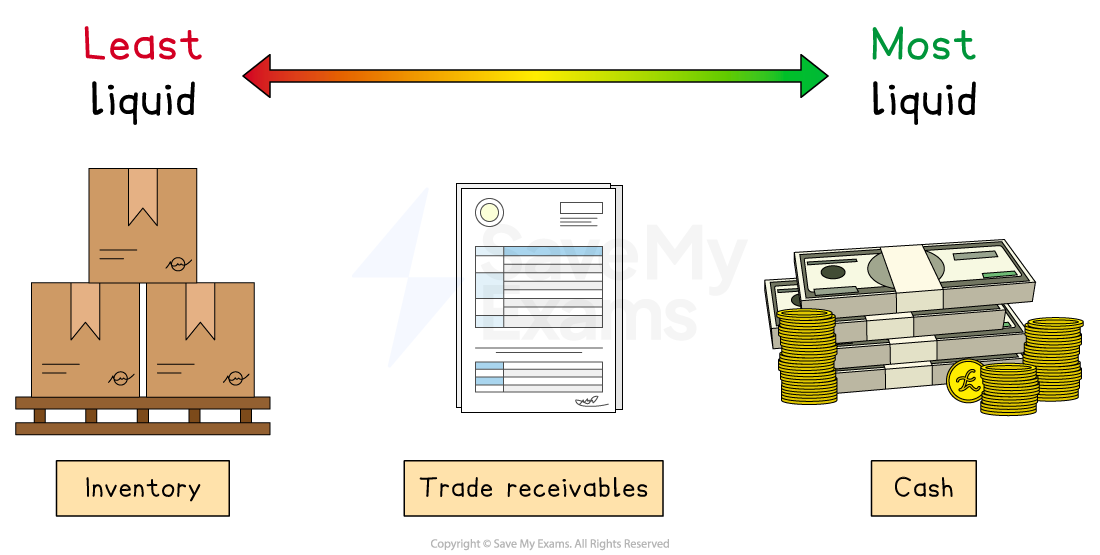
Cash is the most liquid form of current asset, as it can be used immediately as a method of payment
Inventory is the least liquid form of current asset, as, before it can be used for payment, it must be sold
Liabilities
Liabilities
Liabilities are amounts of money owed by a business (debts)
Non-current liabilities are amounts owed that do not need to be paid back for at least 12 months
For example, long-term loans such as mortgages
Current liabilities are amounts owed that must be repaid within 12 months
For example, creditors (trade payables) and bank overdrafts
Capital employed
Capital employed
Capital employed is the total amount of money that a business uses to operate and grow
It usually includes:
Equity
Money invested by the owners or shareholders.
Non-current liabilities
Long-term loans or borrowings
In the statement of financial position, capital employed is equal to net assets
Calculations based on the statement of financial position
Calculations based on the statement of financial position
Statement of financial position
Chagny Rentals Ltd at 31st December 2024

1. Calculating total assets
Total assets are the sum of non-current assets and current assets
This figure represents everything a business owns at a specific point in time
2. Calculating total liabilities
Total liabilities are the sum of current liabilities and non-current liabilities
This figure represents everything a business owes at a specific point in time
3. Calculating working capital
Working capital is the money a business has available for day-to-day activities, such as paying bills, buying stock and covering wages
It is calculated using the formula
Decisions based on the statement of financial position
Decisions based on the statement of financial position
The statement of financial position can be used to answer important questions that may support business decisions
Question | Based on | Explanation |
|---|---|---|
Can the business pay short-term debts? |
|
|
Should the business invest in new equipment? |
|
|
Is the business taking on too much debt? |
|
|
Is the business growing? |
|
|